
Alexandrite is the gemstone that seems to perform a quiet trick. Step from afternoon sunlight into the glow of a lamp and the same stone shifts from cool green to warm raspberry red, a phenomenon so striking it earned the description emerald by day, ruby by night. Fine natural alexandrite is one of the rarest gems on Earth, and understanding how the colour change works is the key to buying it well. This guide explains what the stone is, how to judge its defining magic, what to know about natural and laboratory-grown material, and how it wears day to day.
In short: with alexandrite the colour change matters more than size, so look for a strong, near-complete shift between a genuinely attractive green and a genuinely attractive red. It is a chrysoberyl at 8.5 on the Mohs scale, hard enough for daily wear, and as a June birthstone it makes a rare and personal gift. Always view it in daylight and lamplight before buying, and bought in George Town the purchase is tax-free. See our coloured gemstones to begin.
A Chrysoberyl That Changes Colour
Alexandrite's reputation rests on a single, remarkable property, but it helps to understand the mineral behind the magic.
What alexandrite is
Alexandrite is the colour-change variety of chrysoberyl, a beryllium aluminium oxide and one of the harder gem minerals. It is a distinct species from the corundum that gives us sapphire and ruby, yet it shares with ruby the colouring element chromium, the trace that powers its transformation. Discovered in Russia's Ural Mountains in the 1830s, it was named in honour of the young heir to the Russian throne who would later become tsar, and its green and red echoed the imperial colours of old Russia.
Why it changes colour
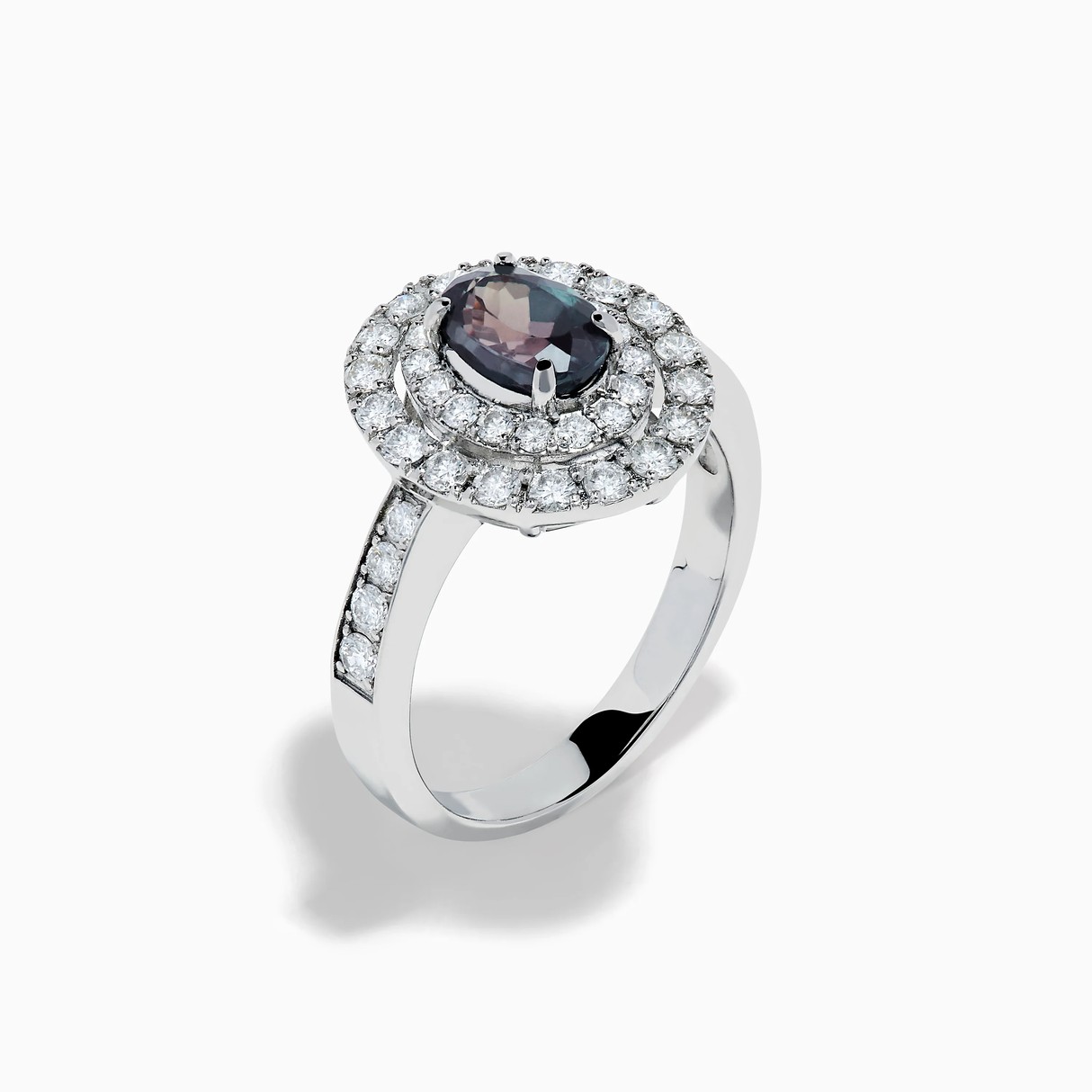
Those traces of chromium cause the stone to transmit both green and red light. Because our eyes weigh those wavelengths differently under different lighting, the stone appears green or bluish-green in daylight and fluorescent light, then red, purplish-red or raspberry under the warmer light of incandescent bulbs and candle flame. The effect is entirely natural and inherent to the gem, not a treatment, which is part of what makes genuine alexandrite so prized. Our coloured gemstone jewellery guide places it among the rarest of the coloured stones.
The Colour Change: Its Defining Magic
With alexandrite, the colour change is the prime value factor, far more important than size. The most coveted stones show a complete, dramatic shift between two genuinely attractive colours, ideally a vivid bluish-green by day and a rich purplish-red by night. Weak or partial changes, or muddy, brownish phases, sharply reduce desirability however large the stone.
How to judge the change
- Strength of change, often described as a percentage. A stone that transforms almost completely is worth far more than one that merely warms or cools a little.
- Quality of both colours, since the gem must look beautiful in daylight and in lamplight. The finest show a clean green and a strong red with little grey or brown.
- Clarity, where eye-clean material is preferred; some fine stones show a soft silky character, but obvious inclusions reduce value.
- Carat, because natural alexandrite is exceptionally rare above a carat or two, so larger stones with a strong change are extraordinary.
Alexandrite at a Glance
The essentials in one view:
| Property | Alexandrite detail |
|---|---|
| Mineral | Chrysoberyl, the colour-change variety |
| Mohs hardness | 8.5, good toughness, no troublesome cleavage |
| Colour range | Green or bluish-green by day, red to purplish-red by night |
| Main sources | Russia (historic Urals), Brazil, Sri Lanka, East Africa |
| Birthstone | June, alongside pearl and moonstone; fifty-fifth anniversary gem |
| Treatment | Typically untreated; the colour change is natural |
| Care | Warm soapy water and a soft brush; durable for daily wear |
Origins, Natural and Lab-Grown
Where it comes from
The original Russian deposits are largely exhausted, and antique Ural stones are treasured by collectors. Today most natural alexandrite comes from Brazil, which produced a celebrated find at Hematita, along with Sri Lanka and East Africa, particularly Tanzania. Sri Lankan stones can be larger but sometimes show a more subdued change, while the best Brazilian and African material can rival the historic Russian colour.
Natural, lab-grown and simulants
Because the natural gem is so scarce, laboratory-grown alexandrite, which is real chrysoberyl produced in controlled conditions, is widely available and far more affordable, and inexpensive simulants such as colour-change synthetic corundum are also sold as alexandrite-like. None of this is a problem when it is disclosed; the difficulty arises only when a grown or imitation stone is sold as natural. We state plainly which you are buying, and for important pieces we arrange independent reports, as set out in our guide to GIA certification.
| Natural | Lab-grown | Colour-change simulant | |
|---|---|---|---|
| What it is | Mined chrysoberyl | Genuine chrysoberyl grown in a lab | Other material, often colour-change corundum |
| Colour change | Often the most prized | A real change, can be vivid | An imitation of the effect |
| Rarity | Exceptionally rare | Readily available | Common |
| Relative price | Highest | Far more affordable | Lowest |
| Our promise | Disclosed and reported | Disclosed | Never sold as alexandrite |
Buy the colour change first. A complete, beautiful shift between a clean green and a rich red is rarer, and more thrilling, than any amount of carat weight.
Durability, Birthstone and Care
Built for daily wear
Here the news is excellent. Alexandrite measures 8.5 on the Mohs scale, harder than almost every coloured gem except sapphire and ruby, and it has good toughness with no troublesome cleavage. That makes it one of the few rare gems genuinely suited to everyday wear, including engagement rings, with sensible care. Choose a precious metal and a setting that let light reach the stone from many angles, so the change reads clearly however the piece is worn.
The June birthstone
Alexandrite is a June birthstone alongside pearl and moonstone, and the traditional gift for the fifty-fifth wedding anniversary, which makes it a deeply meaningful present. See the full calendar in our birthstones by month guide, compare it with June's pearl, and find anniversary ideas in our anniversary jewellery gift guide.
Caring for alexandrite
Clean alexandrite with warm soapy water and a soft brush, then rinse and pat dry. Its hardness tolerates ultrasonic cleaning, though gentle hand cleaning is the safest habit, and viewing it in daylight by a window and again under a warm lamp before buying is always wise. Store it apart from softer gems and follow the routine in our jewellery care guide.
Buying Alexandrite in Grand Cayman
Genuine alexandrite is one of the most rewarding stones a collector can own, and our GIA-certified gemologists will show you the colour change under both daylight and lamplight, explain whether a stone is natural or laboratory-grown, and arrange independent reports for important pieces. Browse our fine jewellery and coloured-gemstone collection at your own pace. Visit us in George Town, Grand Cayman, where no appointment is needed and every purchase is entirely tax-free, with no sales tax and no VAT. When you are ready, come and find us on the waterfront.