
Amethyst has been the colour of royalty and reverence for thousands of years, worn by emperors and bishops long before its violet was widely affordable. Today it is one of the most rewarding coloured gems to own, richly coloured, beautifully clean, and available in sizes generous enough for the boldest cocktail ring. The whole art of buying amethyst well lies in reading its purple correctly, because tone and saturation separate a forgettable stone from an unforgettable one. This guide explains what amethyst is, what makes the finest colour, how to recognise treatment, and how to keep your stone glowing for a lifetime.
In short: choose a deep, vivid royal purple of medium to medium-dark tone with secondary flashes of red or blue, insist on an eye-clean stone, and remember amethyst is a quartz at 7 on the Mohs scale, hard enough for daily wear but happiest kept from prolonged strong sunlight. As the February birthstone it makes a thoughtful gift, and bought in George Town the whole purchase is tax-free. Browse our coloured gemstones to see it in person.
The Purple Quartz
Amethyst is the purple variety of quartz, a silicon dioxide and one of the most familiar minerals on Earth. Understanding its place in the quartz family is the first step to buying it well.
What amethyst is
The colour arises from traces of iron combined with natural irradiation deep underground, producing hues from the palest lilac to a deep, regal purple. Quartz grows in large, clean crystals far more readily than most gem species, which is why a transparent, eye-clean amethyst of real size is attainable where the same size in sapphire or emerald would be a rarity. Its near cousin is citrine, the golden quartz that shares the same mineral family and is often born from heated amethyst.
A history of royalty made affordable
For much of history amethyst ranked alongside ruby and emerald in value, reserved for crowns, croziers and the robes of cardinals. Vast discoveries in South America then made its beauty accessible to everyone, and that abundance is a gift to the modern buyer, because fine colour and large, clean stones can be enjoyed without the rarity premium attached to many coloured gems. For a wider view of where amethyst sits among its peers, our coloured gemstone jewellery guide maps the whole landscape.
Judging the Colour
Colour is everything with amethyst, and it is judged on three linked qualities: hue, tone and saturation. Get these right and even a modest stone sings; get them wrong and the finest clarity cannot rescue it.
The ideal purple
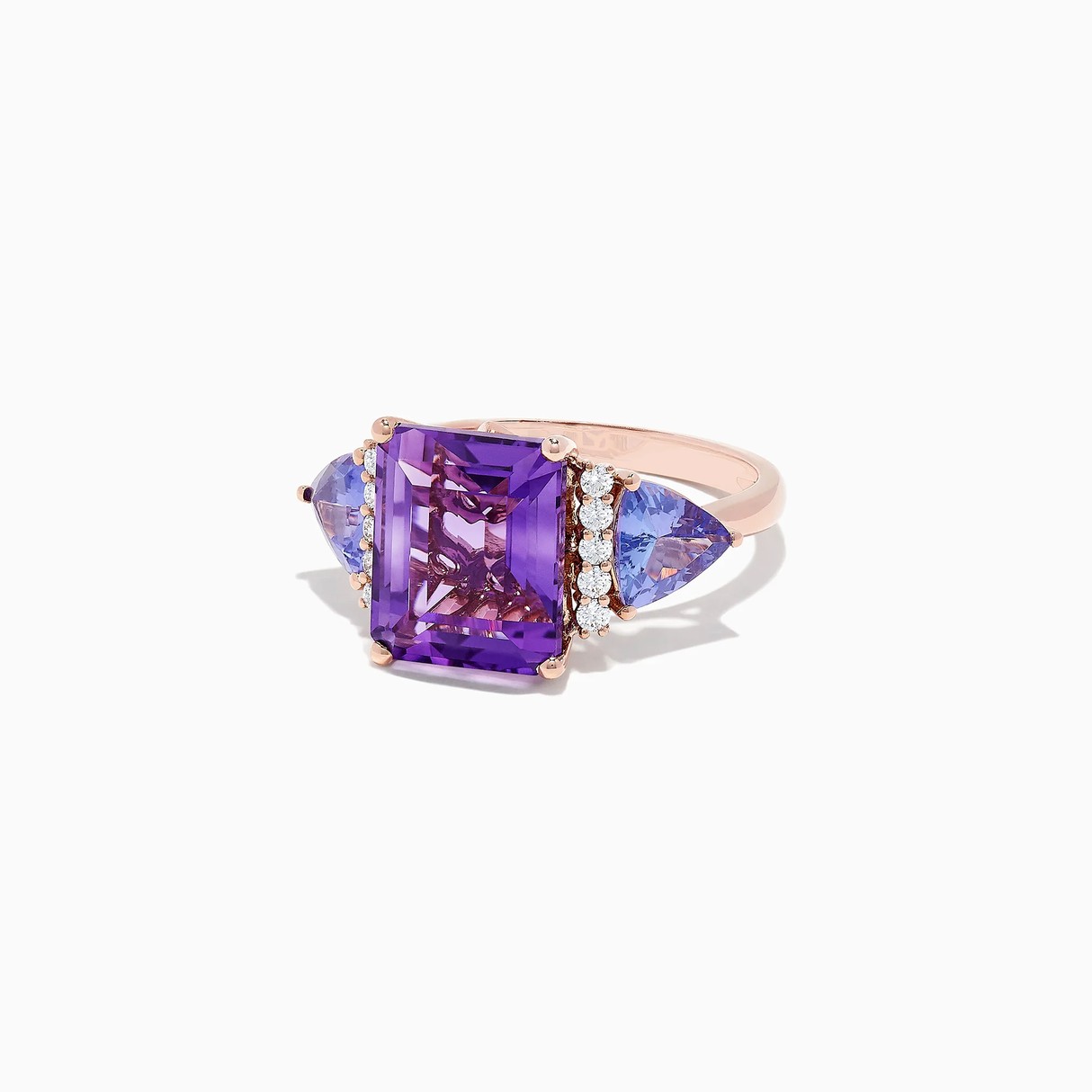
The most prized amethyst shows a deep, strongly saturated royal purple, ideally of medium to medium-dark tone, with secondary flashes of red or blue that give the finest stones their inner fire. The historic benchmark is the so-called Siberian or Deep Russian purple, a rich violet that glows rather than darkens. Pale, washed-out stones look watery, while colours so dark they read almost black lose their glow under soft indoor light, so balance is the goal.
Tone, zoning and the cutter's art
Amethyst frequently grows with colour zoning, where the purple concentrates in bands or patches rather than spreading evenly through the crystal. A skilled cutter orients the rough to spread that colour across the face of the finished stone, which is why cut and colour are inseparable in amethyst. View a stone face-up in more than one light before deciding, because the difference between an even, saturated gem and a zoned one is obvious once you know to look.
Amethyst at a Glance
The essentials every buyer should carry into the boutique:
| Property | Amethyst detail |
|---|---|
| Mineral | Quartz, the purple variety |
| Mohs hardness | 7, good toughness, no cleavage |
| Colour range | Pale lilac to deep royal purple, finest with red or blue flashes |
| Main sources | Brazil, Uruguay, Zambia, Bolivia |
| Birthstone | February, also the sixth anniversary gem |
| Common treatment | Usually untreated; some heated to lighten, or to create citrine |
| Care | Warm soapy water and a soft brush; keep from prolonged strong sunlight |
Clarity, Cut and Origins
Clarity you can expect
Facet-grade amethyst is typically eye-clean and brightly transparent, so visible inclusions are not the norm and should lower the price when present. Hold the stone to the light and look for a clean, glassy interior; the best amethyst has nothing to hide. Because clean material is plentiful, there is rarely any reason to accept a cloudy or heavily included gem.
Where the finest comes from
Brazil and Uruguay produce much of the world's amethyst, with Uruguayan stones often showing a particularly deep, saturated purple, while Zambia yields richly coloured material with strong red flashes and Bolivia gives us ametrine, the natural marriage of amethyst and citrine in a single crystal. Origin is far less a value driver here than it is in ruby or sapphire, so let your eye, not the locality, lead the decision.
What Drives the Value
When you compare two amethysts, weigh them in this order of importance:
| Factor | What to look for | Why it matters |
|---|---|---|
| Colour | Deep, even royal purple with red or blue flashes | By far the leading value factor in amethyst |
| Clarity | Eye-clean and transparent | Clean material is plentiful, so insist on it |
| Cut | Even colour spread and a lively return of light | Tames natural zoning and lifts brilliance |
| Carat | Generous sizes widely available | Large clean stones are attainable; top colour still commands a premium |
Treatments and Synthetics
Most amethyst is sold untreated, which is part of its honest appeal. Some material is gently heated to lighten an overly dark colour, or, at higher temperatures, transformed into the yellow of citrine or the green of prasiolite, and these changes are stable and permanent. Be aware, too, that synthetic amethyst grown in the laboratory has existed for decades and can be difficult to separate from natural stone by eye alone. None of this is a problem when it is disclosed, and we tell you plainly whether a stone is natural and untreated, heated, or laboratory-grown, so you know exactly what you are buying. Honest disclosure is the thread running through our coloured gemstone guide.
Buy amethyst for its purple first and its clarity second. A deep, even royal violet with a flash of red is the whole game.
Durability, Birthstone and Care
Everyday durability
Amethyst measures 7 on the Mohs scale with good toughness and no troublesome cleavage, which makes it dependable for everyday wear, including rings, with ordinary care. Its one real sensitivity is light, because prolonged exposure to strong sunlight or high heat can, over many years, fade the purple, so avoid leaving amethyst on a sunny windowsill. Set in a precious metal you love, it will give decades of pleasure.
The February birthstone
Amethyst is the birthstone for February and the traditional gift for the sixth wedding anniversary, which makes it both meaningful and personal. See where it sits in the calendar in our birthstones by month guide, and find ideas built around it in our anniversary jewellery gift guide.
Caring for amethyst
Clean amethyst with warm soapy water and a soft brush, then rinse and pat dry. Ultrasonic cleaning is generally safe for natural, untreated stones, though gentle hand cleaning is always the safest habit, and steamers are best avoided because of the heat. Store it apart from harder gems such as sapphire and diamond so nothing scratches its surface, following the same routine set out in our jewellery care guide.
Buying Amethyst in Grand Cayman
From a deep Siberian-purple solitaire to a generous emerald-cut cocktail ring, our GIA-certified gemologists will help you choose colour, cut and setting with confidence. Browse our coloured gemstones and fine jewellery, see how each purple behaves under daylight and lamplight, and ask anything you like with no pressure. Visit us in George Town, Grand Cayman, where no appointment is needed and every purchase is entirely tax-free, with no sales tax and no VAT. When you are ready, come and find us on the waterfront.