Few gemstones command attention quite like a blue diamond. Prized by collectors for a colour that ranges from soft sky to deep midnight, blue diamonds are among the rarest and most coveted stones on earth. Whether you are drawn to a fancy blue diamond ring, a pendant that catches the Caribbean light, or a pair of statement earrings, a little knowledge about how these stones form, how they are graded and how they are priced will help you buy with genuine confidence.
In short: blue diamonds owe their colour to trace boron and are sold in natural, treated and lab-grown forms, each at a very different price. Judge a stone on colour intensity first, insist on independent certification, and browse our certified diamonds or read our overview of fancy coloured diamonds before you commit.
What are blue diamonds?
A blue diamond is a natural or laboratory-created diamond that shows a distinct blue body colour rather than the near-colourless appearance most people picture. Among coloured diamonds, blue is one of the scarcest hues, far rarer than yellow or brown and rivalled only by red and green. For every natural blue diamond that reaches the market, many thousands of colourless stones are cut and sold, which is a large part of why blue diamonds carry such prestige and such value.
Where the blue colour comes from
The colour is not a coating or a trick of the light. It is created deep within the stone by trace amounts of boron caught in the carbon lattice as the diamond grew. Boron absorbs light from the red and yellow end of the spectrum and lets blue pass through, giving the stone its characteristic tone. Depending on other trace elements and structural features, a blue diamond may lean towards a pure blue, a greyish-blue or a greenish-blue, and it is this exact balance of hue that a grading laboratory sets out to describe.
Natural, treated and lab-grown blue diamonds
Not every blue diamond forms the same way, and the route to that colour has an enormous effect on rarity and price. There are three broad categories a buyer will meet, and a reputable jeweller will always tell you which one you are looking at.
| Type | How the blue forms | Rarity | Typical value | On the report |
|---|---|---|---|---|
| Natural blue | Boron present as the diamond formed deep in the earth | Extremely rare | Highest, occasionally exceptional | Colour origin stated as natural |
| Treated blue | Colour added after cutting by irradiation or HPHT | Common, begins as a less valuable diamond | Moderate | Stated as treated or colour enhanced |
| Lab-grown blue | Boron introduced during laboratory growth | Made to order, not rare | Most accessible | Stated as laboratory-grown |
Treated and lab-grown stones are entirely genuine diamonds; the difference lies in how the colour was achieved and, therefore, in rarity and price. If you are weighing the merits of each, our guide to natural versus lab-grown diamonds explains the trade-offs in more depth.
How blue diamonds are graded
Colourless diamonds are graded on a scale that runs from D to Z, where the aim is the absence of colour. Blue diamonds work in the opposite direction: here colour is the prize, and the grading system is built to capture how much of it a stone shows.
Fancy colour intensity
The Gemological Institute of America describes coloured diamonds using three linked qualities: hue (the basic colour), tone (how light or dark it is) and saturation (how strong or pure it appears). These combine into intensity grades that, for blue diamonds, run broadly from Faint and Very Light through Fancy Light, Fancy and Fancy Intense to Fancy Vivid, Fancy Deep and Fancy Dark. As a rule, the stronger and purer the blue, the rarer and more valuable the stone, with Fancy Vivid and Fancy Deep grades commanding the greatest premiums. Modifying colours such as grey or green are noted too, and a purer blue is generally worth more than a greyish-blue of the same intensity.
How the 4Cs differ for coloured diamonds
The familiar four Cs still apply, but their order of priority changes for a coloured stone:
- Colour comes first. It is the single largest driver of value, and intensity outweighs every other factor for a blue diamond.
- Cut is judged differently. A cutter shapes a coloured diamond to deepen and concentrate its hue rather than to maximise sparkle, so proportions that would be unusual in a colourless stone are often ideal here.
- Clarity is more forgiving. Small inclusions are far less noticeable against a saturated body colour, so a slightly lower clarity grade rarely detracts from the beauty of a blue diamond.
- Carat weight still counts, but a smaller stone with a vivid, even blue will usually outshine and outvalue a larger one with a pale or uneven colour.
If you would like to understand the colour dimension in full, our diamond colour grades guide sets out how the scales work for both colourless and fancy coloured stones.
GIA certification for coloured diamonds
Because so much value rests on colour and origin, independent certification is essential when you buy a blue diamond. The GIA issues a dedicated Coloured Diamond Grading Report and a Coloured Diamond Identification and Origin Report, which go further than a standard report by stating whether the colour is natural, treated or laboratory-grown. That single line protects your money, and no serious purchase should proceed without it. Our primer on understanding GIA certification explains how to read a report, and every coloured diamond we sell is independently certified.
Blue diamond jewellery: rings, pendants, earrings and bands
A blue diamond can be set into almost any piece, and the right choice depends on how you want to wear the colour.
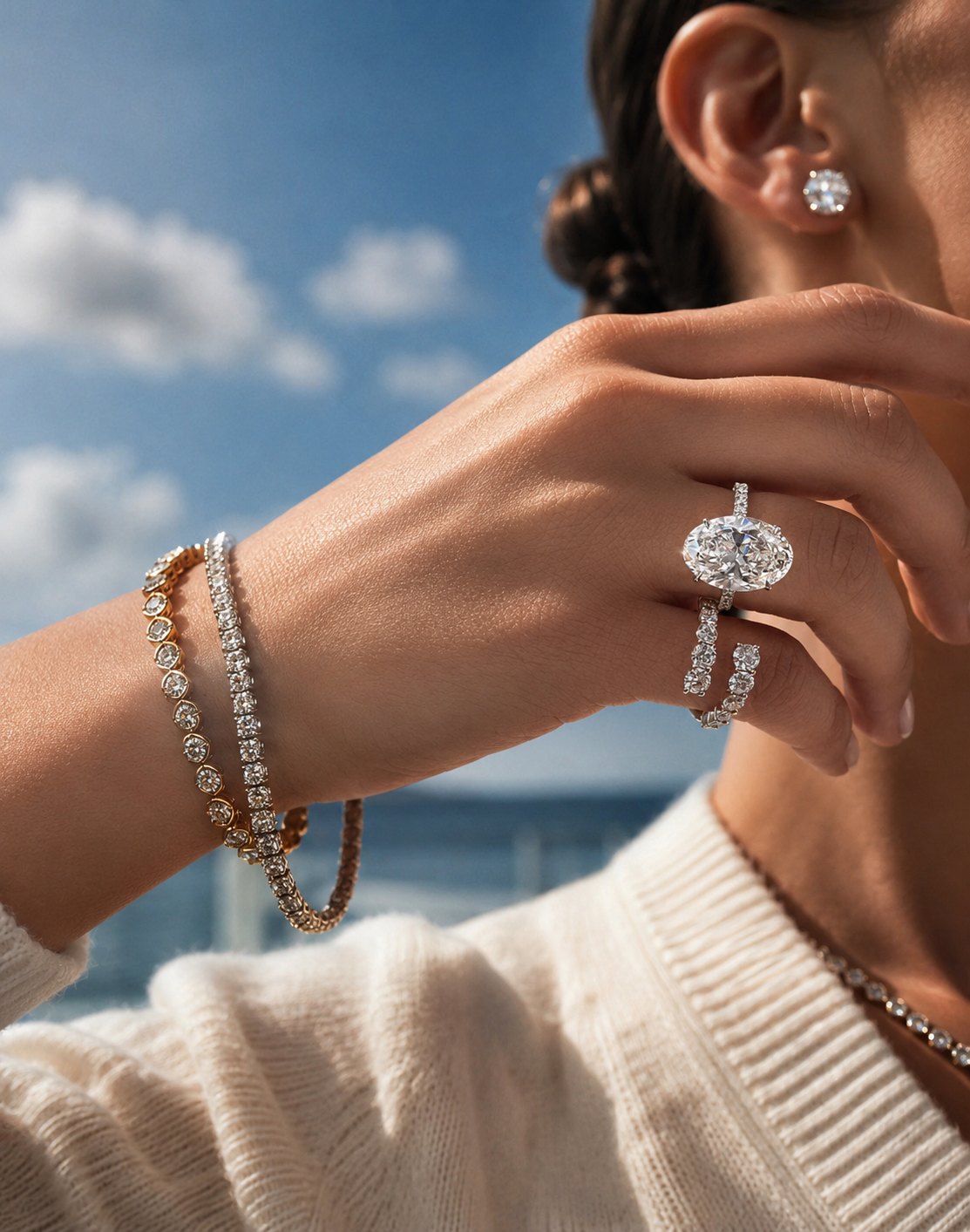
- Rings: a blue diamond ring makes an unforgettable centrepiece, whether as a solitaire or flanked by colourless diamonds that make the blue appear even deeper. It is an increasingly popular choice for an unconventional engagement ring.
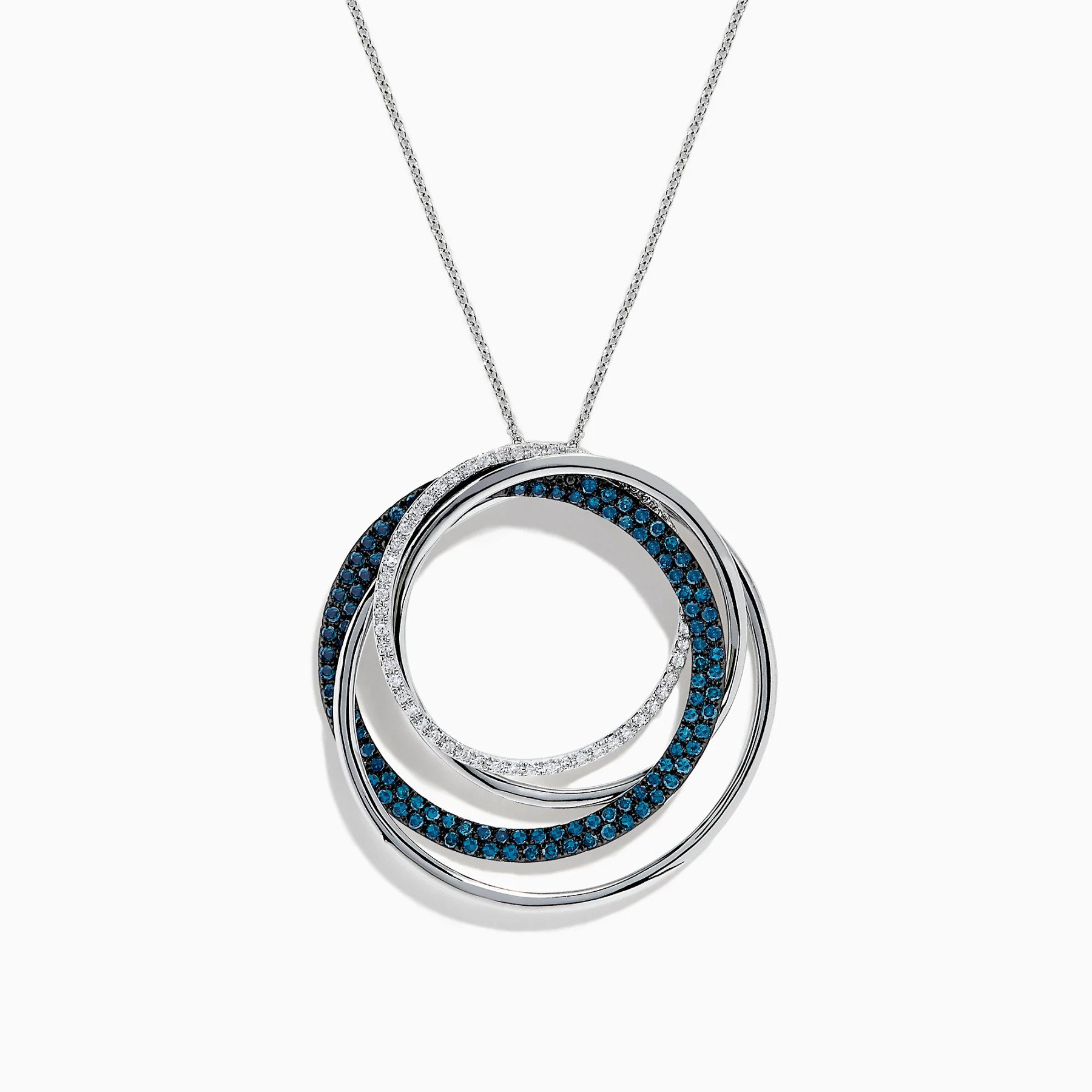
- Pendants: a pendant lifts the stone towards the face and lets daylight move through it, which makes it a flattering home for a vivid blue.
- Earrings: matched pairs are especially prized, because finding two blue diamonds of identical hue, tone and saturation is genuinely difficult, so a well-matched pair is a quiet mark of quality.
- Bands and eternity rings: smaller blue diamonds set along a band add a ribbon of colour and pair beautifully with a colourless centre stone.
Many couples set a blue diamond at the heart of a bespoke engagement ring, while others prefer it as a pendant or earrings within a wider collection of fine jewellery. Whatever the piece, our in-house gemologists can design and build it on the island.
Caring for a blue diamond
A blue diamond is as hard as any other diamond and will last for generations with simple care. Clean it with warm water, a little mild soap and a soft brush, then rinse and pat it dry. Avoid harsh chemicals, remove the piece before heavy work or swimming, and have the setting and prongs checked once or twice a year so the stone stays secure. Every piece we sell carries lifetime after-care, including cleaning, prong inspection and resizing.
Price and rarity
Blue diamonds are among the most valuable gemstones by weight, and their price reflects a supply that is genuinely tiny. A natural stone with a strong, even colour can reach figures far beyond a colourless diamond of the same size, while treated and lab-grown stones bring the colour within reach of a much wider range of budgets.
A natural fancy blue diamond is one of nature's rarest creations, and even a modest example represents a tiny fraction of the world's annual diamond production.
When you compare stones, look first at intensity, then at how evenly the colour reads across the stone, and only then at carat weight. A vivid, evenly coloured one carat blue will almost always be more desirable, and hold its value better, than a larger stone with a pale or patchy hue.
Buying blue diamonds tax-free in Grand Cayman
The Cayman Islands levy no sales tax and no value added tax, which means fine jewellery here is genuinely tax-free. For a coloured diamond, where the sums involved can be significant, that difference is meaningful: a GIA-certified diamond can cost roughly 20 to 35 percent less than the equivalent stone in the United States, the United Kingdom or Europe. You can browse and buy without an appointment, and every purchase includes free insured worldwide shipping, so your stone travels home safely.
For more on how and where to buy, see our guide to where to buy diamonds in Grand Cayman, our overview of the best jewellery stores in George Town, and the details of tax-free jewellery shopping on the island.
Why IDC Cayman
IDC Cayman has stood on the George Town waterfront since 2011, at 38 Seafarers Way. We are owned and run by gemologists, and every blue diamond we offer is GIA-certified and sold at genuinely tax-free prices, with bespoke design and repair carried out on the island by our in-house team. Every piece is backed by lifetime after-care, including cleaning, prong inspection and resizing. Learn more about us, explore our diamond collection, or contact us to view blue diamonds in person.