
Carat is the most talked-about of the 4Cs and the most misunderstood, because nearly everyone assumes it describes size when it actually describes weight. Two diamonds of identical carat weight can look noticeably different in size on the hand, depending on their shape and cut. Knowing how weight translates into visible presence is how you buy a diamond that looks every bit as large as you hoped, often for considerably less.
In short: carat is weight, not size, and face-up spread is what your eye reads. Elongated shapes look larger per carat than rounds, a well-proportioned cut spreads weight across the face, and buying just below a magic size such as 0.90 instead of 1.00 carat saves real money with no visible loss. This pairs with our complete diamond buying guide.
Carat Is Weight, Not Size
One carat equals one fifth of a gram, divided into one hundred points, so a half-carat diamond is fifty points. Because carat is purely a measure of mass, it tells you nothing directly about how big the diamond will appear when viewed from above, which is all anyone sees once it is set.
Points, Grams and Total Weight
You will sometimes see weight written as points, so 0.75 carat reads as seventy-five points. On rings with several stones, look for the phrase total carat weight, which adds up every diamond rather than describing the centre stone alone. A ring listed at one carat total weight with a small centre and many accent stones is a very different thing from a one carat solitaire, so always ask which figure you are being quoted.
Face-Up Spread Is What You See
What you actually see on the hand is the face-up area, often called the spread, measured in millimetres. A stone can carry its weight up in a thick, deep body that hides beneath the setting, or spread it across a wide, generous face, so two diamonds of one carat each can differ in the size your eye registers. When comparing diamonds, always ask for the millimetre measurements, not just the carat, and read them alongside the cut grade.
Why Spread Varies by Shape and Cut
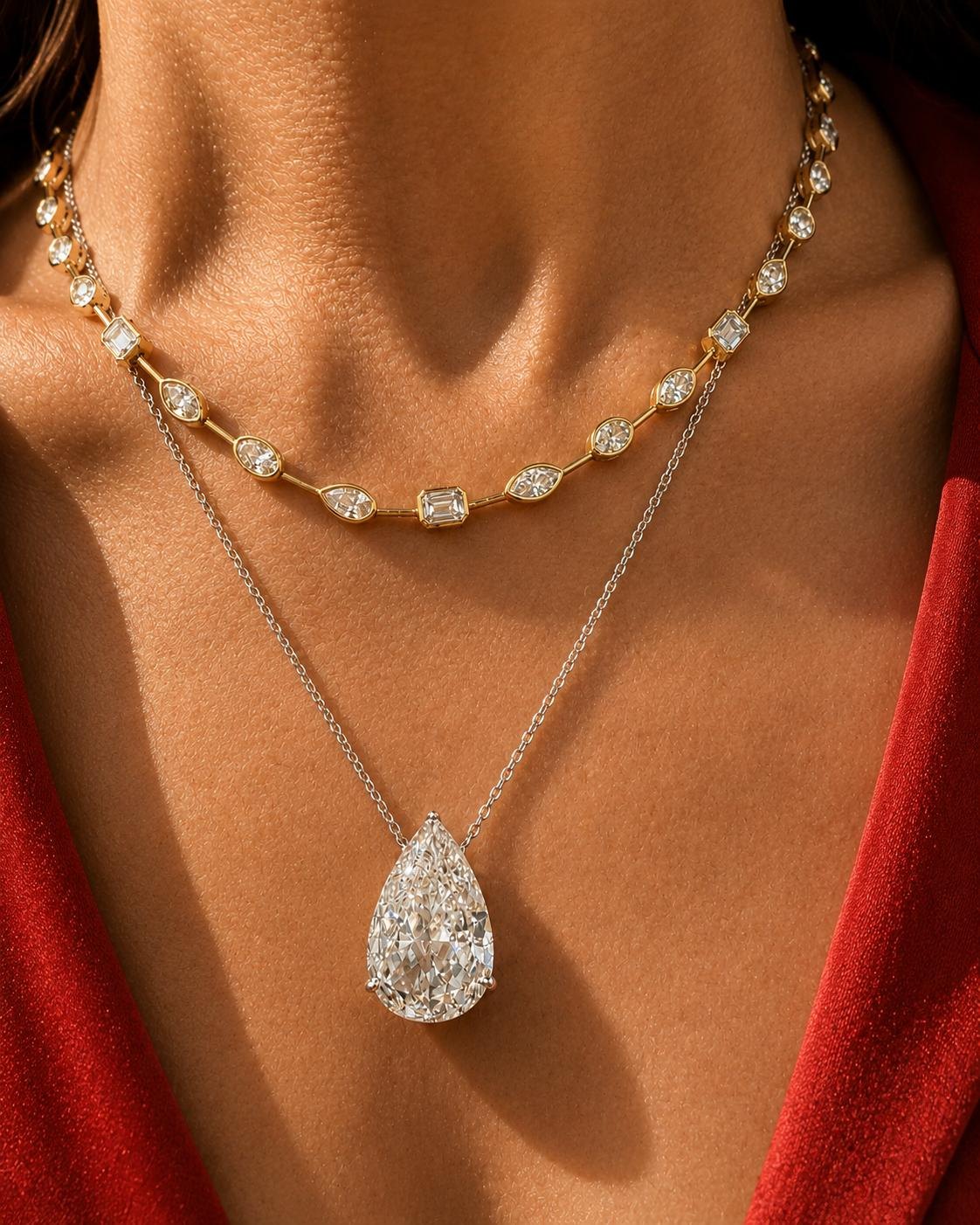
A round brilliant concentrates more of its weight in depth, so it tends to look smaller per carat than elongated shapes, while marquise, oval, pear and emerald cuts spread their weight across a larger surface and look bigger for the same weight, sometimes strikingly so. The table below gives typical face-up measurements for a one carat stone in each shape, a useful guide when you are weighing size against budget. Our diamond shapes guide explores the character of each.
| Shape | Typical face-up size at 1 carat | Apparent size |
|---|---|---|
| Round brilliant | About 6.5 mm across | The benchmark |
| Princess | About 5.5 mm square | Compact for its weight |
| Cushion | About 6.0 mm | Slightly compact |
| Oval | About 7.7 by 5.7 mm | Looks larger |
| Emerald | About 7.0 by 5.0 mm | Looks larger, elegant |
| Pear | About 8.5 by 5.5 mm | Looks larger |
| Marquise | About 10.0 by 5.0 mm | Looks largest |
How Cut Quality Changes Apparent Size
Cut quality changes apparent size just as much as shape. A diamond cut too deep buries weight below the girdle where it cannot be seen, while a well-proportioned Excellent or Very Good cut spreads weight across the face and often looks larger and livelier than a heavier, poorly cut stone. This is one more reason we tell every client to choose cut first: it buys both sparkle and size at once.
Magic Sizes and the Value Just Below Them
Diamond prices jump sharply at the round, headline weights the trade calls magic sizes, such as 0.50, 0.75, 1.00, 1.50 and 2.00 carats, because demand clusters there. The practical opportunity is to buy just below them. A 0.90 carat diamond is visually almost indistinguishable from a full 1.00 carat, often a difference of a fraction of a millimetre across the width, yet it sits below the premium that the round number commands.
| Magic size | Smart alternative | Visible difference |
|---|---|---|
| 0.50 carat | 0.45 carat | None to the eye |
| 1.00 carat | 0.90 carat | A fraction of a millimetre |
| 1.50 carat | 1.40 carat | Imperceptible once set |
| 2.00 carat | 1.90 carat | Imperceptible once set |
Spend the Saving Where It Shows
Choosing 0.90 over 1.00, or 1.40 over 1.50, frees up real value with no visible loss of size. That saving is best redirected into an eye-clean clarity grade, a whiter colour, or a better setting. Because every purchase in George Town is entirely tax-free, the budget goes further again before you have even started.
Balancing Carat Against the Other 3Cs
Carat is the easiest C to chase, because size is the most visible measure of a diamond, yet it is rarely the wisest place to spend your whole budget. A larger stone with a weak cut, a visible inclusion or an obvious tint will always look less beautiful than a slightly smaller stone that is lively, eye-clean and white. The goal is a diamond that looks wonderful, not simply one that weighs a particular number.
When to Trade Size for Quality
A practical approach is to set the size you want, then choose the best cut, colour and clarity that size allows rather than reaching for a heavier stone of poorer grades. If the budget is tight, drop a tenth of a carat before you compromise on cut, because cut is what makes a diamond sparkle and even look a touch larger. Our complete diamond buying guide walks through how to weigh all four together.
How to Make a Diamond Look Larger
Several choices add visible presence without adding carat weight, which means without adding cost. Combine two or three and the effect is striking.
- Choose an elongated shape such as oval, marquise or pear, which look larger than a round of the same carat weight.
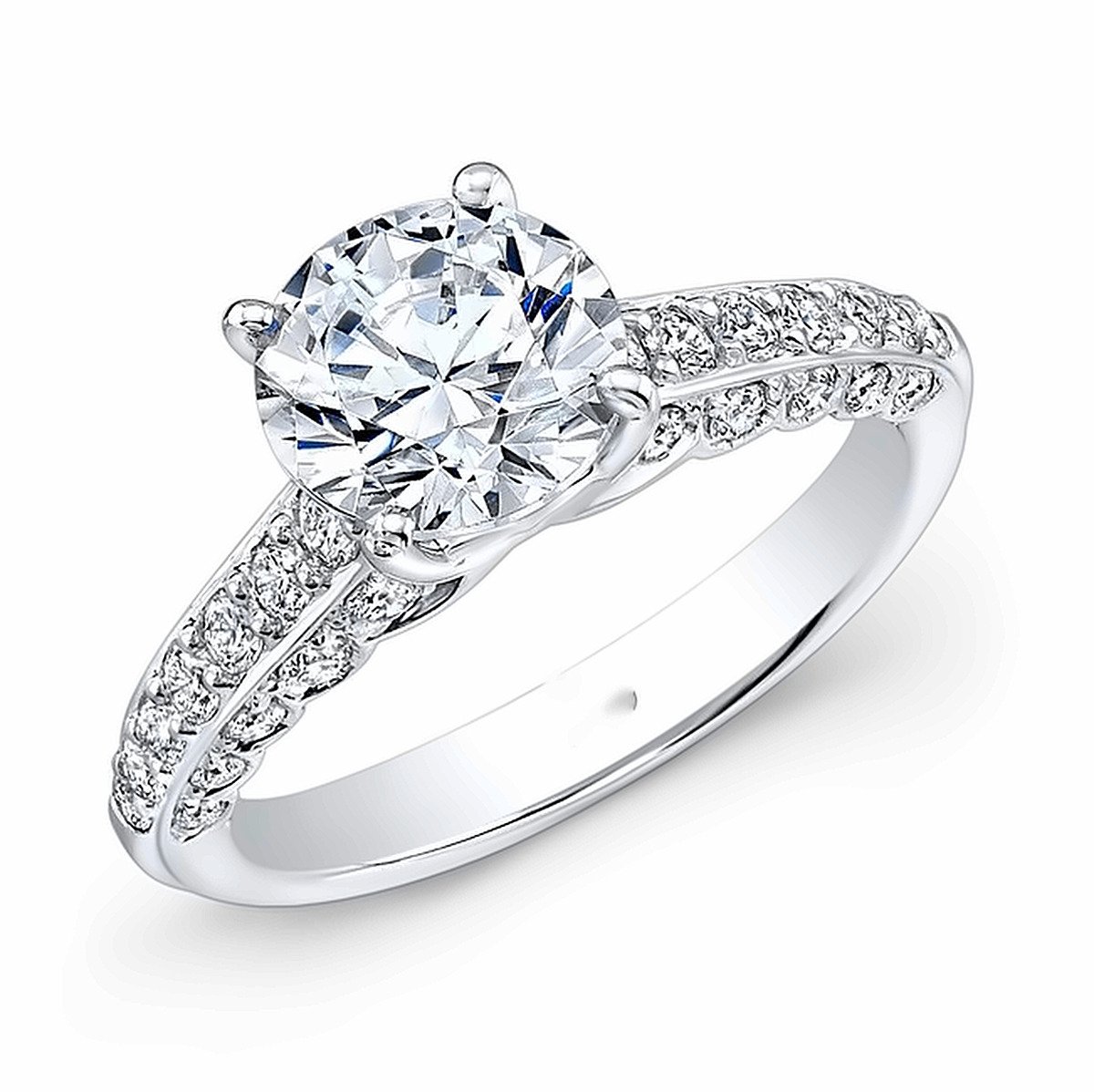
- Add a halo of small diamonds around the centre stone, which can make it appear a noticeable step larger while adding sparkle.
- Select a slimmer band and finer, lower-profile prongs, which make the centre diamond look proportionally bigger.
- Insist on a well-proportioned cut, so the weight is spread across the face rather than hidden in the depth.
- Consider a thin bezel or a hidden halo, both of which frame the stone and lift its apparent size.
Carat and the Finger
Remember finger size too: the same diamond looks more generous on a slender finger and more modest on a broader one, so consider the wearer when judging how a carat weight will read. Our ring size guide helps you get the band right, and our guide to choosing an engagement ring ties shape, setting and size together. If a halo appeals, the halo versus solitaire guide is worth a read.
The goal is presence on the hand, not a number on a receipt.
At IDC Cayman in George Town, Grand Cayman, our gemmologists will help you balance carat, shape and cut to maximise visible size, with every diamond GIA-certified and entirely tax-free. Browse our loose certified diamonds and engagement rings, then visit us with no appointment needed; walk-ins are always welcome and every piece ships worldwide fully insured. We are glad to help you choose in person.