
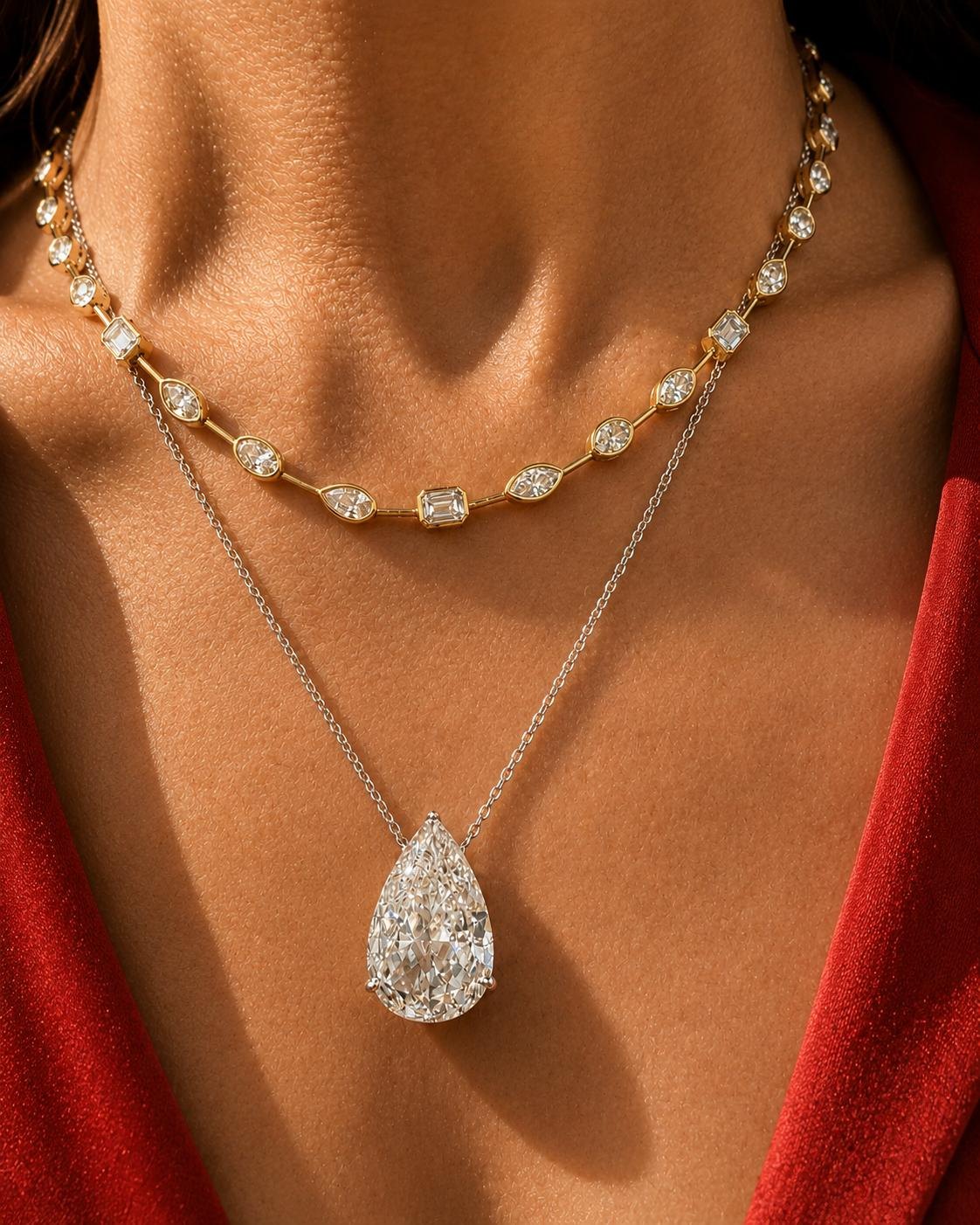
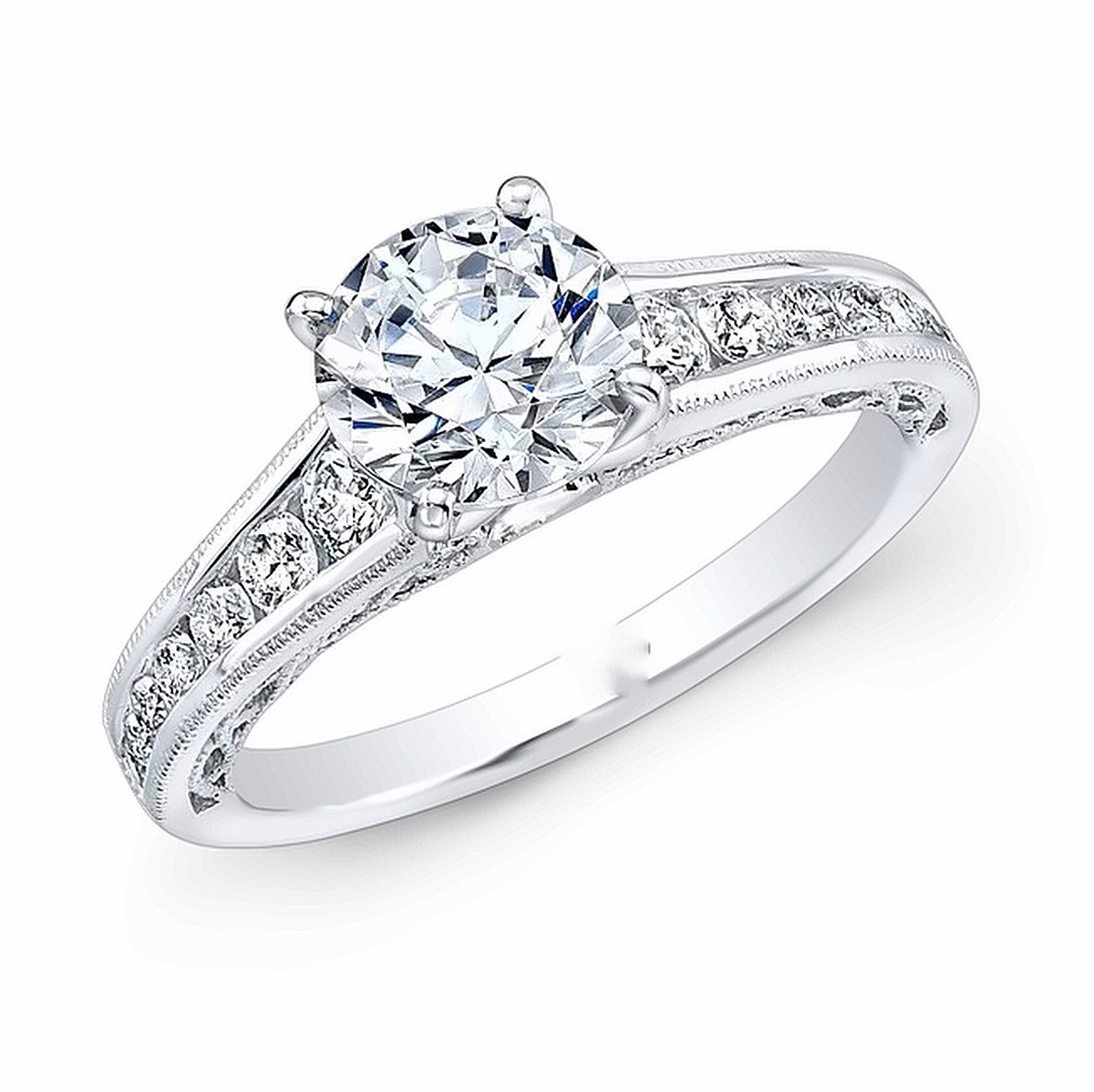
Of the four characteristics that define a diamond, cut is the one that breathes life into the stone. A diamond can be flawless and perfectly colourless, yet if it is poorly cut it will sit dull and lifeless on the hand. Cut is not the shape of the diamond; it is the precision of its faceting, the angles and proportions that decide how light enters, bounces and returns to your eye. It is also the only one of the 4Cs shaped entirely by human skill rather than nature, which is why we tell every client to choose cut first: a superb cut lifts modest colour and clarity, while a weak cut wastes even the finest raw material.
In short: for round brilliants, buy Excellent or Very Good cut and nothing below, because cut governs the brilliance, fire and scintillation you actually see. A beautifully cut diamond of modest colour will out-sparkle a poorly cut stone of higher colour and clarity every time, so spend here first and let the other 4Cs follow. Read this alongside our complete diamond buying guide.
The GIA Cut Scale, From Excellent to Poor
The Gemological Institute of America grades the cut of round brilliant diamonds on a five-tier scale, assessed under controlled lighting and based on measured proportions rather than opinion. A master cutter will sacrifice weight to reach ideal angles, because a heavier stone cut for size rather than light performance always looks flat. The grade you choose has more effect on how the diamond looks than any other single decision.
What Each Grade Means
- Excellent: the top grade, returning the maximum amount of light for intense brilliance and fire, cut to ideal angles with crisp facet alignment.
- Very Good: very nearly the performance of Excellent, with light return that is hard to tell apart by eye, often at gentler value.
- Good: a pleasing sparkle, though a trained eye will notice some light escaping through the bottom or the sides.
- Fair: noticeably less lively, with proportions that let light leak away rather than reflect back to the viewer.
- Poor: cut for weight at the expense of beauty, appearing dull, dark or glassy even to an untrained eye.
| Cut grade | Light performance | Our recommendation |
|---|---|---|
| Excellent | Maximum brilliance and fire, crisp and lively | First choice for a round brilliant |
| Very Good | Nearly identical to Excellent by eye | Excellent value, confidently recommended |
| Good | Bright but with visible light loss | Only with careful in-person comparison |
| Fair | Noticeably dull, weight cut over beauty | Generally avoid |
| Poor | Dark or glassy, lifeless | Avoid |
Which Grade to Choose
For round brilliants we recommend Excellent or Very Good and nothing below. Very Good often delivers the look of Excellent at gentler value, money that is better redirected into the colour or clarity you can actually see, or into a touch more carat weight. Below Very Good, light begins to leak in ways the eye registers, so the savings are false economy.
How Cut Controls Light: Brilliance, Fire and Scintillation
A well-cut diamond performs in three distinct ways, and gemmologists name each effect. Brilliance is the white light that reflects back from the surface and interior, the bright, lively glow. Fire is the rainbow flash, the dispersion of white light into spectral colours as it bends through the facets. Scintillation is the sparkle and contrast of light and dark you see as the diamond, the hand or the light source moves. Only correct proportions deliver all three at once; cut too shallow and light escapes through the bottom, cut too deep and it leaks out of the sides, leaving a dark centre.
Proportions, Symmetry and Polish
Three measured factors sit beneath the overall cut grade. Proportions are the relationships between table size, crown angle, pavilion depth and total depth, and they matter most because they govern light return. Symmetry describes how precisely the facets align and meet, while polish reflects the smoothness of each facet surface, where minor flaws can scatter light and soften sparkle. On a GIA report you will find polish and symmetry rated separately, and for the finest stones you want both at Excellent or Very Good.
The Numbers Behind a Great Cut
If you enjoy the detail, these are the commonly cited ideal ranges for a round brilliant. They are a guide rather than a rulebook, because the figures work together, but a stone that sits within them and grades Excellent is almost always beautifully lively.
| Proportion | Commonly cited ideal (round brilliant) | Why it matters |
|---|---|---|
| Table | 54 to 57 percent | Balances brilliance against fire |
| Total depth | 59 to 62.5 percent | Too shallow or too deep and light leaks away |
| Crown angle | 34 to 35 degrees | Works with the pavilion to return light |
| Pavilion depth | 42.5 to 43.5 percent | The most sensitive figure for light return |
| Girdle | Thin to slightly thick | Very thin risks chipping, very thick hides weight |
| Culet | None to very small | A large culet shows as a dark spot through the table |
Cut and the Fancy Shapes
GIA assigns an overall cut grade only to round brilliants, so for fancy shapes such as oval, cushion, pear and emerald there is no single Excellent-to-Poor verdict on the report. This is exactly where an experienced jeweller earns their keep, judging proportions, symmetry and polish by eye and by measurement. Our diamond shapes guide explains how each outline behaves, and our engagement rings show every shape set on the hand.
Judging an Uncertified Cut by Eye
With a fancy shape, watch for even light return across the whole stone rather than a dark bow-tie running through the centre, a common fault in ovals and marquises cut for weight. Look for a lively, balanced face with no large dull zones, and crisp, well-aligned facets. We are always happy to put two stones side by side so you can see the difference cut makes, with no pressure and no appointment needed.
Why Cut Outranks the Other Cs
This is the principle that surprises buyers most: place an Excellent-cut, near-colourless diamond beside a Poor-cut stone of higher colour and clarity, and the well-cut one looks brighter, whiter and more alive, because brilliance masks faint colour and draws the eye away from minor inclusions. Cut is the multiplier that makes everything else you have paid for actually show, which is why our complete diamond buying guide puts it ahead of colour, clarity and carat alike.
A beautifully cut diamond of modest colour will out-sparkle a poorly cut stone two grades higher every single time.
Every diamond at IDC Cayman is GIA-certified, so the cut grade you are shown is independently verified, never an in-house claim, whether you choose natural or lab-grown. Browse our loose certified diamonds, then visit our waterfront boutique in George Town, Grand Cayman, where you can compare cut grades side by side with no appointment needed. Every purchase is entirely tax-free, and when you are ready to choose a setting you can come and see us on the George Town waterfront.