
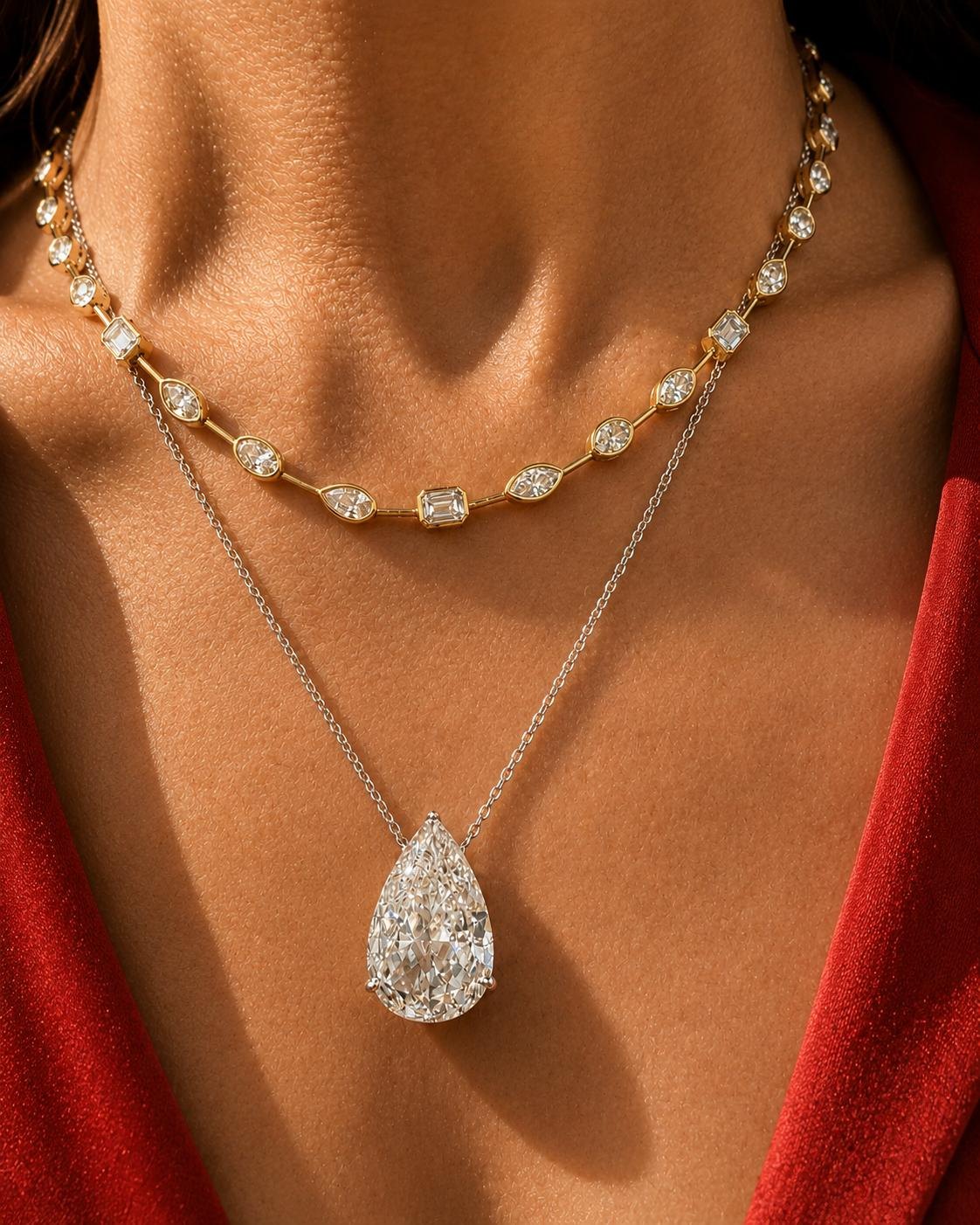
Choosing a diamond shape is the most personal decision in the whole process, because shape is what people notice first and what reflects her taste most directly. Some shapes blaze with sparkle, others whisper a quieter, architectural elegance, and the right one should suit her hand, her style and the way she wears jewellery every day. Here is how the ten most popular diamond shapes differ, and how to choose the one that will feel unmistakably hers.
In short: round brilliant is the timeless, most brilliant choice and the only shape GIA awards a cut grade; elongated shapes such as oval, pear and marquise look larger per carat and flatter the finger; and step cuts such as emerald and Asscher trade sparkle for clean, architectural calm. Read this with our complete diamond buying guide and browse our engagement rings to see each one set.
Brilliant Cuts vs Step Cuts
Diamond shapes fall broadly into two families, and settling which you prefer is the first thing to do.
The Two Faceting Families
Brilliant cuts, with their many triangular and kite-shaped facets, are engineered for maximum sparkle and forgiveness; round, oval, cushion, pear, marquise, princess and radiant all belong here. Step cuts, such as emerald and Asscher, use long, parallel facets that create a calmer, mirror-like play of light known as the hall-of-mirrors effect. Neither is better. It is the difference between fireworks and the clean lines of fine architecture.
What This Means for the Other 4Cs
The family you choose changes how much clarity and colour you should buy. Busy brilliant facets hide minor inclusions and faint colour, so you can choose a slightly lower grade. Step cuts, with their open tables, reveal both, so they reward higher grades. Either way, cut quality decides how lively the stone looks.
A Shape-by-Shape Guide
Each of the ten shapes has its own personality, strengths and small things to watch. Use the snapshot below to narrow the field, then come and see your favourites in person, because nothing replaces the moment a shape sits on the hand.
- Round brilliant: the most popular and most studied shape, with unrivalled brilliance and the only shape GIA awards a cut grade. The safe, timeless choice.
- Oval: a brilliant cut with elongated grace that flatters and lengthens the finger and looks larger per carat than a round of the same weight.
- Cushion: a soft, pillow-shaped square with rounded corners, romantic and vintage in feel, with excellent fire and an antique charm.
- Princess: a sharp, square brilliant cut, modern and architectural, that delivers high sparkle for those who love clean geometry.
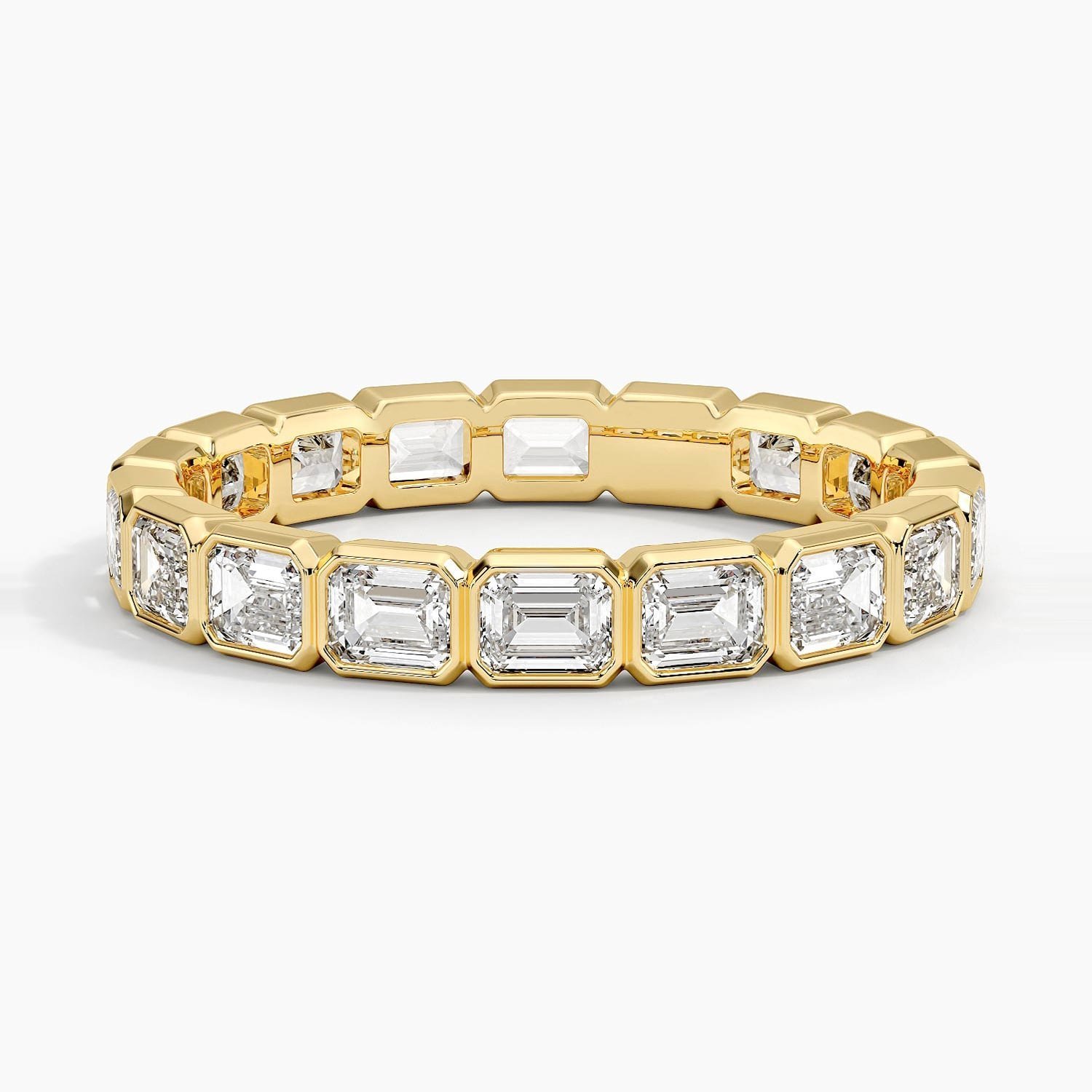
- Emerald: a step cut with long, elegant facets and an open table that rewards high clarity and shows a refined, understated sophistication.
- Radiant: the brilliant faceting of a round set inside a trimmed rectangular outline, combining serious sparkle with a flattering elongated shape.
- Pear: a teardrop blending round and marquise, distinctive and slimming on the finger when worn with the point toward the nail.
- Marquise: a long, pointed ellipse that maximises apparent size and dramatically lengthens the hand, bold and regal.
- Asscher: a square step cut with deep, concentric facets and striking vintage Art Deco character for lovers of symmetry.
- Heart: the most romantic shape, a brilliant cut that requires fine symmetry, ideal for those who want sentiment expressed openly.
| Shape | Family | Sparkle | Looks large per carat | Clarity to favour |
|---|---|---|---|---|
| Round | Brilliant | Highest | Benchmark | Flexible |
| Oval | Brilliant | High | Yes | Flexible |
| Cushion | Brilliant | High, soft fire | Average | Flexible |
| Princess | Brilliant | High | Compact | Flexible |
| Radiant | Brilliant | High | Yes | Flexible |
| Pear | Brilliant | High | Yes | Flexible, check the point |
| Marquise | Brilliant | High | Highest | Flexible, check the points |
| Emerald | Step | Subtle, hall of mirrors | Yes | Higher, VS2 or better |
| Asscher | Step | Subtle, hall of mirrors | Average | Higher, VS2 or better |
| Heart | Brilliant | High | Average | Flexible |
Shapes That Lengthen the Finger
If she has shorter fingers, or simply loves the illusion of length, elongated shapes are your allies. Oval, marquise, pear, emerald and radiant all draw the eye along the finger and make the hand appear slimmer and more graceful. Set lengthwise, these shapes also tend to look larger than their carat weight suggests, because more of the stone is presented face up, a point our carat and size guide explores in detail. A round or cushion, by contrast, sits more compactly and suits longer fingers or a daintier look.
Which Shapes Hide Inclusions or Colour
Faceting style changes how forgiving a shape is. The dense, busy faceting of brilliant cuts such as round, oval, cushion, pear and radiant scatters light in a way that camouflages minor inclusions and faint colour, so you can often choose a slightly lower clarity or colour grade without anyone noticing. Step cuts are less merciful: emerald and Asscher have large, open facets that act like windows, revealing inclusions and any hint of body colour, so they reward higher clarity and colour. Pointed shapes such as pear, marquise and heart concentrate colour at the tips, which is worth checking under good light.
Protecting and Wearing Each Shape
Beauty is only half the decision; how a shape lives on an active hand matters just as much, especially for a ring worn every day. A little forethought here keeps a diamond looking its best for a lifetime, and our guide to cleaning and caring for fine jewellery covers the upkeep in full.
Pointed Shapes Need a Little Protection
Pear, marquise and heart shapes taper to fine points, and those points are the most vulnerable part of any diamond. A well-made setting protects them, typically with a V-shaped prong that cups each tip, or a bezel that wraps the edge entirely. When you choose one of these shapes, ask how the points are secured, and favour a jeweller who finishes the setting with this care as standard.
Choosing a Shape for Everyday Wear
For a ring that will be worn while typing, gardening or carrying a child, a lower profile and a rounded outline tend to snag less and feel more secure. Round, oval and cushion sit comfortably for daily life, while high-set solitaires and very pointed shapes reward a slightly more careful wearer. None of this should override taste, but it is worth weighing alongside the setting and the 4Cs when you decide.
Matching Shape to Personality and Setting
Ultimately, shape should mirror personality. A classic soul gravitates to round or cushion, a modern minimalist to emerald or princess, and a romantic to oval, pear or heart. Setting style matters too: a three-stone design frames an elongated centre beautifully, as our three-stone engagement rings guide shows, while a halo lifts the apparent size of any shape, covered in our halo versus solitaire guide. Our guide to choosing an engagement ring brings shape, setting and the 4Cs together.
The right shape is the one that looks unmistakably hers the moment it sits on her hand.
Bring her style, and if you can her hand, to our waterfront boutique in George Town, Grand Cayman, where you can try every shape and see how it sits before deciding. Browse our certified diamonds, confirm each one against its GIA report, and take your time; every diamond is GIA-certified and entirely tax-free, walk-ins are always welcome with no appointment needed, and we ship worldwide fully insured. We would be delighted to help you in person.