
Diamond stud earrings are the most worn piece in fine jewellery, the first diamonds many people own and the last they would ever part with. They suit a boardroom, a beach and a black-tie evening with equal ease, ask nothing of the wearer, and quietly lift everything else. That very simplicity is what makes choosing them carefully so important, because with nothing to hide behind, the quality of the diamonds, the precision of the pair and the security of the backs are everything. This guide covers each in turn.
In short: think in terms of the weight per stone rather than the total, insist on a matched, GIA-certified pair, and choose a setting and back that suit how the studs will be worn. Prioritise cut for sparkle, choose a flattering size in the mirror, and buy in George Town to keep the whole purchase tax-free.
Total Carat Weight vs Weight Per Stone
The single most common misunderstanding about studs is how their size is described, so it is worth getting clear before anything else.
What you actually see
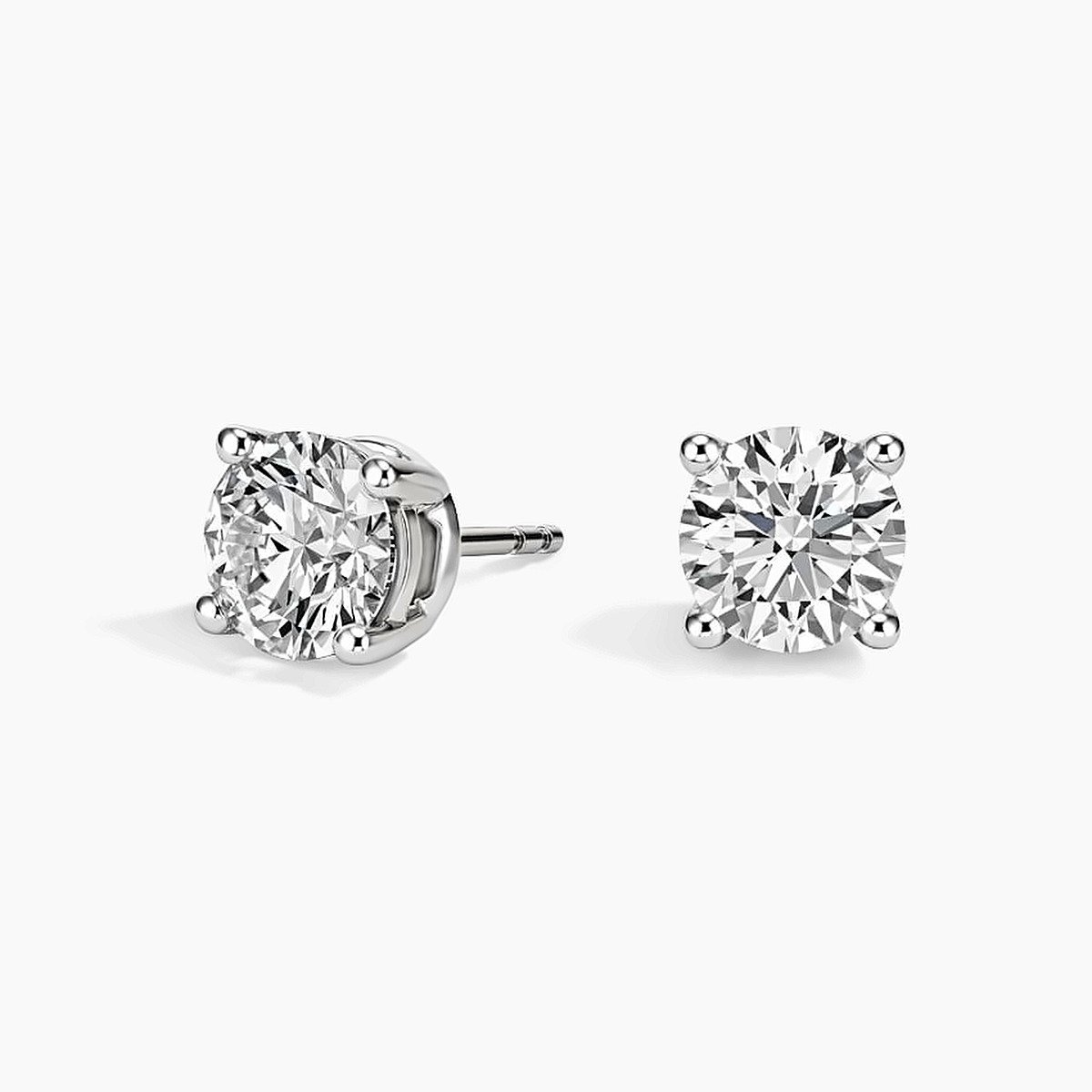
Studs are sold by total carat weight, the combined weight of the two diamonds, but what you actually see in the mirror is the weight per stone, which is half of that figure. A pair described by its total will look smaller on the ear than the number first suggests, so it helps to think in terms of the single diamond facing forward. Our carat and size guide explains how weight relates to the size you actually perceive.
Choosing a flattering size
When you choose a size, picture the wearer. A smaller, near-colourless stone reads as refined and is wonderful for everyday and for younger ears, while a larger stone makes more of a statement for evening or a milestone. Hold a pair up to the lobe in a mirror before deciding, because the right size is the one that flatters the face, not the one that sounds impressive. And because a stud sits still on the ear rather than moving in the light, cut quality matters more here than almost anywhere else.
Why a Matched, Certified Pair Matters
A solitaire ring is judged as one stone; studs are judged as two, and the eye is unforgiving of any difference between them.
The eye reads twins
The two diamonds should be matched for carat weight, colour, clarity and cut so they sparkle identically, sit at the same height, and look like true twins from across a room. Without that care, one stone can read warmer, cloudier or simply duller than the other, and the asymmetry is surprisingly easy to notice once you do.
What matching involves
Matching to that standard takes real selection, which is why a certified matched pair is worth seeking out, each diamond graded independently and chosen to mirror its partner. The same question of natural versus lab-grown applies to studs as to any diamond, and you can weigh it in our natural versus lab-grown guide; whichever you choose, insist that both stones are certified.
Settings: Martini, Basket and Bezel
The setting controls how much of each diamond shows, how much light reaches it, and how close the stud sits to the ear.
| Setting | Character | Best for |
|---|---|---|
| Four-prong martini | Shows the most stone, sits close to the lobe | A clean, modern everyday look |
| Basket | Lifts the stone, more light from beneath | Extra sparkle and a classic profile |
| Bezel | Smooth rim, fully protective | Active wearers and children |
Four-prong martini
The diamond sits in a compact triangular cup that hugs the lobe. It shows the most stone, lets in plenty of light, and sits very close to the ear, for a clean and contemporary look.
Basket
Four or more prongs rise from an open framework that lifts the diamond slightly and lets light flood in from beneath, for a touch more sparkle and a more traditional profile.
Bezel
A smooth rim of metal surrounds the whole stone. It is the most secure and snag-free setting, a little softer in sparkle but ideal for active wearers, children and anyone who never wants to worry.
Backs, Security and Metal
The back is the unsung hero of a stud earring, the small fitting that decides whether a treasured diamond stays on the ear.
Earring backs compared
| Back | Security | Best for |
|---|---|---|
| Screw back | Highest, threaded onto the post | Valuable studs, sleeping and travel |
| La pousette | High, locks and releases at a button | Everyday security with quick fastening |
| Push (friction) back | Good with a snug fit | Comfort and speed, checked over time |
Screw backs thread onto the post and are the most secure choice for valuable diamonds and for sleeping or travelling, though a little slower to fasten. La pousette backs use a small button that locks and releases the post, combining the security of a screw with the speed of a push, a favourite for fine studs. Push backs, also called friction backs, use a sprung butterfly that grips the post; quick and comfortable, and best paired with a snug fit that is checked from time to time.
Choosing the metal
14-carat and 18-carat white gold keep the look icy and bright, while yellow and rose gold add warmth, and the setting metal subtly affects how white the diamond appears. Match it to the rest of what you wear, and see our precious metals guide if you are deciding between 14-carat and 18-carat gold.
Studs as a Gift and the Complete Look
Few pieces work as hard, or mean as much, as a pair of diamond studs, which is why they are among the most loved gifts in all of jewellery.
A gift for a lifetime
Studs are given for an anniversary, a graduation or a first grown-up present, precisely because they will be worn for a lifetime, an idea we expand in our anniversary gift guide. Their versatility makes them a safe yet meaningful choice for almost anyone.
Part of the complete diamond look
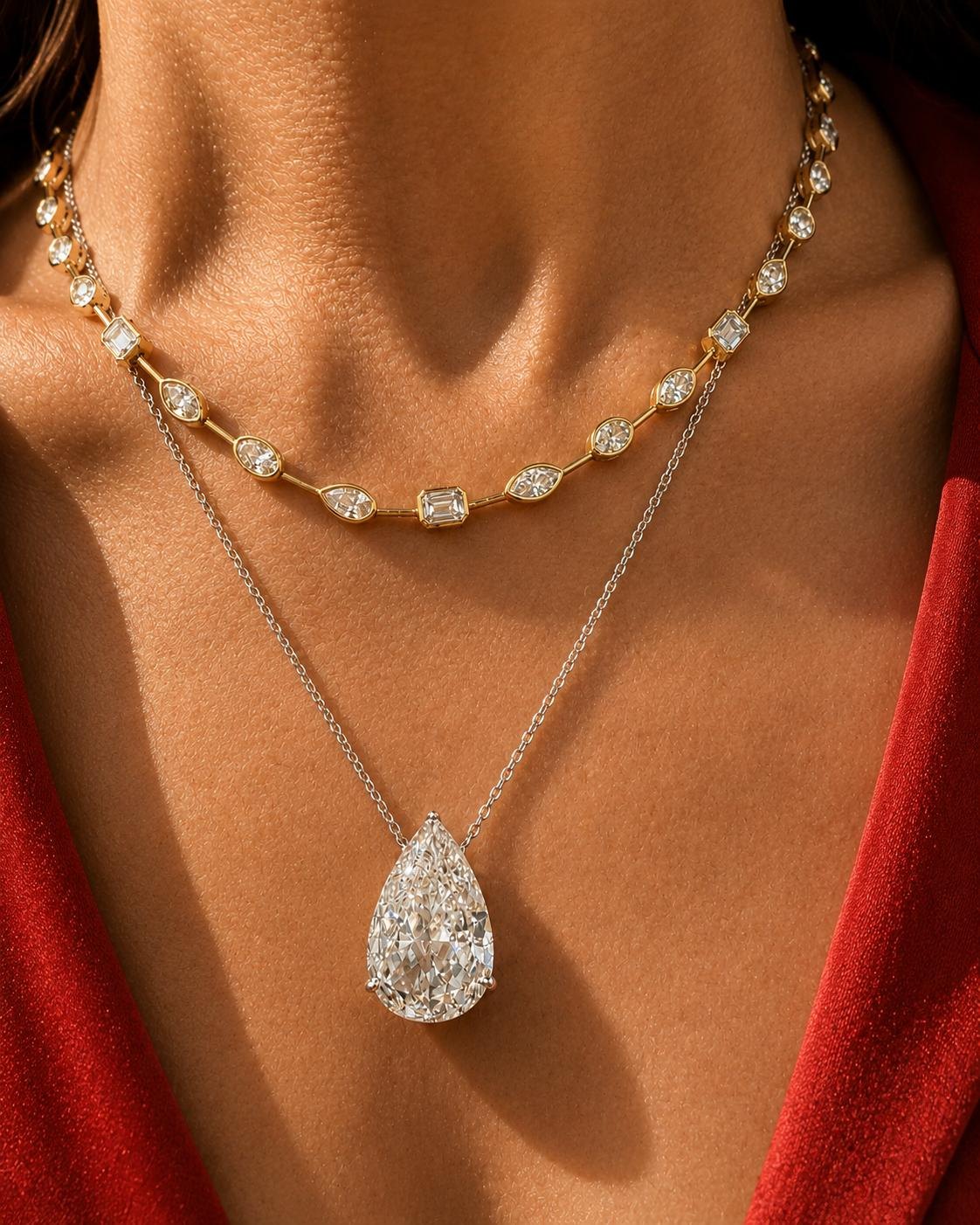
Studs are also the foundation of a coordinated set, worn alongside a tennis necklace and the right ring. If you are building towards that, our complete diamond look and tennis bracelet guide show how the pieces sit together in one harmonious composition.
With nothing to hide behind, the quality of the diamonds, the precision of the pair and the security of the backs are everything.
Buying Diamond Studs in Grand Cayman
At IDC Cayman on the George Town waterfront, every pair is matched by hand from GIA-certified diamonds and finished with the secure backs you prefer. Because the Cayman Islands charge no sales tax and no VAT, more of your choice goes into the diamonds themselves, roughly 20 to 35 percent more than the same pair would buy elsewhere, and you can read how the tax-free advantage works first. Browse our diamonds and wider fine jewellery, then walk in without an appointment, try a few sizes against the ear, and let us ship your studs home fully insured anywhere in the world.