
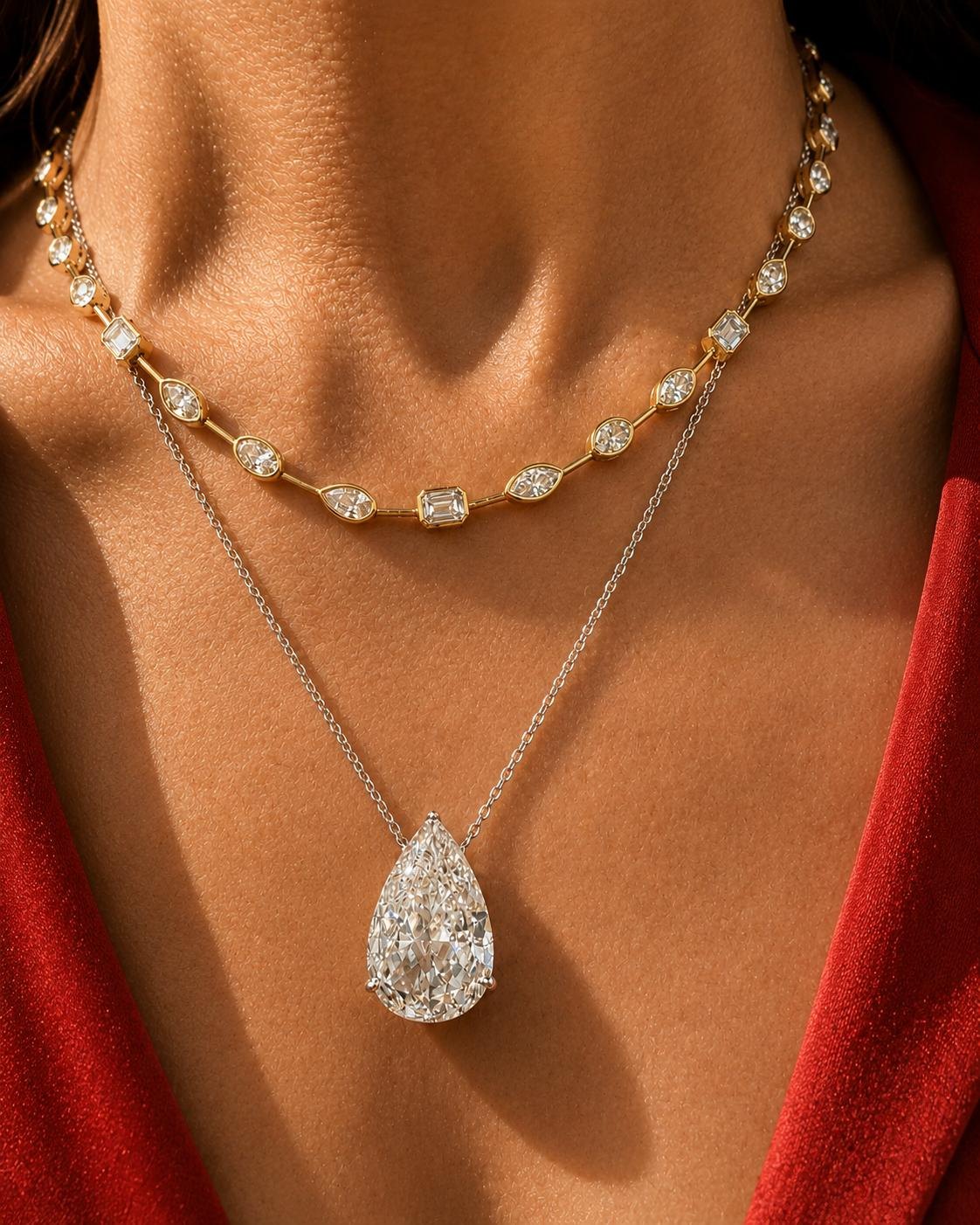
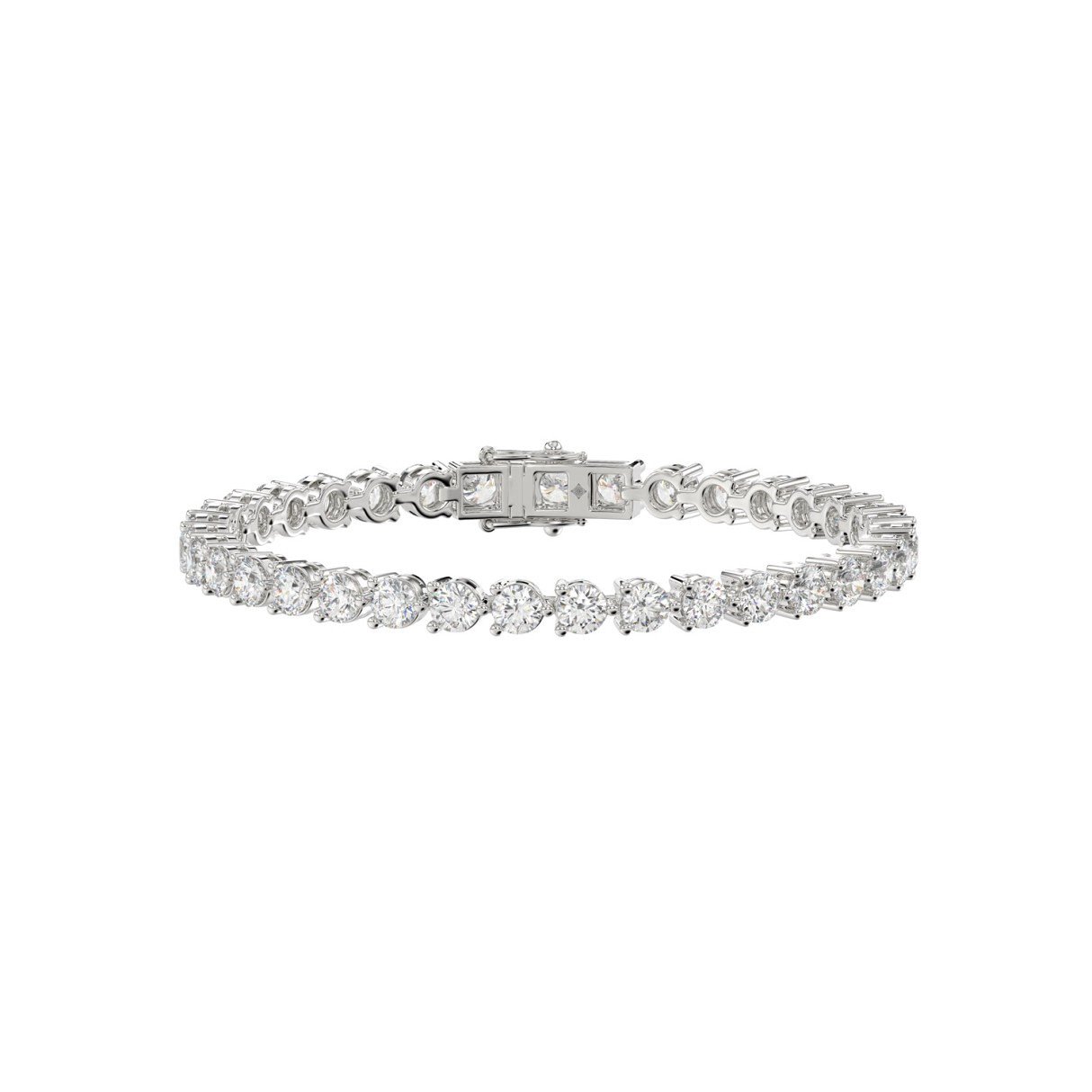
A diamond tennis bracelet is a continuous line of individually set diamonds, linked so the whole piece flexes and follows the curve of the wrist. It is one of the most versatile pieces in fine jewellery, quietly elegant by day and effortlessly glamorous by night, which is why so many people reach for it more than any other piece they own. Choosing one well comes down to how the diamonds are matched, how they are held, and how securely the bracelet fastens, so here is exactly what a jeweller looks at.
In short: judge a tennis bracelet by the consistency of its matched, GIA-certified diamonds first, then by the security of its clasp and safety catch. Choose a setting and metal that suit your daily life, size it to allow about a finger of movement, and have the clasp checked once a year. Buy in George Town and the whole bracelet is tax-free.
What Is a Diamond Tennis Bracelet?
Before the details, it helps to understand what makes this design distinctive and where its curious name comes from.
The flexible line
Unlike a rigid bangle, a tennis bracelet is built from many small links, each holding a single diamond, joined so the line drapes and moves with the wrist. That flexibility is what lets it lie flat and catch the light from every direction, and it is why the quality of every individual stone matters so much to the finished piece.
Where the name comes from
The style earned its name in the late 1970s, when a tennis champion paused her match to recover a slender diamond line bracelet after its clasp slipped open. The phrase tennis bracelet stuck, and so did the lesson: on a piece like this, the clasp and safety catch are as important as the diamonds themselves.
Total Carat Weight and How It Wears
Carat weight sets the scale of a tennis bracelet, but the way it is distributed and matched is what makes it look fine rather than merely large.
Reading total carat weight
Total carat weight describes the combined weight of every diamond along the line, not the size of any single stone. A lighter total reads as a fine, understated thread of light that layers easily and slips under a cuff, while a heavier total gives a bolder, continuous river of brilliance that stands on its own. Because the weight is shared across many matched stones, a tennis bracelet also wears more comfortably than its total suggests, lying flat and moving with the wrist rather than sitting proud. Our carat and size guide explains how weight translates into presence.
Matched diamonds and the even line
Whatever the weight, the mark of a fine bracelet is consistency. Every diamond should be matched for colour, clarity and cut so the line reads as one even sweep, with no stone that looks darker, cloudier or duller than its neighbours. Because the eye takes in the whole line at once, any mismatch is surprisingly easy to spot, which is why a certified, hand-matched bracelet is worth seeking out.
Settings: Prong, Channel and Bezel
The setting decides how much light reaches each diamond and how protected the stones are during everyday wear.
| Setting | Character | Best for |
|---|---|---|
| Prong | Maximum light and sparkle | The classic, most brilliant look |
| Channel | Sleek, contained shine | Active days and snag-free wear |
| Bezel | Modern and fully protective | Anyone hard on their jewellery |
Prong
Four small claws hold each diamond and lift it slightly off the wrist, letting light enter from every side for maximum sparkle. It is the classic and most brilliant choice, with a little more surface to keep clean and prongs that reward a yearly check.
Channel
The diamonds sit between two smooth rails of metal that protect their edges, giving a sleeker, more secure bracelet for active days, with a calmer, more contained shine.
Bezel
A slim rim of metal wraps each stone completely. It is the most protective option, modern in feel, and especially practical for anyone who never wants to worry about their jewellery.
Clasp, Metal, Length and Fit
The details that keep a tennis bracelet on your wrist, and looking right there, deserve as much attention as the diamonds.
Clasp and safety
Look for a box clasp that clicks firmly home, paired with a figure-eight safety catch or a hidden safety, so the bracelet cannot spring open if it is knocked. This single detail protects the whole piece, and it is precisely the feature that gave the style its name.
Metal
14-carat gold is hard-wearing and holds the line of diamonds securely, while 18-carat white, yellow or rose gold offers a slightly richer colour. The metal should match the rest of your stack, and our precious metals guide compares the options if you are deciding.
Length and fit
Most wrists suit a bracelet that allows roughly a finger of movement once fastened, snug enough to sit near the wrist bone but free to glide. Ask to have the length adjusted by adding or removing links so the line sits perfectly, since one that is too loose spins and one that is too tight cannot drape.
Layering, Occasions and Care
A tennis bracelet earns its keep by being endlessly wearable, and a little routine care keeps it looking new for decades.
Styling and layering
Worn alone, a tennis bracelet is quietly elegant for the office or everyday; stacked with a watch or a second bangle, it dresses up effortlessly for evening. It also completes a coordinated set alongside stud earrings and a necklace, an idea we explore in the complete diamond look.
Looking after it
To keep it bright, wipe it after wear, soak it occasionally in warm water with a drop of mild washing-up liquid and lift dirt with a soft brush, then have the clasp and settings checked once a year so no stone can work loose. Our jewellery care guide covers this in more detail, and a well-cared-for line bracelet looks as crisp in a decade as it did on the first day.
The eye reads the whole line at once, so diamonds matched for colour, clarity and cut, and a clasp you can trust, are the truest marks of a fine tennis bracelet.
Buying a Tennis Bracelet in Grand Cayman
At IDC Cayman on the George Town waterfront, every tennis bracelet is built from GIA-certified diamonds matched along the line and finished with a secure clasp and safety catch. Because the Cayman Islands charge no sales tax and no VAT, more of your choice goes into the diamonds and the craftsmanship, roughly 20 to 35 percent more than the same piece would buy elsewhere, and you can read how the tax-free advantage works first. Browse our diamonds and wider fine jewellery, then walk in without an appointment, try the line against your wrist, and let us ship your bracelet home fully insured anywhere in the world.