
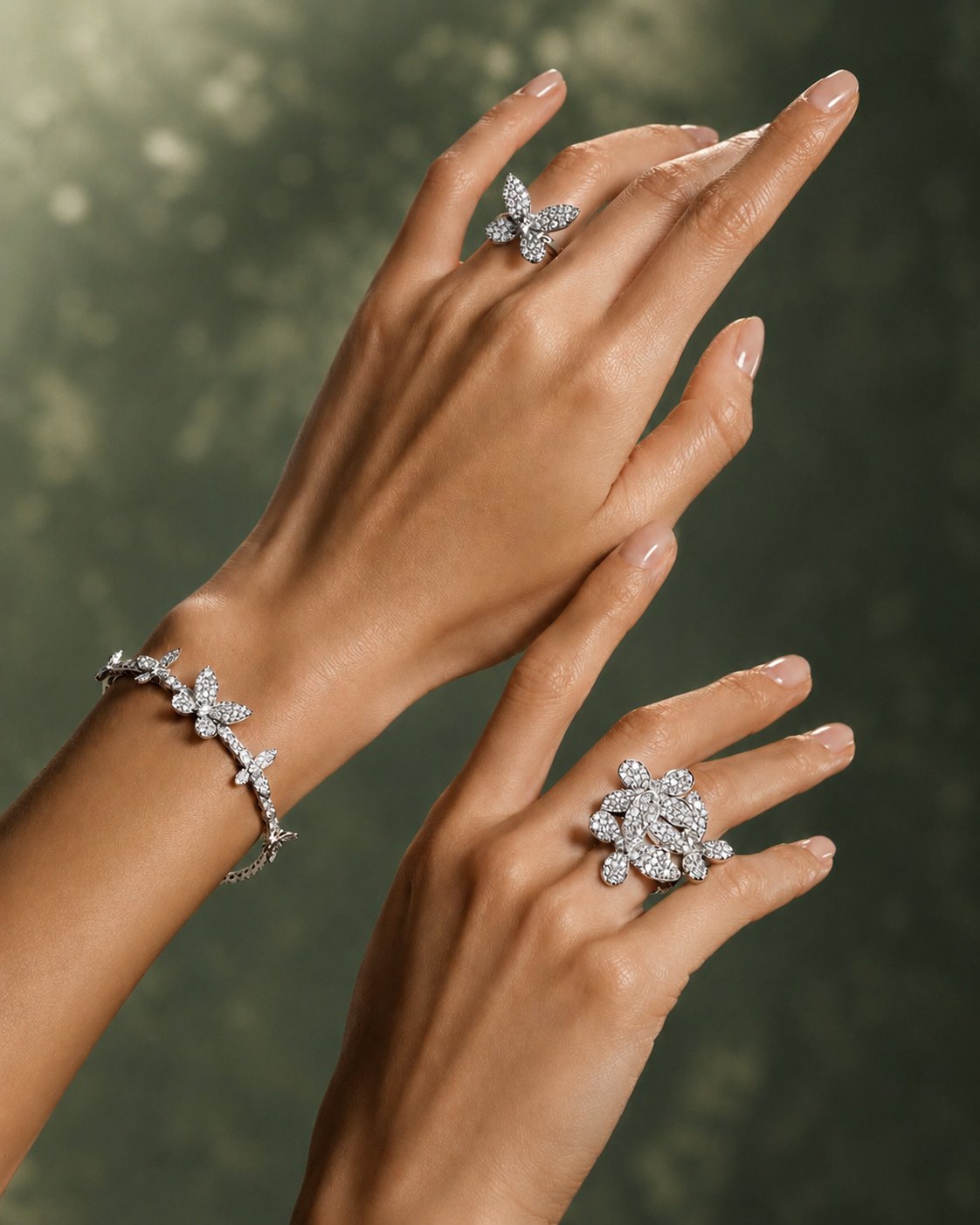
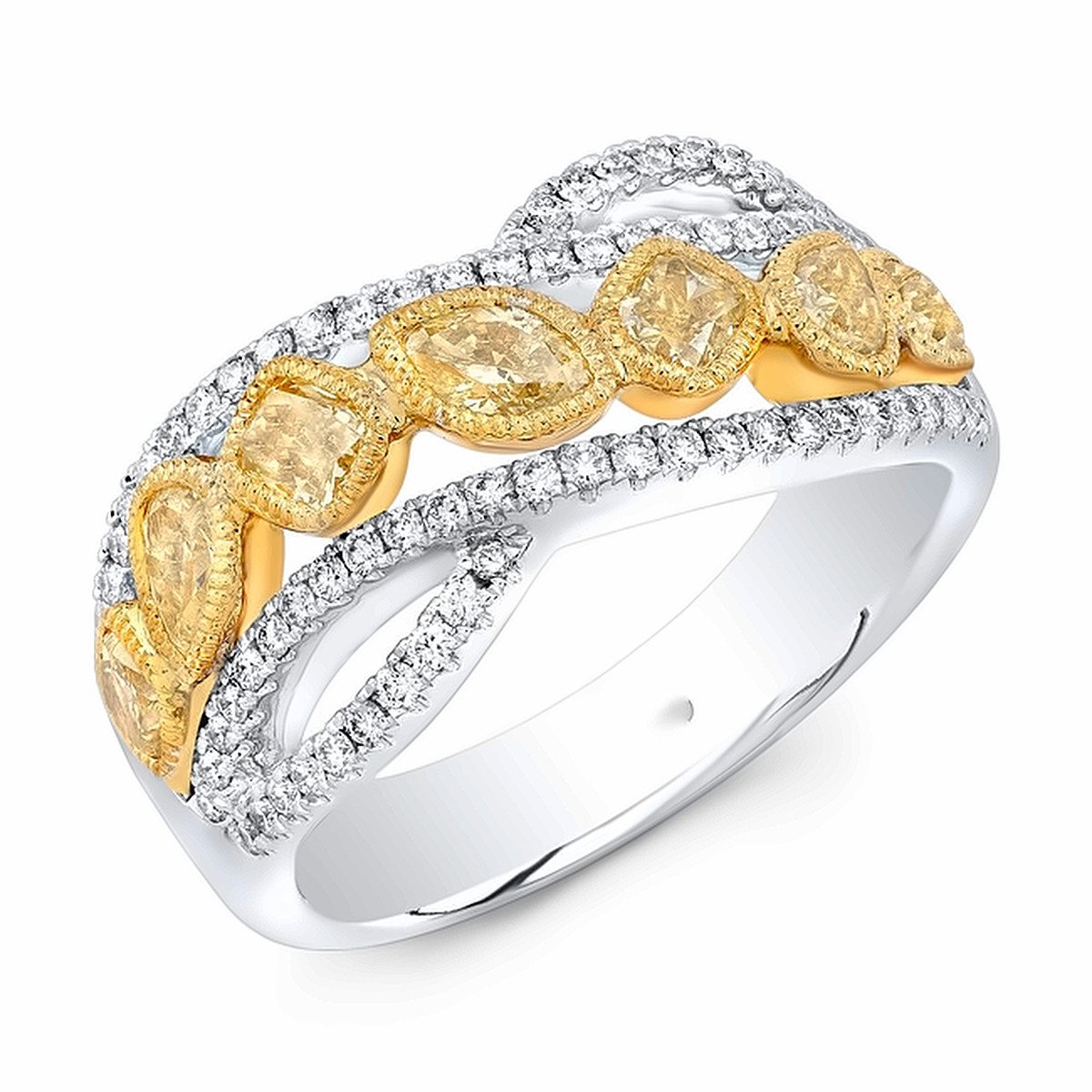
Most diamonds are prized for the absence of colour, but a rare few are treasured for exactly the opposite. Fancy coloured diamonds, the canary yellows, blush pinks, ocean blues and forest greens, are among the rarest gems on earth, formed by quirks of nature that touch only a tiny fraction of stones. Understanding how their colour arises, how the GIA grades it, and how to tell a natural colour from a treated one is the key to buying one with real confidence.
In short: a fancy coloured diamond is one whose colour is stronger than the Z end of the normal white-diamond scale, or a hue outside it altogether. The GIA grades these stones on hue, tone and saturation, and for coloured diamonds more colour means more rarity and more value, the opposite of white diamonds. Always insist on a GIA report that confirms the colour is natural, and buy in George Town to keep the purchase tax-free.
What Makes a Diamond Fancy
The word fancy is a precise gemological term, not a flourish. It marks the point at which a diamond stops being judged for what it lacks and starts being celebrated for what it has.
Beyond the D-to-Z scale
Ordinary white diamonds are graded on the GIA D-to-Z scale, where D is colourless and value lies in having as little colour as possible, as our colour grades guide explains. A fancy coloured diamond is one whose colour is more saturated than the Z end of that scale, or whose hue falls outside it altogether. At that point the stone leaves the normal range and is graded on a separate fancy-colour system, where the logic of the white scale is turned on its head.
Just how rare they are
Natural fancy colours are genuinely scarce. Only a small fraction of mined diamonds show any meaningful colour at all, and stones with a strong, even, naturally occurring hue are rarer still. That scarcity, combined with permanence and beauty, is why a fine natural fancy colour holds its rarity and its value in a way few gems can match. It also makes a striking alternative centre stone for an engagement ring.
How GIA Grades Fancy Colour
Because colour rather than its absence is the prize, the GIA assesses three separate qualities of that colour, then combines them into a single overall grade.
Hue, tone and saturation
- Hue is the basic colour itself, such as yellow, pink, blue, green or orange, along with any modifying tints, for example a brownish-yellow or a purplish-pink.
- Tone describes how light or dark the colour is, running from pale to deep.
- Saturation describes the strength or intensity of the colour, and it is the single biggest driver of a fancy diamond's rarity and desirability.
The fancy-colour grades
Combining hue, tone and saturation, the GIA assigns an overall grade along a rising scale: Faint, Very Light, Light, Fancy Light, Fancy, Fancy Intense, Fancy Vivid, Fancy Deep and Fancy Dark. Fancy Vivid describes a strong, highly saturated colour and commands the greatest desirability. Clarity and cut still matter, but in coloured diamonds the cutter's first job is to coax out the richest possible colour rather than maximum sparkle, so proportions are chosen to deepen the hue.
Where the Colours Come From
Colour in a diamond comes from trace elements or structural quirks present as the crystal grew deep in the earth. The cause, and how often it occurs, is what makes one colour everyday and another almost mythical.
| Colour | Usual cause | Relative rarity |
|---|---|---|
| Yellow | Nitrogen trapped in the crystal lattice | The most available fancy colour; vivid canary still scarce |
| Orange | Nitrogen with structural defects | Scarce, pure orange especially so |
| Brown to champagne | Distortion in the crystal structure | The most plentiful, warm in tone |
| Pink to red | Structural distortion under immense pressure | Extremely rare, red the rarest of all |
| Blue | Traces of boron | Exceptionally rare |
| Green | Natural radiation over millions of years | Very rare, fully saturated green rarest |
Yellow and orange
Nitrogen trapped in the lattice produces the warm yellows, the most available of the fancy colours, with the purest, most vivid examples known as canary. A touch of structural disorder alongside the nitrogen can push a stone towards orange, a far scarcer and more sought-after hue.
Pink, red and purple
Pink and red diamonds owe their colour not to an element but to a distortion in the crystal structure caused by immense pressure as the diamond grew. They are among the scarcest and most coveted of all gems, with true red rarer than any other colour. Related quirks can yield purple and violet stones.
Blue, green and grey
Boron gives the celebrated blues, which are exceptionally rare. Natural radiation over millions of years can produce greens, often concentrated near the surface of the rough, while other quirks of growth yield grey. The rarer the colour and the higher the saturation, the more extraordinary the stone.
Natural Colour vs Treated Colour
Colour is the whole value of these stones, so how it arose is the most important question you can ask. A natural fancy colour and a treated one can look alike yet be worlds apart in rarity and worth.
How colour can be added
Colour can be introduced in a laboratory by high-pressure high-temperature treatment, by irradiation, or with surface coatings. A treated stone is worth a small fraction of a comparable natural one, even though it may be perfectly attractive to wear. This is a different question from natural versus lab-grown, which our natural versus lab-grown guide covers in full; a lab-grown diamond can itself be either a natural or a treated colour.
Why a GIA report is essential
A GIA report states clearly whether colour is natural or the result of treatment, which is exactly why we insist on one for every coloured diamond and are always transparent about which is which. A natural fancy colour, certified as such, is the stone that holds its rarity and its value. Our guide to GIA certification explains how to read the origin and colour-origin lines on the report.
Choosing and Setting a Fancy Colour
Once you have found a natural, certified stone you love, the setting is what lets its colour speak. Small choices here make a visible difference to how deep and lively the hue appears.
Settings that intensify colour
Mounting a yellow diamond in yellow gold, or surrounding any coloured centre with prongs and a frame of the same hue, reflects colour back into the stone and deepens its appearance. A bezel or a surround of white melee, by contrast, heightens the contrast and can make the colour leap out. The right shape also helps, as radiant and cushion cuts are popular for fancy colours because they hold and concentrate colour beautifully.
Matching metal and melee
The metal of the band and any accent diamonds work together with the centre. Warm metals flatter yellows, oranges and browns, while cooler white gold suits pinks and blues. Talk to us about pairing a fancy centre with a halo or accent stones from our fine jewellery collection so the whole piece reads as one considered composition rather than a stone simply dropped into a setting.
With white diamonds you pay for the absence of colour; with fancy diamonds you treasure its presence, and the rarer and more saturated the hue, the more extraordinary the stone.
Buying a Fancy Coloured Diamond in Grand Cayman
At IDC Cayman we source natural, GIA-certified fancy colours and set them to flatter their hue. Because the Cayman Islands levy no sales tax and no VAT, a stone here can cost roughly 20 to 35 percent less than the same one elsewhere, and you can read how the tax-free advantage works before you arrive. Explore our diamonds and the wider gemstones collection, then visit us on the George Town waterfront to see colour in natural light, with no appointment needed.