
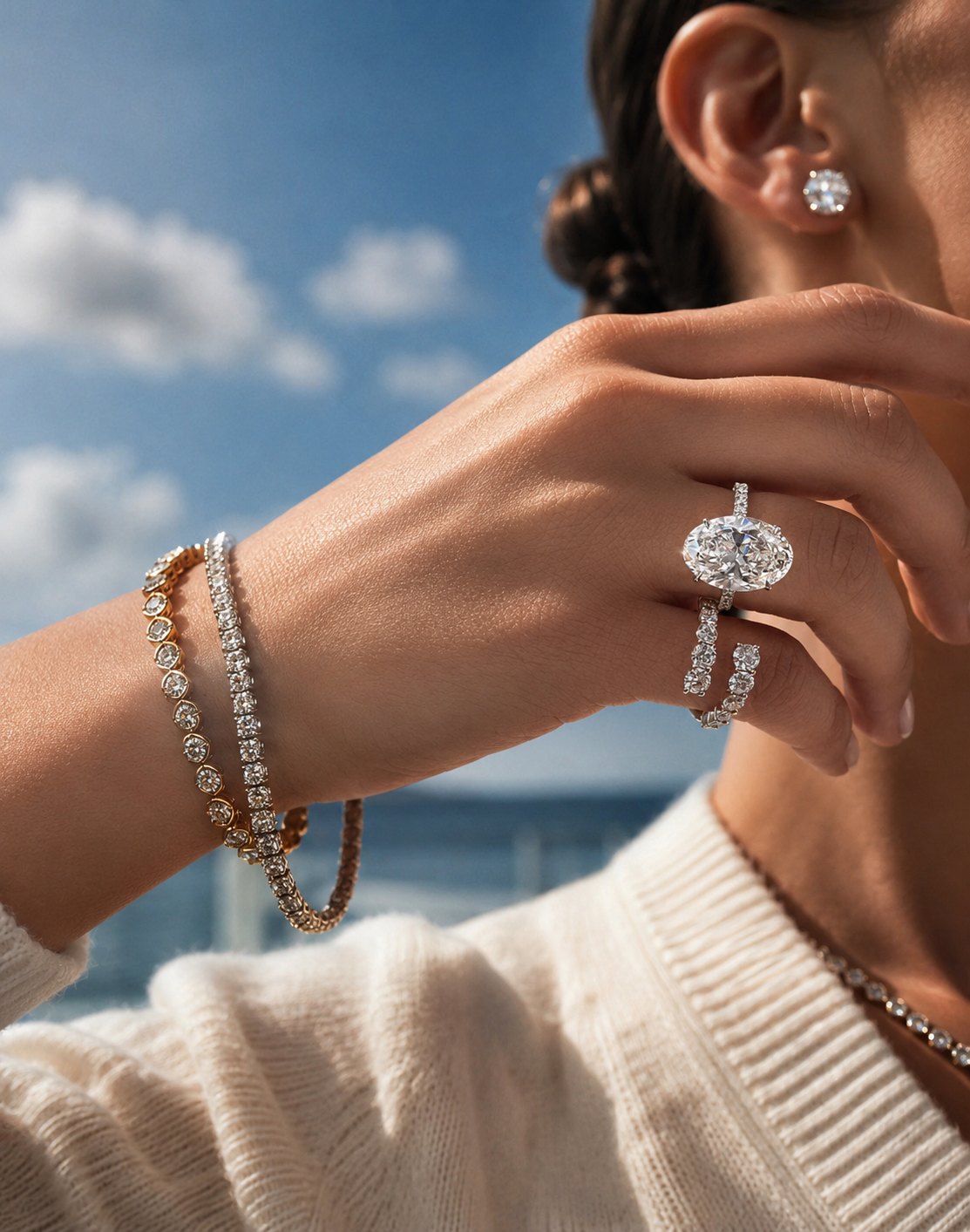
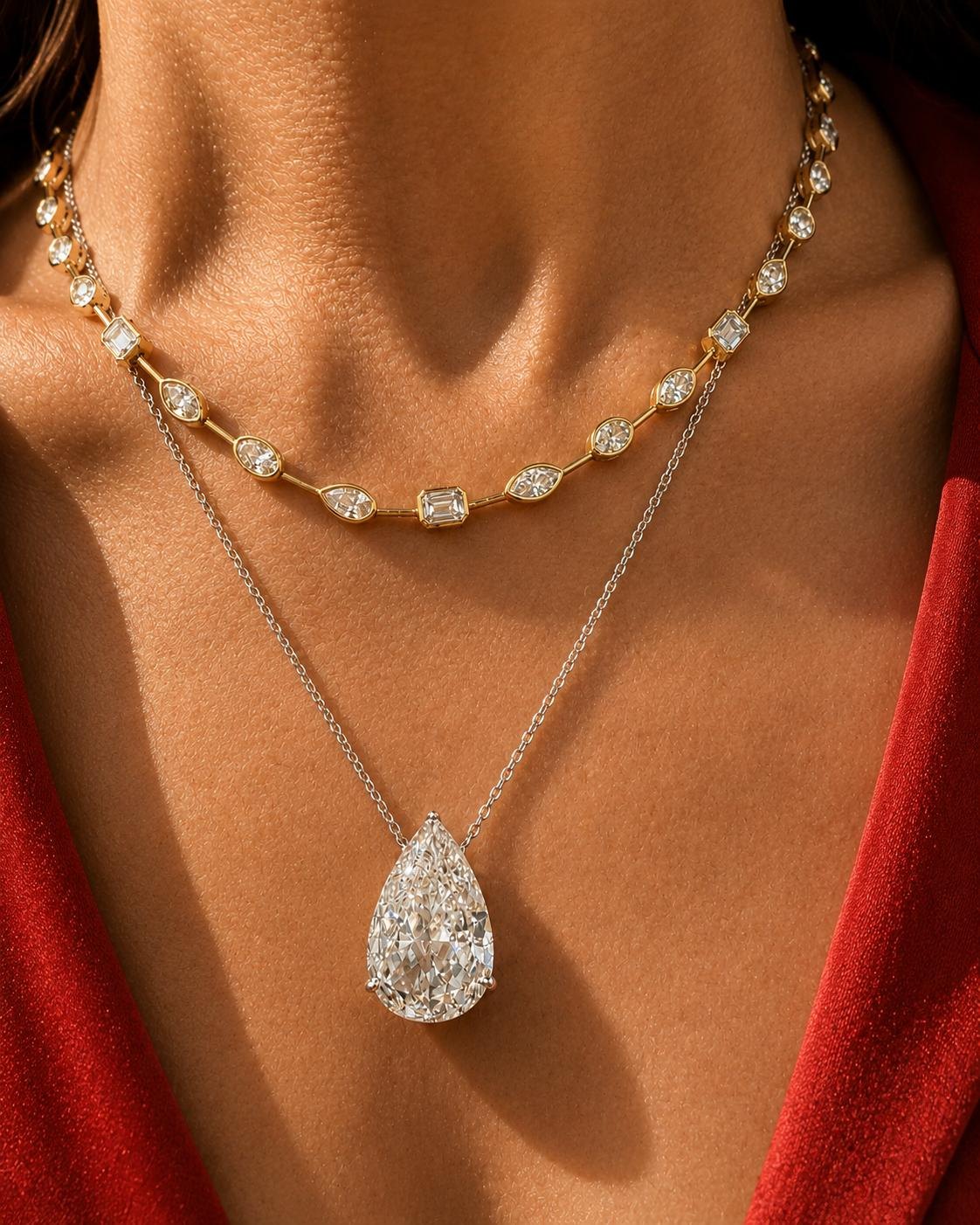
Gold has anchored fine jewellery for thousands of years, and it remains the metal against which every other is measured. Whether you are choosing an engagement ring, a wedding band, a necklace for every day or a pair of earrings destined to pass through generations, understanding how gold is measured, coloured and finished lets you buy with real confidence. This guide from our George Town atelier explains fine gold jewellery in plain terms, from karats and colour to hallmarking and care, and shows how to buy it tax-free in Grand Cayman.
In short: fine gold jewellery is solid gold, alloyed for strength and most often set in 18k or 14k, valued for its weight and craftsmanship rather than any surface plating. Explore our fine jewellery collection and see how the islands make tax-free gold a genuine saving.
Understanding gold purity and karats
Pure gold is graded in karats, a measure of how many parts out of twenty-four are gold. Because pure gold is very soft, jewellers blend it with metals such as copper, silver and palladium to add strength and to create colour. The karat number therefore tells you the proportion of gold in a piece, and it shapes both its value and how well it will stand up to daily life.
24k, 18k, 14k and 10k explained
24k gold is almost pure at 99.9 percent. Its colour is rich and unmistakable, but it is too soft to hold a diamond securely or resist scratches, so it is reserved for investment pieces and heritage designs rather than everyday rings. 18k gold, at 75 percent gold, is the benchmark for fine jewellery: it keeps a warm, luxurious colour while being durable enough for a lifetime of wear. 14k gold contains 58.3 percent gold and is noticeably harder, which makes it a sensible choice for very active hands and pieces that take knocks. 10k gold, at 41.7 percent, is the hardest and palest of the four and the most affordable, though it shows less of the depth of colour that defines fine gold.
| Karat | Gold content | Character | Best suited to |
|---|---|---|---|
| 24k | 99.9 percent | Deep colour, very soft | Investment and heritage pieces |
| 22k | 91.6 percent | Warm, still soft | Light wear, traditional designs |
| 18k | 75 percent | Rich colour, durable | Engagement rings and fine jewellery |
| 14k | 58.3 percent | Harder, everyday resilient | Daily rings, bands and active wear |
| 10k | 41.7 percent | Very hard, paler tone | Budget-conscious, high-impact wear |
For a wider view of how gold sits alongside platinum and silver, our precious metals guide compares each option in detail.
Yellow, white and rose gold, and how each is made
The colour of gold comes entirely from the metals blended with it. All three shades can be produced in 18k or 14k, so you never have to trade purity for the tone you love.
Yellow gold
Yellow gold is the most traditional finish, created by alloying pure gold with copper and silver in balanced measure. It keeps the warm glow people associate with gold and needs no surface plating, which makes it low maintenance and, at higher karats, kind to sensitive skin.
White gold
White gold is made by alloying gold with white metals such as palladium or nickel, then finishing it with a thin layer of rhodium, a bright member of the platinum family. The rhodium gives that crisp, cool brilliance many people favour for diamond settings. Over time the plating can soften in tone, and a simple re-plating restores it, a service we include in lifetime after-care.
Rose gold
Rose gold takes its romantic pink hue from a higher proportion of copper in the alloy. The copper also adds hardness, so rose gold wears well and never needs plating to keep its colour. It flatters a wide range of skin tones and pairs beautifully with both white and champagne diamonds.
| Colour | Typical alloy | Look | Care note |
|---|---|---|---|
| Yellow gold | Gold with copper and silver | Warm and classic | No plating needed |
| White gold | Gold with palladium, rhodium finished | Bright and cool | Occasional re-plating renews it |
| Rose gold | Gold with a higher copper content | Soft, romantic pink | No plating needed, hard-wearing |
Many couples choose a colour to complement their stones, and the right pairing can make a wedding band or a wedding ring feel entirely personal.
Gold with diamonds and coloured gemstones
Gold is the natural partner to fine stones because it can be worked into secure, elegant settings that show a gem at its best. The colour of the gold quietly influences how a stone reads to the eye. White gold and rhodium make a colourless diamond appear even whiter, which is why it is a favourite for solitaires and for our GIA-certified diamonds. Yellow gold can warm the look of a stone and is a classic choice for vintage-inspired designs, while rose gold lends a soft, flattering frame to morganite, champagne diamonds and warmer sapphires.
With coloured gemstones the interplay matters even more. A vivid blue sapphire or a rich green emerald often sings against yellow gold, while rubies and pink stones can look striking in rose gold. Our gemstone jewellery guide looks at these pairings in more depth so you can match metal to stone with a jeweller's eye.
A well-chosen gold alloy is the quiet foundation of a piece you will wear for decades. Choose the karat for how you live, and the colour for how it makes you feel.
What fine gold really means: solid, plated and filled
The phrase fine gold jewellery has a precise meaning, and it is worth knowing before you compare prices. Fine jewellery is made from solid gold throughout, alloyed for strength and sold by its gold weight and the skill of its making. Many pieces sold elsewhere only look like gold.
- Solid gold: gold all the way through, in a stated karat such as 18k or 14k. It holds its value, can be resized and repaired, and lasts for generations.
- Gold-plated: a microscopically thin layer of gold applied over a base metal. It looks attractive at first but wears away, and it cannot be meaningfully repaired.
- Gold-filled: a thicker layer of gold mechanically bonded to a base metal. More durable than plating, yet still not solid gold and not a store of value.
Hallmarking and quality
A hallmark or a karat stamp such as 750 for 18k or 585 for 14k is your assurance of gold content, often alongside a maker's mark. When you buy from an established jeweller, that stamp is backed by expertise and accountability. Everything in our fine jewellery range is solid gold, clearly marked, and checked by our in-house gemologists before it ever reaches your hand.
Choosing gold for every piece
The best karat and colour depend on how a piece will be worn. A ring lives a very different life from a pair of earrings, and matching the metal to the wear is where good advice pays off.
Engagement rings and wedding bands
These are worn every day and set with precious stones, so durability matters. 18k offers the classic balance of colour and strength, while 14k suits particularly active hands. If you are pairing a band with a diamond solitaire, choosing the same colour and karat keeps the set harmonious. Our wedding rings can be matched to almost any engagement ring.
Necklaces, bracelets and earrings
Chains and bracelets flex and rub as you move, so a slightly harder alloy such as 14k can add longevity to a fine chain, while a statement pendant in 18k keeps a deeper colour. Earrings sit away from hard knocks and can happily be 18k for their richer glow, and lighter-karat posts are gentle for sensitive ears. A few pointers help across all of these:
- Match metal colour across pieces you will wear together for a considered look.
- Consider your skin tone, since warm tones often favour yellow and rose while cooler tones suit white gold.
- Think about maintenance, because white gold benefits from occasional re-plating while yellow and rose do not.
Caring for fine gold jewellery
Gold is remarkably enduring, but a little care keeps it luminous. Simple habits at home, combined with periodic professional attention, will protect both the metal and any stones it holds.
- Clean gently with warm water, a drop of mild soap and a soft brush, then dry with a lint-free cloth.
- Store pieces separately so harder stones and edges do not scratch softer gold.
- Remove rings for gardening, sport, swimming and household chemicals.
- Apply perfume, lotion and hairspray before putting jewellery on, not after.
- Have prongs, clasps and settings checked periodically by a jeweller.
Our complete care guide goes further, and lifetime after-care from IDC Cayman includes cleaning, prong inspection, resizing and re-plating so your gold stays as beautiful as the day you chose it.
Buying fine gold jewellery tax-free in Grand Cayman
One of the quiet pleasures of buying gold in the Cayman Islands is that there is no sales tax and no VAT, so fine gold jewellery is genuinely tax-free. That saving is real rather than a promotional gimmick, and on a certified piece it can be substantial: a GIA-certified diamond, for example, can cost roughly 20 to 35 percent less than in the US, the UK or Europe. Because IDC Cayman offers free insured worldwide shipping, you can enjoy that advantage wherever home happens to be.
If you are exploring the George Town waterfront, it is worth understanding the local scene before you buy. Our overview of jewellery stores in George Town explains what to look for, and our page on tax-free jewellery sets out exactly how the saving works.
Why IDC Cayman
IDC Cayman has been a fixture on the George Town waterfront since 2011, welcoming walk-in visitors with no appointment needed. We offer solid, hallmarked gold, GIA-certified diamonds and coloured gemstones, bespoke design and repair by in-house gemologists, and lifetime after-care on every piece. Every purchase is tax-free and backed by free insured worldwide shipping. Learn more about our atelier, browse the fine jewellery collection, or contact us to plan your visit.