
Say garnet and most people picture the deep brownish red of Victorian jewellery, but that image sells the gem badly short. Garnet is not one stone at all; it is a large family of closely related minerals that crystallise in nearly every colour, from the pure grass green of tsavorite to fiery mandarin orange, raspberry pink-red and even rare stones that change colour under different lighting. Among coloured gems, garnet offers some of the most vivid, characterful and genuinely natural colour available, and it rewards a buyer who knows what to look for. This guide explains the family, the prized greens, how to judge quality and how garnet wears.
In short: garnet is a group of gems spanning red, orange, raspberry, green and colour-change, sitting at 6.5 to 7.5 on the Mohs scale and almost always sold completely natural and untreated. Judge colour first, favouring vivid saturation that stays bright rather than dark, and reserve the rarer, more brittle demantoid for gentler wear. As the January birthstone it is a personal gift, and bought in George Town it is tax-free. Begin with our coloured gemstones.
A Family of Gems, Not a Single Stone
Garnet's variety is its great surprise, and understanding the family is the key to buying the colour you really want.
What garnet is
Gemmologically, garnet is a group of silicate minerals that share a crystal structure but differ in chemistry, and those chemical differences produce the colours. Most garnets used in jewellery are blends of a few end members, which is why you will see overlapping names. The practical point for a buyer is reassuring: garnets are almost always sold exactly as nature made them, which is rare and valuable in the coloured-stone world. Our coloured gemstone jewellery guide places garnet in the wider context of treatments and durability.
The varieties worth knowing
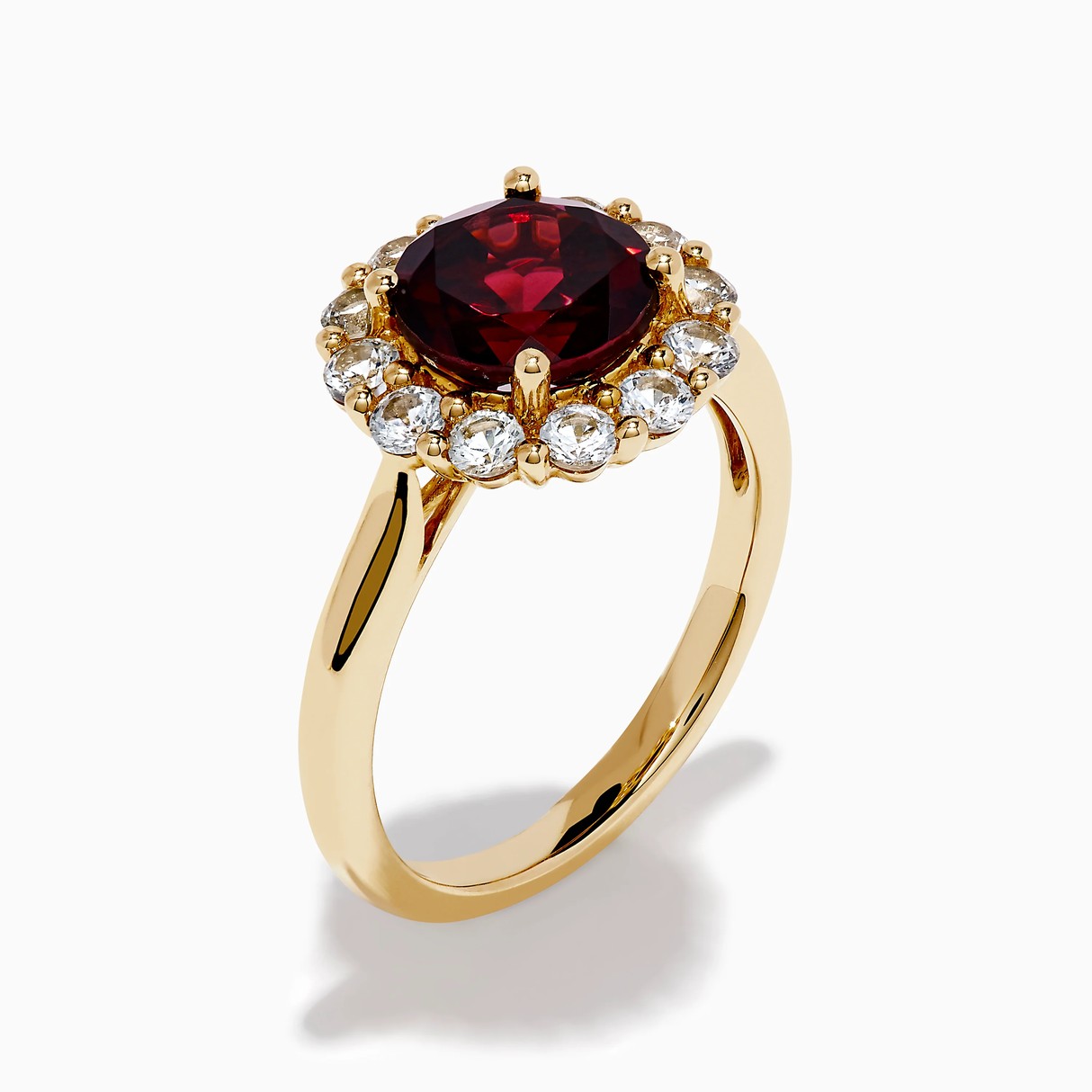
- Almandine and pyrope, the classic reds. Almandine leans slightly brownish or purplish, while pyrope gives a brighter, more open red; most traditional red garnet jewellery is a blend of the two.
- Rhodolite, a beautiful blend that glows in raspberry to purplish red, brighter and more lively than ordinary red garnet.
- Spessartite, ranging from vivid orange to the intense mandarin and fanta orange that collectors chase.
- Tsavorite, a green grossular garnet coloured by chromium and vanadium, rivalling fine emerald for pure green.
- Demantoid, a rare andradite garnet with vivid green colour and a dispersion, or fire, that exceeds diamond.
- Colour-change garnet, which can shift from green or bluish in daylight to red or purplish under incandescent light, one of the most remarkable effects in the gem world.
Garnet at a Glance
The essentials in one view:
| Property | Garnet detail |
|---|---|
| Mineral | A group of silicate minerals, many varieties |
| Mohs hardness | 6.5 to 7.5, depending on variety |
| Colour range | Nearly every colour: red, orange, raspberry, green, colour-change |
| Main sources | East Africa, Russia, Namibia, Madagascar, Sri Lanka, worldwide |
| Birthstone | January; second anniversary gem |
| Treatment | Almost always natural and untreated |
| Care | Warm soapy water and a soft brush; avoid hard knocks and sudden heat |
Because the family is so broad, it helps to see the headline varieties side by side:
| Variety | Typical colour | Notable sources |
|---|---|---|
| Almandine / pyrope | Classic red, brownish to bright | Worldwide |
| Rhodolite | Raspberry to purplish red | East Africa, Sri Lanka |
| Spessartite | Vivid orange to mandarin | Nigeria, Mozambique, Namibia |
| Tsavorite | Vivid green | Kenya, Tanzania |
| Demantoid | Green with fire beyond diamond | Russia, Namibia, Madagascar |
| Colour-change | Green or blue by day, red by lamp | East Africa, Madagascar |
The Coveted Greens: Tsavorite and Demantoid
The green garnets are the aristocrats of the family, and they reward a buyer who knows how to weigh rarity against everyday practicality.
Tsavorite, the natural emerald rival
Tsavorite, found principally in Kenya and Tanzania, delivers a vivid, slightly yellowish to pure green with excellent brightness, and because it is rarely treated it offers a natural alternative to emerald, often cleaner and more durable in everyday wear. It tends to occur small, so a clean, well-saturated green of any decent size is a genuine find.
Demantoid, fire beyond diamond
Demantoid is rarer still, a stone whose extraordinary fire throws off rainbow flashes; the finest Russian demantoid can contain delicate golden fibres known as horsetails, which, unusually, are prized as a sign of origin rather than dismissed as a flaw. Because demantoid is softer and more brittle than most garnets, it is happiest in earrings, pendants or occasional-wear rings within a protective setting.
Judging Quality: Colour Above All
Across the whole family, colour is the dominant value factor, and the goal is vivid saturation without going so dark that the stone loses life. A rich, bright, evenly coloured garnet outperforms a larger but darker or muddier stone every time, which is why you should view garnets in more than one light and watch for over-dark reds that close up. Clarity matters next: most garnets except demantoid and some spessartite are expected to be eye-clean, so visible inclusions should lower the price. A skilled cut lifts the colour and keeps the stone bright rather than windowed, and carat weight has the greatest effect on the rarer greens and oranges, where larger clean stones climb steeply in rarity. Best of all, because garnet is so seldom heated, oiled or irradiated, the colour you see is the colour nature grew.
Garnet is the honest gem: what you see is what nature made. Choose the brightest, liveliest colour your budget allows and you will rarely go wrong.
Durability, Care, Birthstone and Settings
Everyday durability
Garnet ranges from about 6.5 to 7.5 on the Mohs scale depending on the variety, which makes it a robust choice for rings, earrings and pendants alike, though like any gem it appreciates sensible care: a soft brush, warm soapy water, and avoidance of hard knocks and sudden heat. Most garnets are safe in routine wear, while the rarer demantoid is better reserved for pieces that see gentler use. Follow the routine in our jewellery care guide and your garnet will stay bright for generations.
The January birthstone
Garnet is the birthstone for January and the traditional gift for the second wedding anniversary, which makes it a warm, personal present. See where it falls in our birthstones by month guide, and find pairings in our anniversary jewellery gift guide.
Settings that flatter
The bright reds and pinks look wonderful in warm yellow gold, the vivid greens of tsavorite and demantoid sing alongside white gold and diamond accents, and the oranges of spessartite glow in either, so let the stone's colour guide the metal. Our precious metals guide explains how each metal shifts a colour's character, and our fine jewellery shows garnets set to their best.
Buying Garnet in Grand Cayman
At IDC Cayman we select garnets for purity and brilliance of colour rather than mere size, set them to flatter, and sell them completely tax-free, with no sales tax and no VAT. Visit us in George Town, Grand Cayman, to see the colours in person, no appointment needed, and enjoy free insured shipping worldwide. When you are ready, come and find us on the waterfront.