
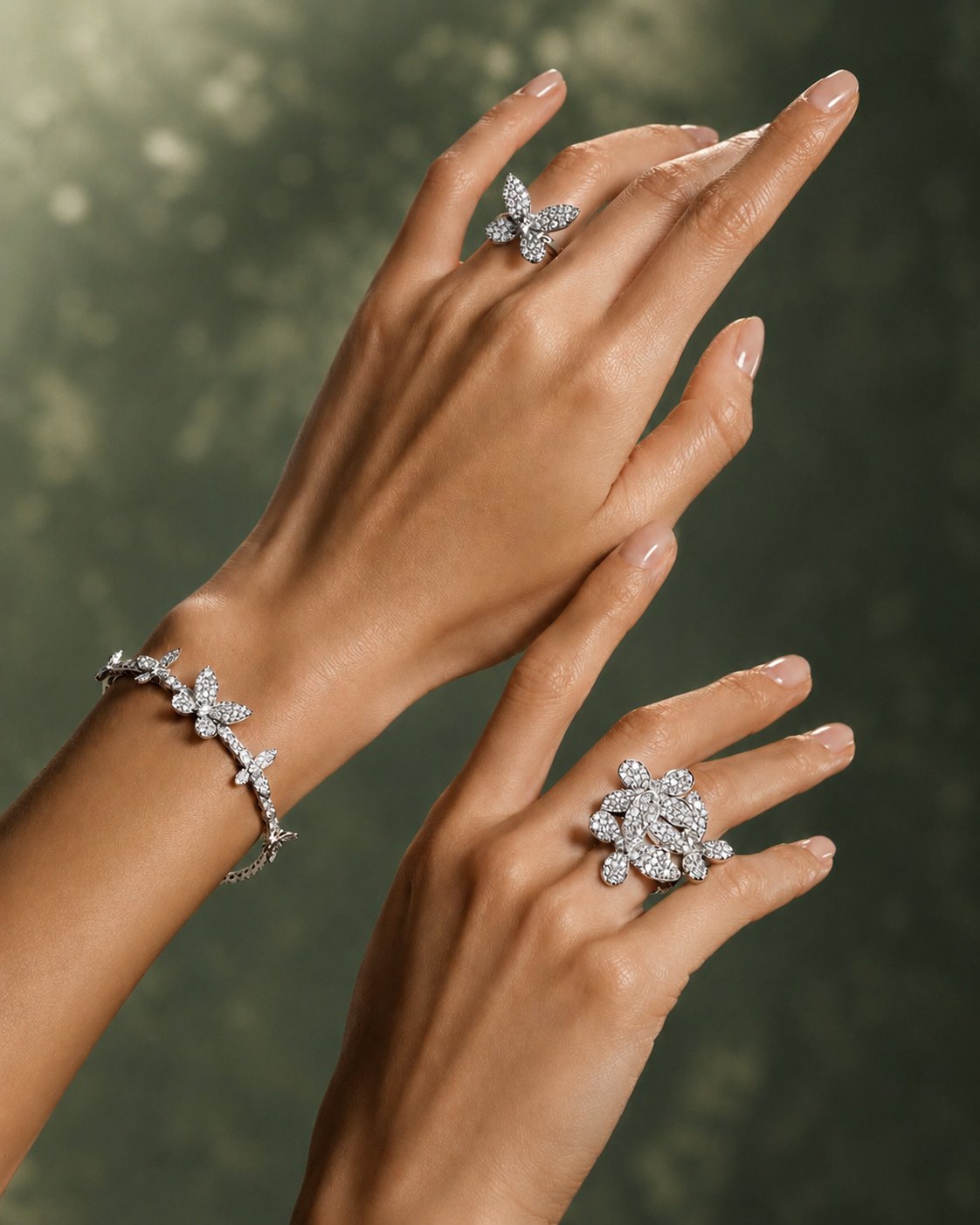
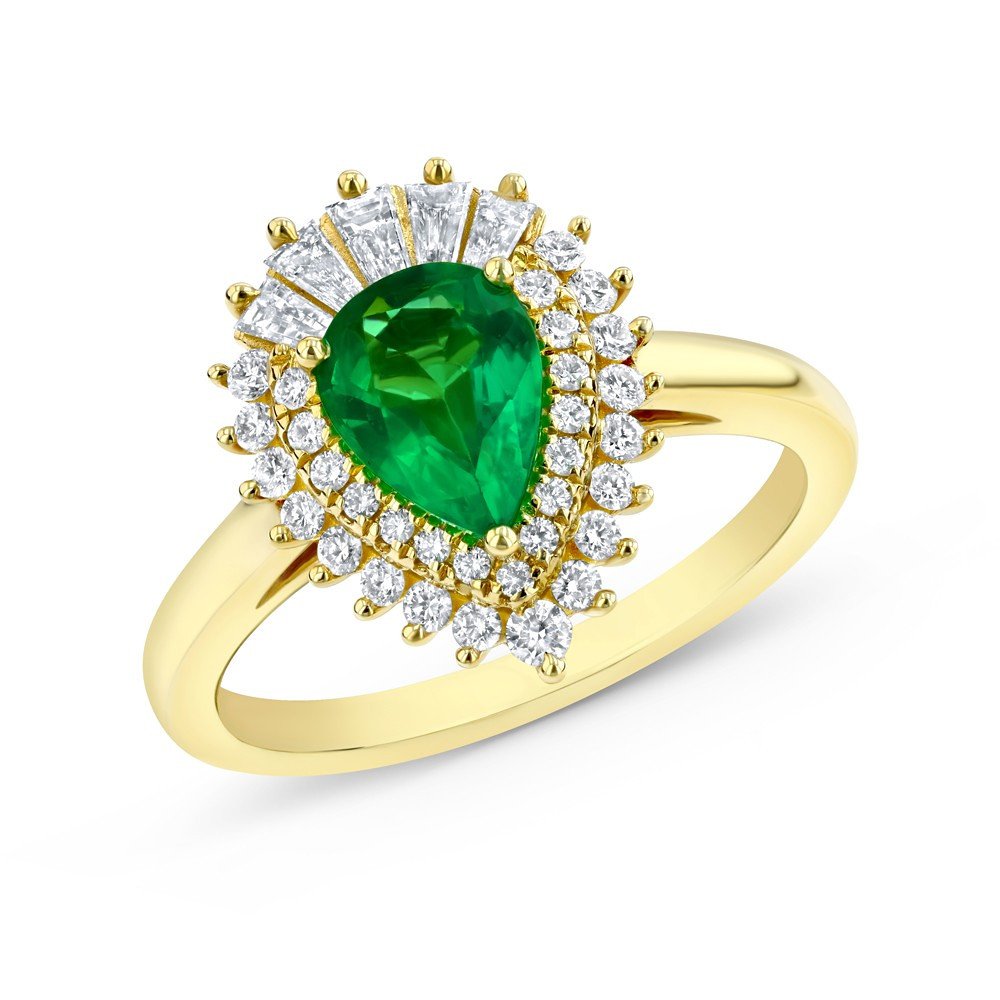
Coloured gemstones bring something diamonds alone cannot: the deep red of a ruby, the velvet blue of a sapphire, the garden green of an emerald, and a spectrum of hues for every personality and occasion. A coloured stone can be the centre of a ring or a quiet accent beside a diamond, but choosing one well means understanding a little about species, durability, treatment and colour. This guide orients you across the coloured-gemstone world, then points you to a full buying guide for each stone, so you can buy with knowledge rather than guesswork.
In short: start from the big four, ruby, sapphire, emerald and diamond, then widen your view to the beryls, quartzes and rarities; match a stone's hardness and toughness to how the piece will be worn, ask what every coloured stone has undergone, and choose by birthstone, by colour or by pairing with diamonds. Browse the full range of coloured gemstones and buy it all tax-free in George Town.
The Big Four Coloured Stones
Tradition places four gemstones above the rest: ruby, sapphire and emerald, joined by the diamond, the colourless benchmark against which the others are often set. Understanding them is the foundation for everything else.
Ruby and sapphire
Ruby and sapphire are both the mineral corundum, ruby being its red variety and sapphire every other colour, most famously blue. At 9 on the Mohs scale they are the hardest coloured gems after diamond, which makes them superb for daily wear. The most prized colours are a vivid, slightly purplish red in ruby and a pure velvety blue in sapphire; learn the detail in our ruby buying guide and sapphire buying guide.
Emerald
Emerald is the green variety of beryl, prized for a saturated bluish green. It is reasonably hard but its many natural inclusions, often called the jardin, make it more brittle, so it rewards protective settings and gentle care. Our emerald buying guide explains how to read colour and clarity in a stone where a few inclusions are expected and accepted.
Diamond, the benchmark
Diamond completes the quartet, valued for brilliance rather than colour and a natural partner to all three. It is the hardest gem at 10 on the Mohs scale and the standard every other stone is measured against. For the full picture see our complete diamond buying guide and the certified loose diamonds we keep in stock.
Beyond the Big Four
Some of the most beautiful and individual jewellery is built around stones outside the classic four, from the soft beryls to vivid quartzes and genuine rarities.
The beryls and quartzes
Beyond emerald, the beryl family gives us the sky blue of aquamarine and the blush pink of morganite, both around 7.5 to 8 on the Mohs scale and well suited to everyday wear. The quartz family supplies the regal purple of amethyst and the warm gold of citrine, durable and generous in size, while topaz spans icy blue to imperial orange.
Colour-change stones and rarities
Among the rarities, tanzanite glows violet-blue from a single source in Tanzania, alexandrite performs its famous shift from green by day to red by lamplight, and garnet ranges far beyond its familiar red into greens and oranges. Then there are the colour-rich individualists, the rainbow of tourmaline, the living fire of opal, the sunny green of peridot and the organic luxury of pearl.
A Gemstone Quick Reference
Use this table to compare hardness, signature colour and birthstone month at a glance, then follow the link to each stone's full buying guide.
| Stone | Mohs | Signature colour | Birthstone | Guide |
|---|---|---|---|---|
| Ruby | 9 | Vivid red | July | Ruby |
| Sapphire | 9 | Velvety blue | September | Sapphire |
| Emerald | 7.5 to 8 | Bluish green | May | Emerald |
| Aquamarine | 7.5 to 8 | Sky blue | March | Aquamarine |
| Morganite | 7.5 to 8 | Pink to peach | Not traditional | Morganite |
| Alexandrite | 8.5 | Green to red shift | June | Alexandrite |
| Topaz | 8 | Blue to imperial | November | Topaz |
| Tourmaline | 7 to 7.5 | Every hue | October | Tourmaline |
| Amethyst | 7 | Purple | February | Amethyst |
| Citrine | 7 | Yellow to orange | November | Citrine |
| Garnet | 6.5 to 7.5 | Red, green, orange | January | Garnet |
| Peridot | 6.5 to 7 | Yellowish green | August | Peridot |
| Tanzanite | 6 to 7 | Violet-blue | December | Tanzanite |
| Opal | 5.5 to 6.5 | Play-of-colour | October | Opal |
| Pearl | 2.5 to 4.5 | White to black | June | Pearl |
Durability for Everyday Wear
Hardness and toughness decide which stones thrive in a daily ring and which are happier in earrings, pendants or occasional pieces.
Hardness versus toughness
Hardness resists scratches; toughness resists chipping, and the two are separate. A stone can be hard yet brittle, which is why emerald and tanzanite deserve more protective settings than their hardness alone would suggest. Always weigh both before you set a stone in a ring that will be worn every day.
The practical durability tiers
- Hardest and most carefree: diamond, at 10 on the Mohs scale, and corundum (ruby and sapphire) at 9. Both resist scratching beautifully and suit daily wear in rings without special caution.
- Hard but handled with care: topaz, alexandrite, spinel and beryls such as aquamarine and morganite, around 7.5 to 8.5. Durable enough for regular wear, though sharp knocks are best avoided.
- Better for occasional wear: emerald is reasonably hard but its inclusions make it brittle, so protective settings matter. Tanzanite, peridot, opal and pearl are softer or more delicate and are happiest in earrings, pendants and occasional-wear rings.
- Match setting to stone: bezels, halos and pendant or earring mounts protect softer gems, and our jewellery care guide explains how to clean each safely.
Treatments to Understand
Almost all coloured gemstones on the market have been treated in some way to improve colour or clarity, and the key is always disclosure.
Accepted, stable treatments
Many treatments are stable, traditional and widely accepted. Heat treatment of ruby and sapphire is routine and permanent, and oiling of emeralds to fill surface-reaching fissures is centuries old, though it calls for gentle care and occasional re-oiling. An untreated stone of fine natural colour is rarer and more valuable, but a well-disclosed, stably treated gem is an honest and beautiful buy.
Treatments worth questioning
Others are worth knowing about and questioning, including glass fracture filling in low-grade ruby, diffusion that adds only surface colour, and dyeing, all of which can mask quality. The principle is simple: treatment is acceptable when it is disclosed. Always ask what a stone has undergone, and favour sellers who tell you plainly, as we do on every coloured stone we sell. A few gems, such as peridot, reach the market essentially untreated.
A gemstone is chosen twice, once for the colour that stops you in your tracks, and once for the certainty that it will last.
Choosing by Birthstone, Colour or Pairing
There is no single right way to choose a coloured stone, but three approaches rarely disappoint.
By birthstone
Gemstones carry month and anniversary associations, garnet for January, amethyst for February, aquamarine for March, emerald for May, pearl for June, ruby for July, peridot for August, sapphire for September, opal and tourmaline for October, topaz and citrine for November, and tanzanite for December, which makes a coloured stone a thoughtful, personal gift. Our birthstones by month guide sets out every month in full.
By colour
Let the wearer's eye and wardrobe lead. Cooler skin tones often flatter blues and greens, warmer tones glow beside reds, oranges and yellows, and a colour the wearer simply loves rarely disappoints. The quick-reference table above is a fast way to find the species that delivers the hue you have in mind.
By pairing with diamonds
A coloured centre framed by a diamond halo gains sparkle and apparent size, diamond side stones make a colour read more vividly, and accent gemstones add personality to a diamond piece. Match the durability of paired stones to the way the piece will be worn, and see how colour and brilliance combine across our fine jewellery and engagement rings.
Buying Coloured Gemstones Tax-Free in George Town
At IDC Cayman our gemologists help you weigh colour, durability and treatment for the way a piece will actually be worn, across a range that spans sapphire, ruby and emerald to tanzanite, alexandrite, aquamarine, morganite, topaz, amethyst, garnet, peridot, citrine, opal, tourmaline and pearl. Diamonds arrive with their GIA reports, coloured-stone treatments are disclosed plainly, and Grand Cayman's tax-free status means no sales tax and no VAT, so a piece here can cost roughly 20 to 35 percent less than the same stone elsewhere. Browse the shop, explore the gemstones and tax-free shopping pages, and visit us on the waterfront with no appointment needed; free insured worldwide shipping will carry your choice safely home, or get in touch before you travel.