
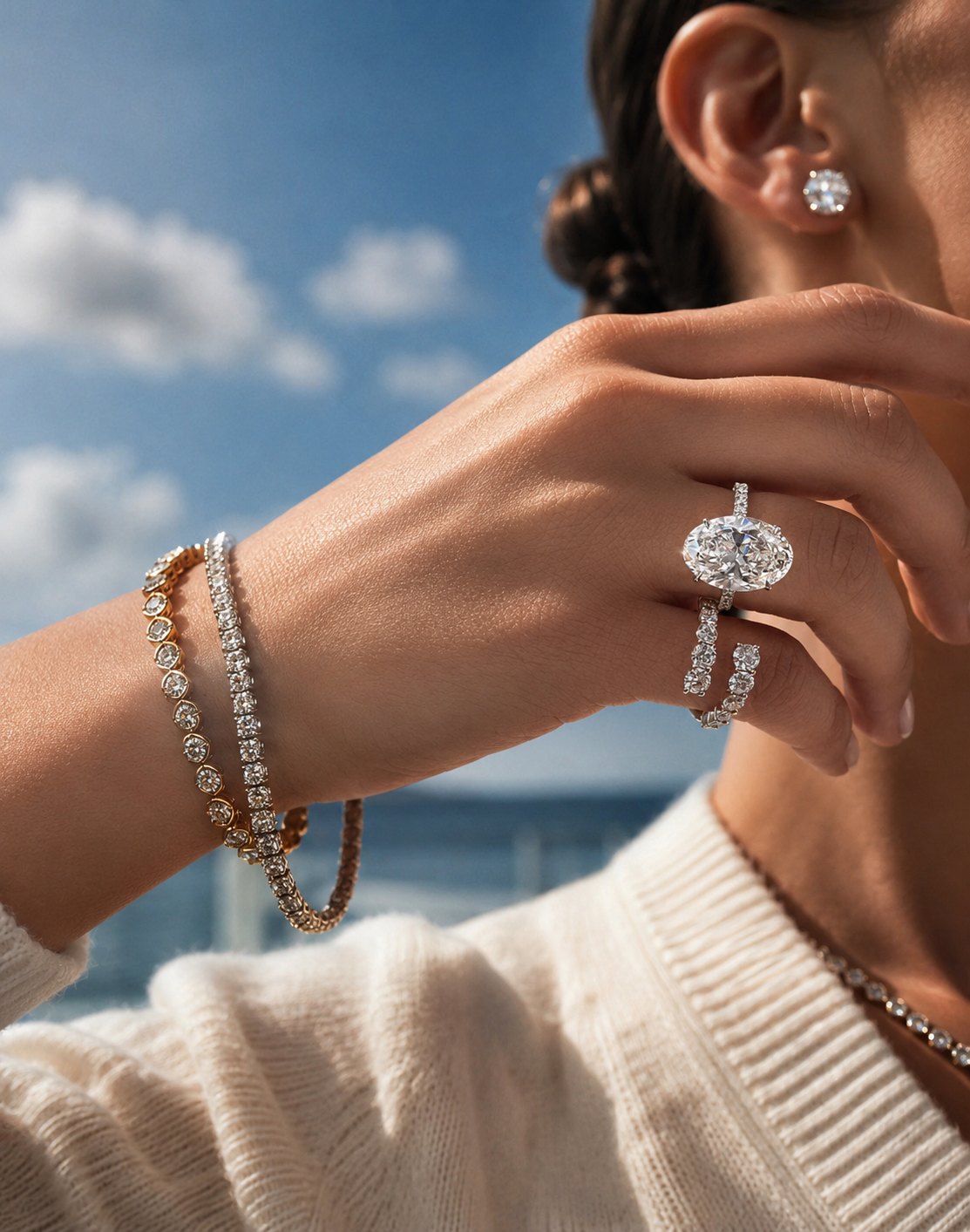
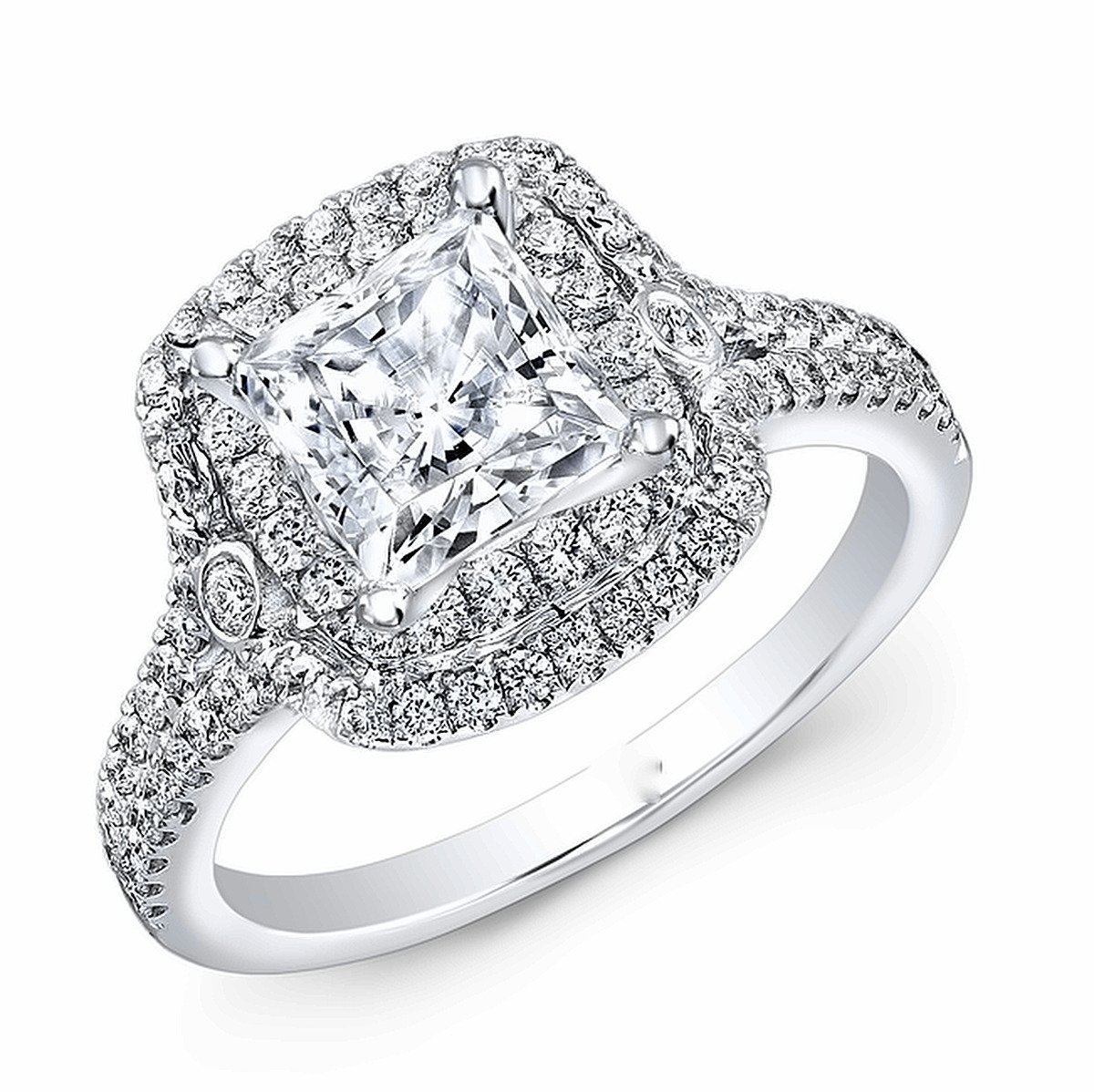
Two settings dominate the engagement ring world, and choosing between them is one of the first real decisions you will make. The solitaire is the pure, single-stone classic; the halo wraps that centre stone in a ring of smaller diamonds for extra sparkle and presence. Both are beautiful, and the right choice comes down to the look you love, how the ring will be worn, and a little understanding of what each design does well.
In short: choose a solitaire if you love understatement and the beauty of a single perfect stone, and a halo if you want maximum sparkle and apparent size for your budget. A halo can make a centre look larger by the visual equivalent of half a carat or more, while a solitaire is simpler to maintain and never dates. Both are GIA-certified and tax-free at IDC Cayman.
The Solitaire: Timeless and Pure
A solitaire presents a single diamond, usually raised on prongs so light can enter from every angle and the stone can show its full brilliance. There is nothing to distract from the diamond itself, which is why the solitaire has never gone out of fashion and never will.
Why it endures
The solitaire pairs effortlessly with almost any wedding band, is the easiest setting to keep clean, and reads as elegant in any decade because it has no decorative elements to date. It also lets the quality of the centre stone speak for itself, which is exactly what many people want from an engagement ring.
What to prioritise in a solitaire
Because the diamond carries the entire look, its cut and proportions matter a great deal, and a small stone has nowhere to hide. Prioritise an Excellent or Very Good cut above all else, as our diamond cut guide explains, and consider an elongated shape such as oval or pear that looks larger for its weight, covered in our diamond shapes guide and carat and size guide.
The Halo: Sparkle and Presence
A halo surrounds the centre diamond with a circle of small pave-set stones. That frame of brilliance floods the setting with extra sparkle and reads as glamorous and full of presence, letting a modest centre stone make a generous impression.
How a halo enlarges the centre
The ring of small diamonds extends the sparkle outward, so the centre appears noticeably larger, often by the visual equivalent of half a carat or more. The surrounding metal and melee also sit slightly proud of the centre's girdle, adding a measure of protection to the most vulnerable edge of the stone. For buyers who want the biggest look for their budget, a halo is one of the most effective designs there is.
Hidden and double halos
A hidden halo tucks a ring of tiny diamonds beneath the centre stone, invisible from above but a glittering surprise from the side, a way to add sparkle while keeping a clean profile from the top. A double halo adds a second concentric row of diamonds around the first, pushing size and brilliance further still for those who want maximum impact. Both are variations on the same idea: using small stones to amplify the centre.
Cushion, floral and scalloped halos
Not all halos are alike. A round halo around a round centre is the cleanest and most classic; a cushion halo softens the corners for a vintage feel; and a floral or scalloped halo shapes the surrounding stones into petals or a gentle wave for extra character. The melee can be shared-prong for maximum sparkle or bead-set for a smoother surround. A larger centre suits a slim, restrained halo, while a smaller centre gains the most from a fuller one, which is worth bearing in mind as you balance presence against your budget.
Halo vs Solitaire at a Glance
Side by side, the two settings spend a budget differently and suit different hands. A solitaire concentrates almost everything in one stone, while a halo invests in a smaller centre surrounded by inexpensive melee to maximise apparent size.
| Solitaire | Halo | |
|---|---|---|
| The look | Pure, classic, single stone | Glamorous, sparkling, full of presence |
| Budget focus | Around 100 percent in one centre stone | Smaller centre plus inexpensive melee |
| Apparent size | True to the centre's carat | Looks half a carat larger or more |
| Upkeep | Simplest to clean and maintain | Pave needs regular cleaning and checks |
| Best suited to | Lovers of understatement | Those who want scale and sparkle |
Pros, Cons and Upkeep
Neither setting is objectively better; each has strengths and trade-offs worth weighing before you decide.
Living with a solitaire
The solitaire is timeless, simple to clean and shows the diamond's true character, and with fewer stones there is less to maintain. The trade-off is that the centre carries the whole look, so size and cut quality matter more, and a smaller stone is more exposed.
Living with a halo
A halo gives far more sparkle, makes a smaller centre look significantly larger, and protects the centre's girdle. In return, the pave needs more regular cleaning to stay bright, the small stones should be checked periodically so none work loose, and a very intricate halo can feel more of its moment than a plain solitaire. Our jewellery care guide covers keeping pave bright between visits.
Metal, Shape and Matching a Band
Both settings work in any metal, though many buyers choose a white metal so a halo's melee blends seamlessly with the centre; our precious metals guide compares the options. Getting the size right matters for both, so use our ring size guide before you decide. When it comes to the band, a high-set solitaire usually takes a straight band, while a halo often needs a contoured or curved band to sit flush, as our guide to matching a wedding band explains. If you are weighing up a third option, our three-stone rings guide and our complete guide to choosing an engagement ring cover the full picture.
Choose the solitaire for the beauty of one perfect stone, the halo for sparkle and presence beyond its carat weight.
Try Both in Grand Cayman
The surest way to decide is to see both on your own hand. At IDC Cayman in George Town, Grand Cayman, you can compare solitaires and halos side by side from our engagement rings collection and our loose certified diamonds, with no pressure and no appointment needed. Every ring is built around GIA-certified diamonds in 14-carat or 18-carat gold, sold entirely tax-free, so a ring here can cost roughly 20 to 35 percent less than the same ring abroad. See how tax-free shopping works, then visit us in George Town or say hello first.