
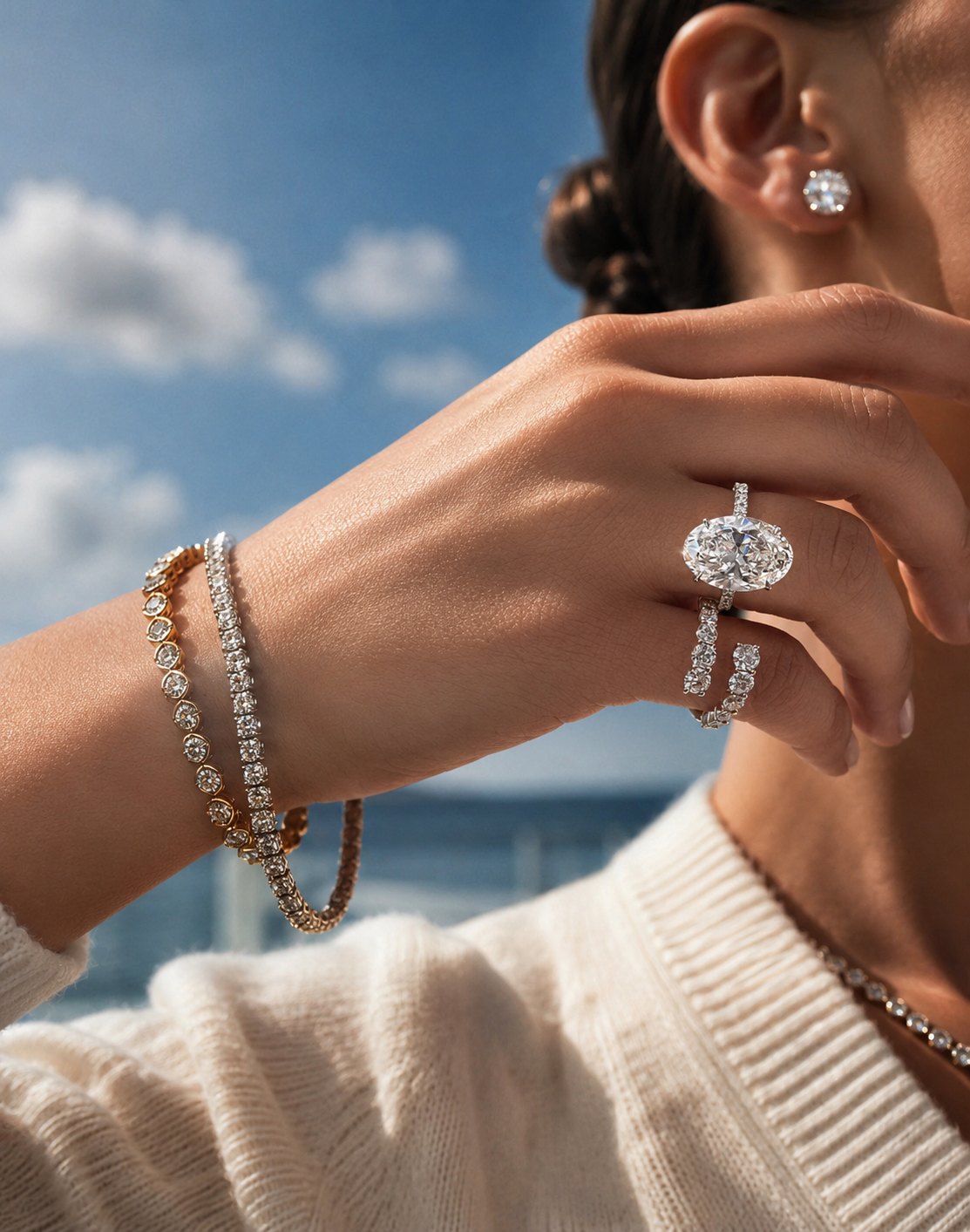
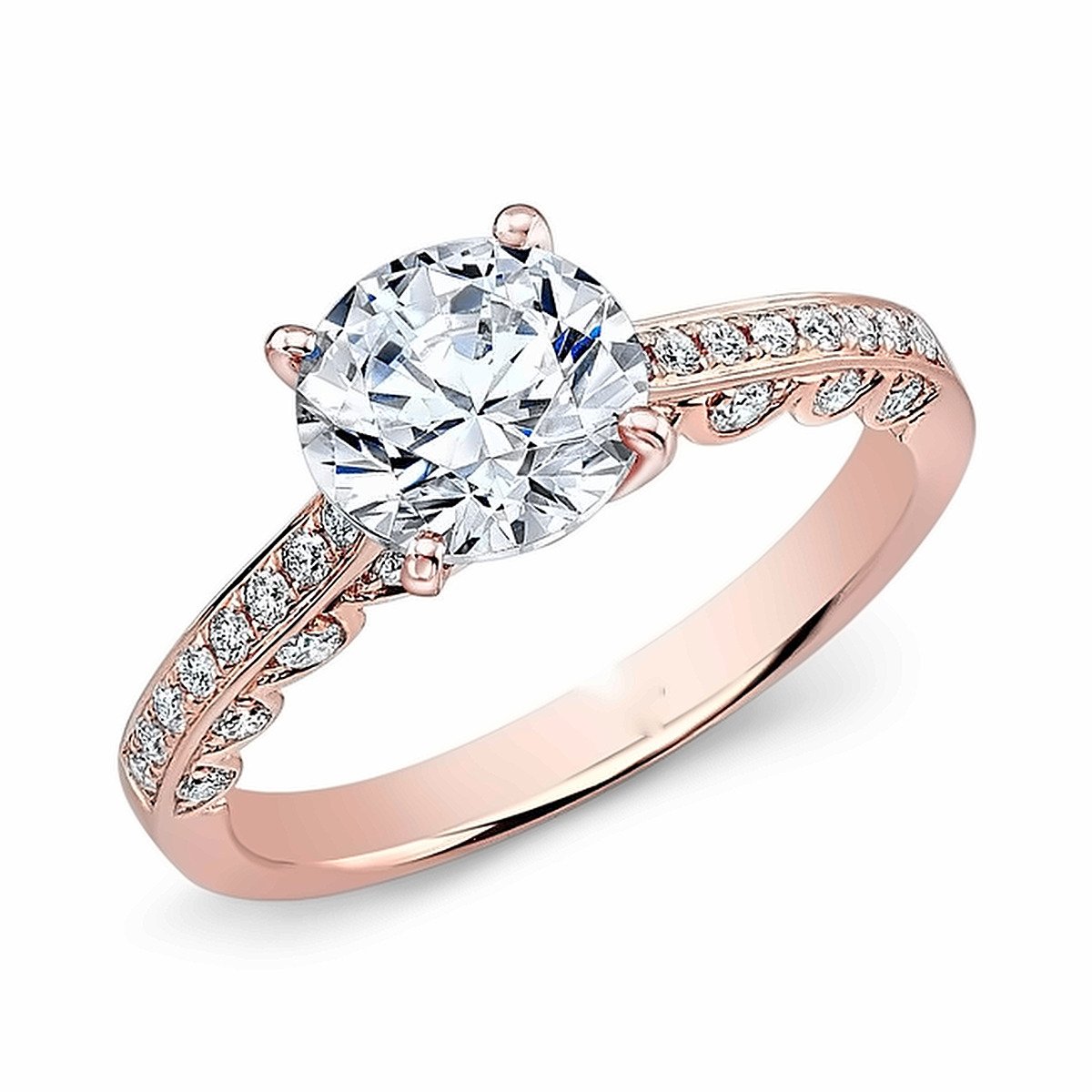
An engagement ring is a promise you can hold, worn every day and remembered for a lifetime. The perfect one suits the person who will wear it, not the ring with the biggest stone or the busiest design. Before you fall for a particular diamond or setting, it helps to understand the few principles that turn a good choice into an unmistakably right one: her style, the 4Cs, the shape and setting that frame the stone, the metal and the fit, and how buying in Grand Cayman quietly improves the whole equation.
In short: learn her style before you shop, prioritise cut among the 4Cs, choose roughly G to I colour and VS1 to SI1 clarity for a stone that looks flawless to the eye, match the setting and metal to how she lives, and insist on a GIA grading report. Buy in George Town and the whole ring is tax-free.
Start With Her Style
The most beautiful ring in the world is the wrong ring if it is not her. A little quiet observation now saves second-guessing later and means the ring feels right to her from the very first glance, even when it is a complete surprise.
Read the jewellery she already wears
Look closely at the pieces she reaches for every day. Note the metal colour, whether she leans classic or contemporary, understated or bold, and whether she wears delicate everyday pieces or larger statement jewellery. The rings she admires on others, the styles she saves and the pieces her closest friends know she loves are all reliable signals. If you can borrow a ring she already wears on the correct finger, even briefly, it is the simplest way to get the size right.
Metal, scale and personality
Decide first whether she prefers a warm metal such as yellow or rose gold, or a cool white metal such as 14-carat or 18-carat white gold, because that single choice steers everything else. Then consider scale: a prominent centre stone suits someone who loves a little glamour, while a refined, low-profile ring suits an active hand and a quieter taste. Our precious metals guide explains how each metal looks and wears.
The 4Cs: Your Quality Framework
Every diamond worth buying is graded on four characteristics, cut, colour, clarity and carat, that together decide how it looks and what it costs. Understanding the practical sweet spot for each lets you spend confidently and have a genuinely useful conversation with our gemologists. The order below is the order of priority we recommend.
Cut comes first
Cut is the single biggest driver of sparkle, and the only one of the 4Cs set by human skill rather than nature. Precise angles return light to the eye as brilliance and fire; a careless cut lets light leak away and the stone looks dull, however high its other grades. For round brilliants, ask for an Excellent or Very Good cut and nothing less. A well-cut stone of a slightly lower colour or clarity will always outshine a poorly cut stone of higher grades. Our diamond cut guide explains what to look for.
Colour and clarity
Colour is graded D, colourless, down to Z, and the sweet spot for most buyers is G to I: stones that face up white in almost any setting at a meaningful discount to the D to F range. In yellow or rose gold you can go a little warmer still. Clarity runs from Flawless to Included, and the goal is eye-clean rather than perfect; VS1 to SI1 covers stones whose inclusions are invisible without magnification. Read the detail in our colour grades guide and clarity grades guide.
Carat weight
Carat measures weight, not size, and prices jump at the round numbers. A stone just under a milestone weight can cost noticeably less than one on it, with no difference you could ever see, and elongated shapes look larger per carat than rounds. Size always comes after quality: never chase weight at the expense of cut. The carat and size guide shows how to buy smart just below the magic weights.
| The C | Our everyday sweet spot | Why it works |
|---|---|---|
| Cut | Excellent or Very Good | Drives brilliance and fire; the one C never to compromise |
| Colour | G to I (warmer in yellow or rose gold) | Faces up white for far less than the top grades |
| Clarity | VS1 to SI1 | Eye-clean without paying for flawlessness you cannot see |
| Carat | Just under a round number | Avoids the price jump at the milestone weights |
Choosing the Diamond Shape
Shape is personal, but it also affects how large a stone looks and how much sparkle it shows. Round brilliants return the most light and suit almost everyone; ovals, pears and marquises look larger for their weight and elongate the finger; emerald and Asscher cuts trade some sparkle for clean, architectural elegance; cushion and radiant cuts offer soft corners with plenty of fire. Try several on the hand before deciding. Our diamond shapes guide compares them all, and our loose certified diamonds let you see each shape in person.
Choosing the Setting
The setting frames the diamond and decides much of the ring's character. The right one balances the look she loves with how she lives, because a ring worn every day must be practical as well as beautiful.
Solitaire, halo or three-stone
A solitaire presents a single diamond raised to catch the light, the purest and most timeless look. A halo wraps the centre in a ring of small diamonds so it appears larger and sparkles more. A three-stone design sets the centre between two side stones, rich in symbolism and presence. Each suits a different personality; compare them in our halo versus solitaire guide and our three-stone rings guide.
Prong, bezel, pave and channel
Beyond the silhouette, the way the stones are held matters for everyday wear. Prong, or claw, settings lift the diamond so light enters from every angle. A bezel rims the girdle in metal for sleek, secure protection, ideal for active hands. Pave scatters tiny diamonds along the band for extra sparkle, while channel settings sit stones flush within the band, elegant and snag-free.
| Setting | The look | Best suited to | Upkeep |
|---|---|---|---|
| Solitaire | Pure, classic, single stone | Lovers of understatement | Simplest to clean |
| Halo | Glamorous, larger presence | Those who love sparkle and scale | Pave needs regular cleaning |
| Three-stone | Meaningful, full of fire | Symbolists and statement-makers | Periodic prong checks |
| Bezel | Sleek, modern, protective | Active and busy hands | Very low maintenance |
Metal and the Right Fit
The diamond gets the attention, but the metal and the size decide how the ring feels for the next several decades.
Choosing a metal
14-carat gold is hard-wearing and holds a setting securely over years of daily wear. The 18-carat golds, yellow, white and rose, offer warmth, a contemporary white tone, or a romantic pink, each prized for richness of colour. Match the metal to her existing jewellery so the new ring sits happily alongside everything she already wears, since durability and colour vary from one metal to the next.
Getting the ring size right
Sizing a surprise ring is the part most people worry about, and it need not be. Borrowing a current ring, asking a close friend, or choosing a setting that is straightforward to resize all work well. Fingers change slightly with temperature and the time of day, so a small adjustment after the proposal is completely normal. Our ring size guide walks through every method, and every ring from IDC Cayman includes complimentary resizing.
Certification and Budget
Two final decisions protect your money: insisting on independent certification, and spending your budget where it shows.
Why GIA matters
Every diamond we sell comes with a report from the Gemological Institute of America, the independent laboratory whose grades are the global benchmark. A GIA report records the 4Cs, the measurements and a unique number you can verify directly, and it is your proof of quality for insurance and any future valuation. Our guide to GIA certification walks through every line of the report.
Splitting your spend and the tax-free advantage
A practical framework is to allocate roughly half to sixty percent of your budget to the diamond and the rest to the setting, while never compromising on cut. Where you buy changes what that budget buys: the Cayman Islands levy no sales tax and no VAT, so a ring here can cost roughly 20 to 35 percent less than the same ring in the United States, the United Kingdom or Europe, value you can redirect into a better cut or a larger carat. See tax-free shopping in Grand Cayman for how it works.
Learn her style, prioritise cut, insist on GIA, and choose a setting that suits the life she actually lives.
Buying With Confidence in Grand Cayman
At IDC Cayman you can take your time. Browse our engagement rings, compare diamonds in the hand, read each GIA report, and discuss a setting with no pressure and no appointment needed. Every diamond is GIA-certified, every purchase is tax-free, and every ring comes with lifetime after-care. When the time comes, the matching wedding band can be designed as a pair. Visit us in George Town, or say hello first.