
Morganite has become one of the most loved gemstones of the last decade, and it is easy to see why. Its soft blush and peach tones glow against rose gold, it carries a quietly romantic mood, and it is available in generous sizes that make a real statement. Yet a beautiful morganite rewards an informed eye, because its colour behaves in ways that surprise first-time buyers. This guide explains what morganite is, how colour and size interact, the treatments to understand, and the honest trade-offs of choosing it for an engagement ring.
In short: morganite is a pink to peach beryl at 7.5 to 8 on the Mohs scale, durable enough for daily wear but pale by nature, so choose a stone with visible, appealing saturation and judge it in person, since its hue deepens with size. It looks its best in rose gold and makes a tender alternative centre stone for an engagement ring. Bought in George Town, the whole purchase is tax-free.
The Pink Beryl
Morganite belongs to one of the most distinguished families in the gem world, which gives it both its beauty and its dependable durability.
What morganite is
Morganite is the pink to peach variety of beryl, the same mineral family as aquamarine and emerald, with its delicate colour owed to traces of manganese. Where aquamarine is the cool blue beryl, morganite is the warm one, spanning gentle rose, blush and salmon through to a soft peach. Like its cousin aquamarine, it tends to grow as clean crystals, so fine morganite is usually transparent and eye-clean, a welcome contrast to the heavily included emerald.
A modern romance
Morganite was named in 1910 in honour of a renowned American financier and gem collector, on the suggestion of a celebrated gemologist of the day, and its popularity has soared in recent years as rose gold returned to fashion. The principal sources are Brazil and Madagascar, with further fine material from Mozambique, Afghanistan, Namibia and the United States. Unlike many gems it carries no traditional birthstone, so it sits a little apart from the birthstones by month as a purely modern token of love. For a sense of where morganite sits among the coloured stones, our coloured gemstone jewellery guide sets out the full picture.
Colour, Saturation and Size
The defining quirk of morganite is that its colour is naturally soft, so reading it well is the single most important skill when buying.
Why size affects colour
Saturation in morganite is gentle, so the hue depends heavily on size: a small morganite can look almost colourless, while a larger stone of the same material shows its pink or peach far more convincingly. This is why morganite is so often cut into broad, generous shapes, and why size and colour must be considered together rather than separately. If you want a stone that reads clearly as pink, plan for a little more size than you might with a strongly coloured gem.
Pink or peach?
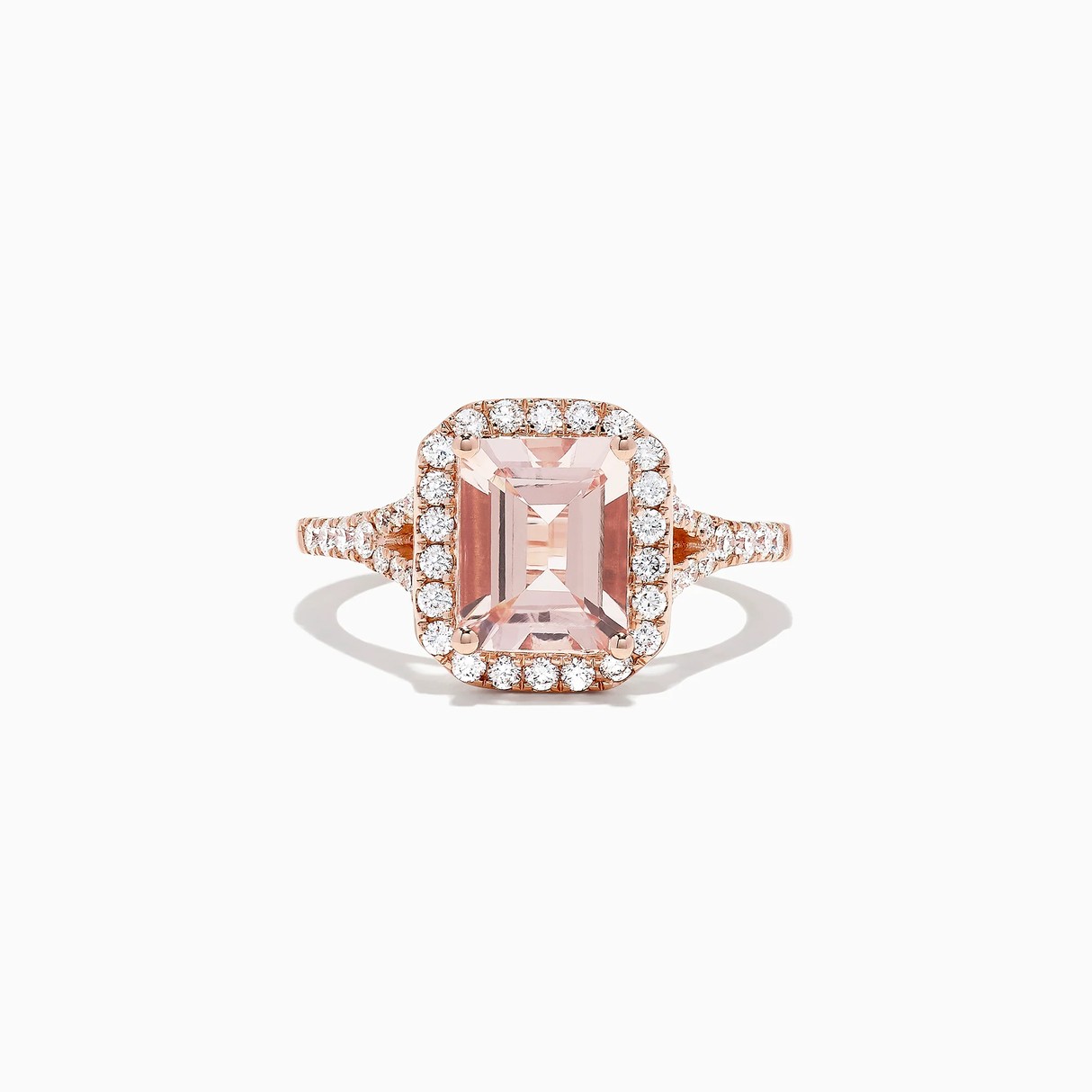
Tastes vary between a clean, pure pink and a warmer salmon or peach. The purer pinks are widely regarded as the most desirable, while peach tones look enchanting set in rose gold, whose warmth amplifies the blush. Choose a tone you genuinely love in person, as photographs rarely capture morganite faithfully, and consider how the metal you choose, whether yellow, rose or white, will noticeably change the way a soft colour reads.
Morganite at a Glance
The essentials to carry into the boutique:
| Property | Morganite detail |
|---|---|
| Mineral | Beryl, the pink to peach variety |
| Mohs hardness | 7.5 to 8, good toughness |
| Colour range | Rose and blush pink through salmon to soft peach |
| Main sources | Brazil, Madagascar, Mozambique, Afghanistan, Namibia, United States |
| Birthstone | None traditional; a modern emblem of compassion and love |
| Common treatment | Often gently heated to remove yellow or orange and purify the pink |
| Care | Warm soapy water and a soft brush; clean the back of the stone regularly |
What Drives the Value
When comparing two morganites, weigh them in this order:
| Factor | What to look for | Why it matters |
|---|---|---|
| Colour | A clear, appealing pink or peach with visible saturation | The leading factor; near-colourless stones are less prized |
| Clarity | Eye-clean and transparent | Fine morganite should be bright and clear |
| Cut | Well-proportioned, larger faces that lift the soft hue | Good cutting helps a gentle colour show its best |
| Carat | Generous sizes readily available | Colour deepens with size, so larger stones often satisfy most |
Treatments and Clarity
Much morganite is gently heated to remove a yellow or orange cast and reveal a cleaner pink. This treatment is stable and permanent and is standard across the trade, though some buyers prefer untreated peach and salmon tones for their natural warmth. Either choice is valid; what matters is that the treatment is disclosed honestly rather than glossed over, which is exactly the standard we hold across our coloured gemstones. On clarity, fine morganite is usually transparent and eye-clean, so visible inclusions should lower the price rather than be accepted as normal.
Morganite is a stone of mood, not drama. Choose the tone that makes you smile in person, give it enough size to glow, and let rose gold do the rest.
Morganite for Engagement Rings
Morganite has become a favourite alternative centre stone, prized for its romance and value, but a few honest points help you choose with open eyes.
Durability and the honest trade-offs
Morganite measures 7.5 to 8 on the Mohs scale with good toughness, the same practical durability as aquamarine, so it stands up well to everyday engagement-ring wear with sensible care. Two trade-offs are worth knowing. First, because the colour is pale, oils and everyday grime gathered behind the stone dull its sparkle more visibly than on a darker gem, so regular cleaning genuinely matters. Second, its soft, on-trend colour is a style choice rather than a timeless classic, something to weigh if you want an heirloom look. Our how to choose an engagement ring guide and our engagement rings and wedding rings collections help you picture the whole piece.
Caring for morganite
Clean morganite with warm soapy water and a soft brush, paying particular attention to the back of the stone where oils collect, then rinse and pat dry. Ultrasonic cleaning is generally safe for clean, untreated stones, though gentle hand cleaning is the safest routine, and harsh chemicals are best avoided. Follow the same habits set out in our jewellery care guide and it will keep its blush for a lifetime.
Buying Morganite in Grand Cayman
If a romantic pink stone speaks to you, our GIA-certified gemologists will help you balance colour, size and setting so your morganite shows its blush at its best. Browse our fine jewellery and coloured gemstones, and see how different tones read against rose, yellow and white metals. Visit us in George Town, Grand Cayman, where no appointment is needed and every purchase is entirely tax-free, with no sales tax and no VAT. When you are ready to choose, come and see us on the waterfront.