
A pearl is the only gem grown by a living creature, and that origin gives it a character no cut stone can match: a soft, glowing depth that seems to come from within. From a single strand of perfectly matched Akoya to a dramatic dark Tahitian, pearls range enormously in colour, size and price, and choosing well comes down to understanding where a pearl comes from and how its quality is judged. This guide covers both in the plain terms we use with clients every day, and you can see fine pearls in context across our coloured gemstone collection.
In short: judge a pearl on lustre above all else, the bright, sharp, glowing reflection that makes it look alive, then on surface, shape, colour, size and how well a strand is matched. Almost every pearl sold today is a cultured pearl, which is entirely real. Pearls are soft, at only about 2.5 to 4.5 on the Mohs scale, so they need gentle care. Pearl is June's birthstone, and bought in George Town it is entirely tax-free.
Pearls at a Glance
Here are the facts clients ask for most often, gathered in one place and expanded in the sections that follow.
| Property | Pearl |
|---|---|
| Origin | Organic; nacre grown by an oyster or mussel |
| Colour range | White, cream, golden, pink, grey to black |
| Mohs hardness | About 2.5 to 4.5; the softest gem you will own |
| Notable sources | Japan, China, Australia, French Polynesia |
| Birthstone | June |
| Anniversary | Third and thirtieth wedding anniversaries |
| Top value factor | Lustre, above all else |
| Care | Last on, first off; wipe with a soft damp cloth, never ultrasonic |
Natural Versus Cultured Pearls
How a pearl forms
A natural pearl forms entirely by chance when an irritant lodges inside a wild mollusc, which then builds up concentric layers of nacre over years. Natural pearls are extraordinarily rare today and are largely the province of auctions and antique jewellery, which is why fine examples carry such legendary prices.
Cultured pearls are real pearls
Almost every pearl sold now is a cultured pearl, in which a technician introduces a bead or piece of tissue to start the process, after which the oyster does the real work, depositing genuine nacre exactly as it would in nature. A cultured pearl is therefore a real pearl, not an imitation; the difference is only in how the process began. True imitations, made of coated glass or plastic, are a separate thing entirely and are easy to tell apart by their cold, even, lifeless surface.
The Four Great Types of Cultured Pearl
Four kinds of cultured pearl make up almost everything you will see, and each has its own look, size and personality.
Akoya and freshwater
Akoya, the classic saltwater pearl from Japan and China, is prized for the sharpest, most mirror-like lustre. Usually white to cream with rose or silver overtones and beautifully round in smaller to medium sizes, these are the quintessential strand pearls. Freshwater pearls, grown in mussels chiefly in China, are now the most varied and accessible; once irregular, the best modern freshwater pearls are round with excellent lustre and come in natural white, pink, peach and lavender, often solid nacre throughout.
South Sea and Tahitian
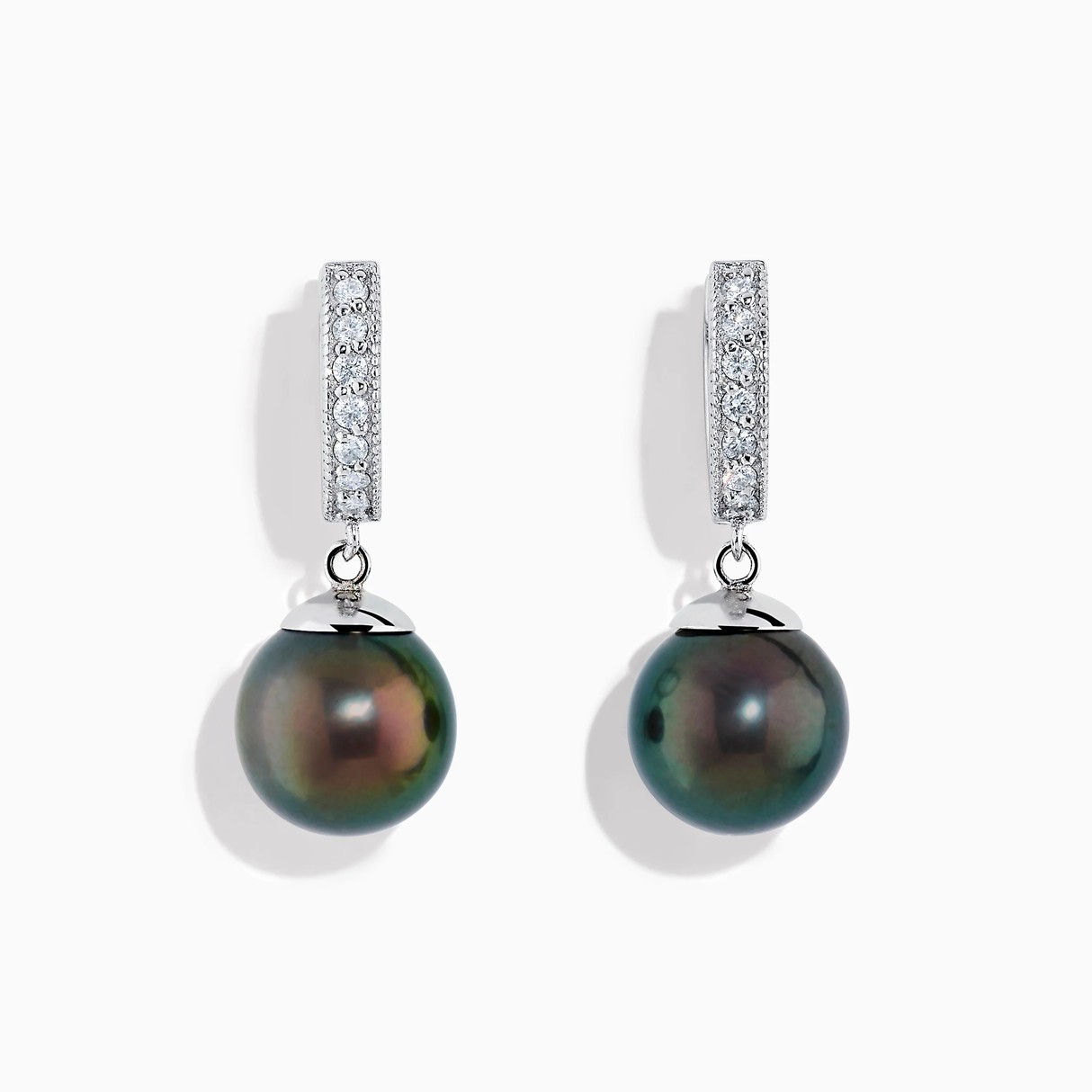
South Sea pearls are the largest and among the most valuable, grown in big oysters in Australia, Indonesia and the Philippines. They appear in luminous white to silver and in a much-loved natural golden colour, with thick nacre and a satiny, deep glow. Tahitian pearls are the famous naturally dark pearls grown in French Polynesia, ranging from silver and grey to deep black with peacock green, aubergine and blue overtones; large, exotic and entirely natural in colour. Our guide to coloured gemstone jewellery in Cayman shows how these pearls work in finished pieces.
| Type | Main sources | Typical colours | Known for |
|---|---|---|---|
| Akoya | Japan, China (saltwater) | White to cream, rose or silver overtones | Sharpest, mirror-like lustre |
| Freshwater | China (mussels) | White, pink, peach, lavender | Variety, value, solid nacre |
| South Sea | Australia, Indonesia, Philippines | White to silver and golden | Large size and satiny depth |
| Tahitian | French Polynesia | Silver, grey to black, peacock | Naturally dark, exotic colour |
How Pearls Are Judged
Pearls are not graded by the 4Cs of diamonds; they have their own value factors, and the order matters a great deal.
Lustre comes first
Lustre outranks everything else, because it is what makes a pearl look alive. A high-lustre pearl shows bright, sharp reflections and an inner glow, while a dull pearl looks chalky and flat no matter how round it is. A smaller pearl with superb lustre will always look finer than a large, dull one, so this is the factor to fix first.
The other value factors
- Nacre thickness, the depth of the pearl coating, which underlies both lustre and durability; thin nacre looks dull and wears poorly.
- Surface quality, how free the pearl is of spots, bumps and blemishes; cleaner surfaces are rarer and more valuable.
- Shape, from perfectly round, the rarest, through near-round, drop and button, to baroque, which can be characterful and beautiful in its own right.
- Colour, the body colour plus its overtone and any iridescent orient; preference is personal, but rarer natural colours such as fine golden South Sea and peacock Tahitian command more.
- Size, measured in millimetres; larger pearls are rarer and cost more, dramatically so in the big South Sea sizes.
- Matching, how well pearls in a strand or pair agree in colour, lustre, size and shape; close matching across many pearls is painstaking and adds real value.
Caring for Pearls, the Softest Gem
Last on, first off
Pearls are by far the most delicate gem you are likely to own, sitting at only about 2.5 to 4.5 on the Mohs scale, and being organic they are vulnerable to acids, heat and dryness. The golden rule is last on, first off: put your pearls on after perfume, hairspray, makeup and lotion, and take them off before you undress, because cosmetics, sweat and chlorine all dull or etch nacre over time.
Cleaning and storage
Never use ultrasonic or steam cleaners or any chemical dip; simply wipe pearls with a soft damp cloth after wear and let them dry before storing. Keep them flat in a soft pouch away from harder jewellery that would scratch them, and do not hang strands for long periods, which stretches the silk. Strands should be restrung periodically, ideally with a knot between each pearl and a secure clasp in a metal you can read about in our precious metals guide. Our guide to cleaning and caring for fine jewellery covers the full routine.
The June birthstone
Pearl is the birthstone for June and the gem of the third and thirtieth wedding anniversaries, a timeless symbol of purity and grace. See where it sits among the other birthstones by month, and find ideas in our anniversary jewellery gift guide. Because pearls are soft, they shine brightest in earrings and pendants rather than rings worn daily; for an everyday ring a harder gem is wiser, as our engagement rings show.
With pearls, lustre is everything: choose the brightest, most glowing surface you can find, treat them as the softest gem you own, and they will keep their quiet light for a lifetime.
Buying Pearls Tax-Free in Grand Cayman
At IDC Cayman we select pearls for lustre above all, match strands with patience, and present them alongside our wider fine jewellery so you can compare in the hand. Browse the shop or visit our waterfront boutique in George Town to see how different pearls suit your skin tone and wardrobe.
Walk in whenever it suits you, with no appointment needed. Every purchase is tax-free, with no sales tax and no VAT, so pearls here can cost roughly 20 to 35 percent less than the same quality in the United States, the United Kingdom or Europe, and we offer free insured worldwide shipping. See how tax-free shopping works, or visit us on the George Town waterfront.