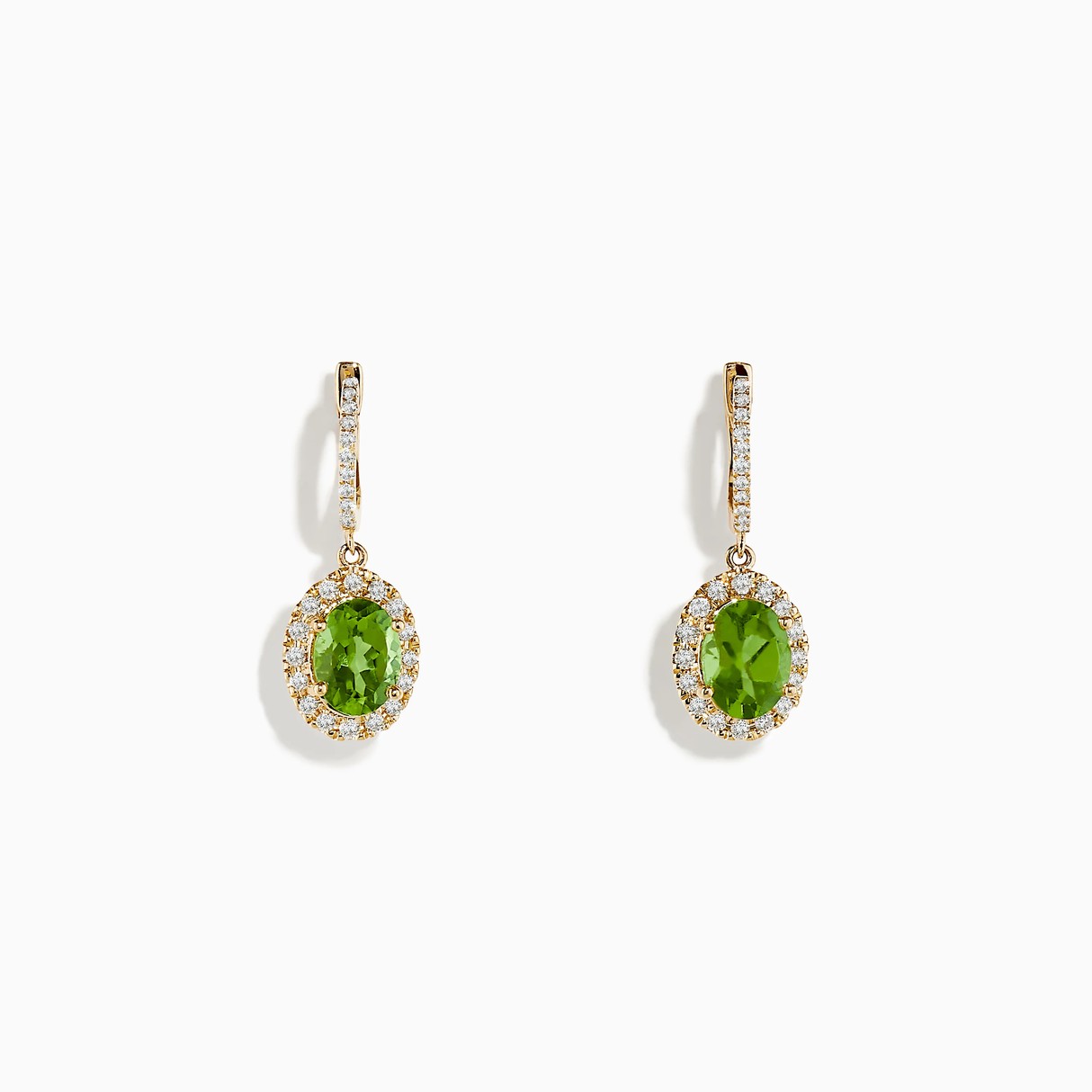
Peridot wears its colour with unusual confidence. It is one of the very few gemstones that occur in essentially a single colour, a fresh yellowish green to olive that looks like sunlight through leaves, and it owes that hue to iron built into its own structure rather than to a trace impurity. The result is a gem that is always recognisably itself, glowing and lively, and one with a remarkable backstory that reaches from ancient Egypt all the way to outer space.
In short: buy peridot for the cleanest, most vivid grass green you can find, because in this gem colour is almost the entire story. It is one of the few coloured stones that reaches the market essentially untreated, it sits at about 6.5 to 7 on the Mohs scale so it suits everyday earrings and pendants with care, and bought in George Town it is entirely tax-free.
Gem Olivine: A True Single-Colour Stone
Peridot is the gem-quality variety of the mineral olivine, part of the forsterite to fayalite series, and gemmologists often call it gem olivine. Its single-colour nature makes it one of the most honest stones in the coloured gemstone world to buy and to understand.
Why peridot is self-coloured
Because iron is an essential ingredient rather than an accidental one, peridot is what is known as idiochromatic, or self-coloured, which is why it never strays far from green. The colour is part of the recipe of the mineral itself, not a guest element that happened to wander in, so peridot does not appear in the rainbow of hues you find in a stone like tourmaline.
The untreated luxury
That same chemistry means peridot is almost always completely untreated; it is not routinely heated, irradiated or oil-filled, so the colour in the stone is the colour nature grew. For a buyer that honesty is a quiet luxury, since you are judging the gem on its own merits with nothing hidden, a refreshing contrast to the many treatments we explain in our coloured gemstone jewellery guide.
Colour, Clarity and Cut
With treatment off the table, three familiar factors decide the beauty and value of a peridot, and colour leads all of them.
Colour, the master factor
The most prized peridot is a pure, vivid grass green with as little yellow or brown as possible, and saturation tends to deepen in larger stones, because small peridot can look pale. Avoid stones that drift too far toward brownish or muddy olive, as these read as tired next to a clean green. A practical bonus is that peridot holds its colour under both daylight and lamplight rather than shifting or dulling indoors, a quality that earned it the old nickname evening emerald; for the real thing, see our emerald buying guide.
Clarity and lily-pad inclusions
Clarity should be eye-clean in the finer material, though peridot characteristically contains tiny lily-pad inclusions and the occasional crystal, which a loupe will reveal and which confirm a natural stone. A few small internal features are normal and nothing to fear; what you want to avoid is anything large or dark enough to dull the stone or threaten its durability.
Cut and double refraction
Cut matters more than people expect, partly because peridot has strong double refraction, which can make the back facets appear to double when viewed closely. A skilled cutter orients the stone to minimise this face-up and to gather the most light, so good cutting keeps a peridot looking crisp and bright rather than sleepy. Precision here is exactly what we look for when choosing stones for fine jewellery.
Buy peridot for the cleanest, most vivid green you can find; in this gem, colour is almost the entire story.
Peridot at a Glance
These are the key facts our gemologists return to most often when guiding a client through a peridot purchase.
| Property | Detail |
|---|---|
| Mineral | Gem olivine (forsterite to fayalite series) |
| Mohs hardness | 6.5 to 7 |
| Colour | Yellowish green to olive; a single, self-coloured hue |
| Treatment | Almost always untreated |
| Birthstone | August |
| Anniversary | Traditional gift for the sixteenth |
| Care | Avoid ultrasonic, steam, sudden heat and acids |
Where Peridot Comes From
Peridot has one of the most far-flung origin stories of any gem, from a tiny Red Sea island to the high Himalaya and even the depths of space.
From ancient Egypt to Arizona
Historically the island of Zabargad in the Red Sea, also known as St John's Island, supplied the ancient world, and the Egyptians mined it there so long ago that several royal gems once believed to be emerald have turned out to be peridot. Fine peridot still comes from several modern sources, each with its own character.
Peridot from space
Most extraordinary of all, peridot also arrives from beyond the earth: gem-quality olivine is found inside pallasite meteorites, the rare stony-iron meteorites in which crystals of olivine are suspended in nickel-iron. Extraterrestrial peridot is scarce and collectable, but the overwhelming majority of stones in jewellery come from terrestrial mines.
| Source | Region | Known for |
|---|---|---|
| Zabargad | Red Sea (Egypt) | The historic ancient-world source |
| San Carlos | Arizona, United States | Large quantities of bright, accessible material |
| Pakistan | Himalaya near Kashmir | Some of the finest large, clean stones |
| Myanmar | Mogok region | Rich, slightly bluish green colour |
| Pallasite meteorites | Outer space | Rare, collectable extraterrestrial peridot |
Durability, Care and Settings
Peridot is a cheerful everyday stone for the right pieces, provided you respect its modest hardness and its dislike of harsh treatment.
Everyday wear
Peridot sits at about 6.5 to 7 on the Mohs scale, hard enough for everyday earrings and pendants but deserving of a little thought in rings, where knocks and abrasion accumulate over years. A protective setting and gentle handling let a peridot ring be worn often without worry.
Cleaning and storage
It is sensitive to sudden temperature change and to acids, so keep it away from ultrasonic and steam cleaners and clean it with warm soapy water and a soft brush, then store it apart from harder gems. Our jewellery care guide covers safe routines, and our in-house services include professional cleaning and setting checks.
Birthstone and settings
As the birthstone for August and a traditional gift for the sixteenth wedding anniversary, peridot makes a cheerful, personal present; match any month to its stone in our birthstones by month guide, or browse our wider anniversary gift guide. Its green flatters both metals: yellow gold echoes and warms the hue for a classic look, while white gold sharpens it and lets the green read cooler and more modern, a choice our precious metals guide explores. Protective styles such as a bezel or a halo suit a ring that will be worn often.
Buying Peridot Tax-Free in George Town
At IDC Cayman we choose peridot for the purity and life of its green, cut to sparkle and set to last, and we sell it completely tax-free, with no sales tax and no VAT, so a piece here can cost roughly 20 to 35 percent less than the same stone elsewhere. Browse our coloured gemstones and the wider shop, then visit us on the George Town waterfront with no appointment needed; ask about free insured shipping worldwide or get in touch before you travel.