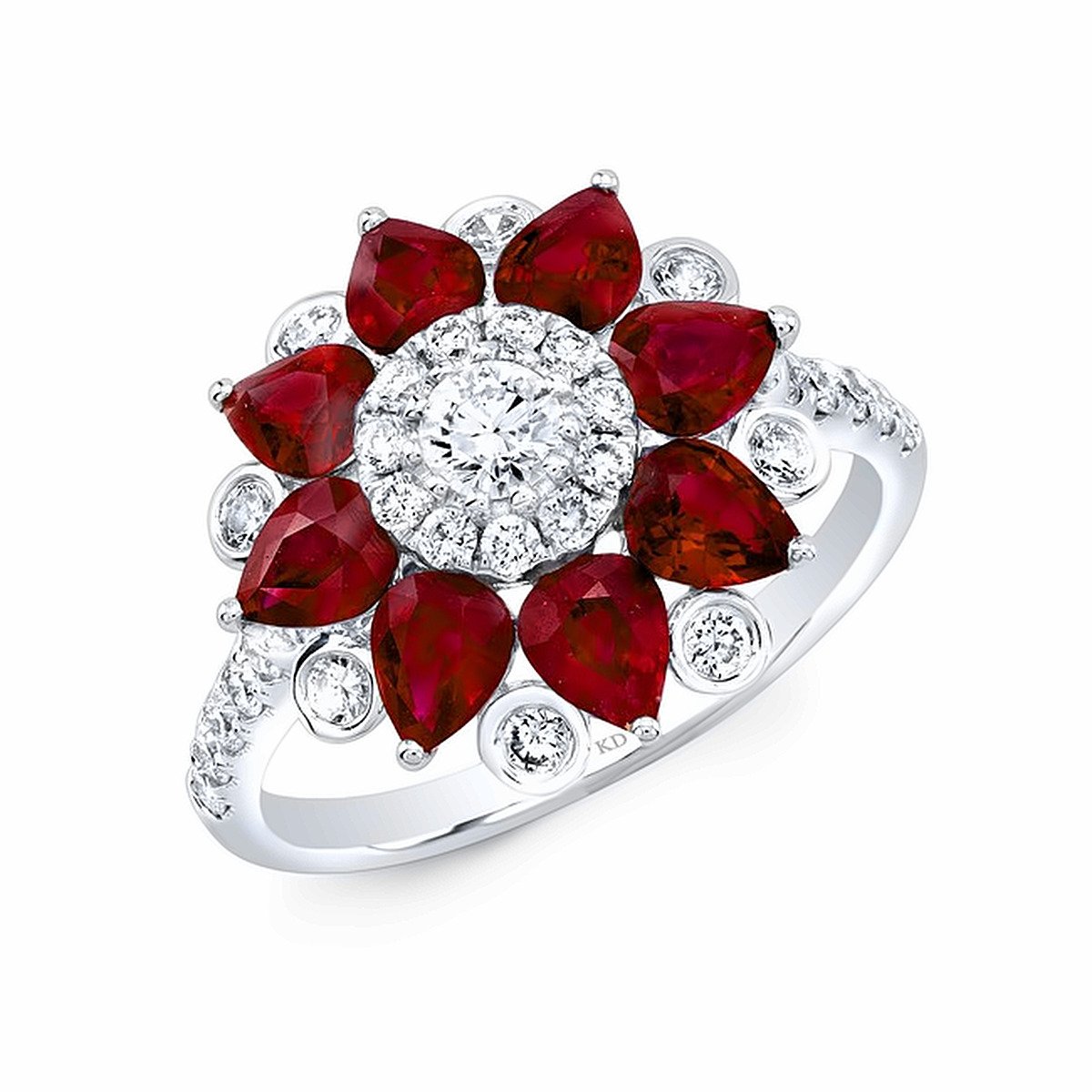
Few gemstones command attention like a fine ruby. Worn by emperors, set into crowns and treasured across cultures for thousands of years, it has earned its title as the king of gemstones, and a top-quality ruby can be rarer, and command more per carat, than a diamond of the same size. Ruby is simply the red variety of corundum, the same remarkably hard mineral that gives us sapphire, coloured by traces of chromium; that very chromium lends the finest stones a soft red fluorescence that seems to glow from within. This guide distils what our team looks for every day, so you can choose a ruby of real and lasting quality.
In short: with ruby, colour outranks everything, so prioritise a vivid, slightly purplish red in a medium to medium-dark tone, accept the small inclusions that come with a natural stone, expect standard heat treatment but avoid fragile glass-filled material, and insist on independent disclosure of any treatment. At 9 on the Mohs scale ruby is superbly hard-wearing, it is July's birthstone, and bought in George Town it is entirely tax-free.
Ruby at a Glance
Before the detail, here are the facts our clients ask for most often, gathered in one place. Each point is expanded in the sections below, and you can see fine rubies in context across our coloured gemstone collection.
| Property | Ruby |
|---|---|
| Mineral | Corundum (aluminium oxide) |
| Colour range | Purplish red to slightly orangey red |
| Mohs hardness | 9, second only to diamond |
| Notable sources | Myanmar (Burma), Mozambique, Thailand, Sri Lanka |
| Birthstone | July |
| Anniversary | Fortieth wedding anniversary |
| Common treatment | Heat, standard and accepted |
| Care | Warm soapy water and a soft brush; very durable |
Colour: The Heart of a Ruby
With ruby, colour matters more than any other factor, and a trained eye breaks it into three parts: hue, tone and saturation. Get the colour right and everything else falls into place; get it wrong and no amount of size or polish will rescue the stone.
Hue, tone and saturation
The ideal hue is a pure, vivid red, or a red with only the faintest whisper of blue. Any obvious drift toward orange or brown lowers the appeal, and a stone too light in colour is classed as pink sapphire rather than ruby. Tone should sit in the medium to medium-dark range, deep enough to feel rich yet bright enough to stay lively, while saturation, the sheer intensity of the colour, should be as strong as possible without tipping into darkness. Saturation is the quality that separates a merely pretty red from a breathtaking one.
The pigeon-blood ideal
The most coveted colour of all carries the old Burmese trade name pigeon-blood: a pure, highly saturated red with a vivid internal glow and little to no brown. Because the term is sometimes used loosely to flatter lesser stones, treat it as a description to be earned rather than a label to be trusted, and look for it confirmed on a report from an independent laboratory. Comparing several reds side by side, ideally in daylight, is the fastest way to train your eye.
Origin: Where Fine Rubies Are Found
Origin can shape both beauty and value, because different deposits tend to produce different characters of red. It should support your judgement, not replace it.
Burma, the historic benchmark
The Mogok valley in Burma, now Myanmar, has produced the legendary rubies of history, prized for an intense, slightly purplish red and a strong fluorescence that makes them appear lit from inside. A documented Burmese origin of fine colour commands the highest premiums of all.
Mozambique and other modern sources
Mozambique has become a leading modern source of superb rubies with excellent colour and clarity, and fine stones also come from Thailand, Sri Lanka and Madagascar. A beautiful, well-priced Mozambique ruby can outshine a tired Burmese one, so let the stone in front of you, not the name on the label, lead the decision. Our guide to coloured gemstone jewellery in Cayman explains how we weigh origin alongside the qualities you can actually see.
Clarity, Silk and Cut
Why a few inclusions are welcome
Unlike diamond, ruby is expected to carry some inclusions, and a few are perfectly acceptable. Many fine stones contain delicate, needle-like inclusions called silk, made of the mineral rutile; in the right measure silk scatters light softly, adds life and can even confirm that a stone has not been overheated. The goal is a ruby that is clean and lively to the naked eye, not one that is flawless under a loupe.
Cut and shape
A skilled cut balances colour and brilliance and returns light evenly across the face of the stone, with no dull window at the centre. Ovals and cushions are the most popular shapes because they hold weight well and deepen the red, while rounds maximise sparkle. Fine ruby is genuinely rare in larger sizes, so clean stones above one carat in top colour are uncommon and the price per carat rises steeply with weight. A fine ruby makes a striking centre for coloured-stone engagement rings.
Treatments: What to Accept and What to Avoid
Knowing how a ruby has been treated is essential, because it separates a genuine, valuable gemstone from a fragile composite worth a fraction of the price.
Heat treatment, standard and accepted
Gentle, permanent heating is standard across the trade and fully accepted. It improves colour and clarity, and a heated ruby of fine colour is still a real, durable, valuable gemstone. The overwhelming majority of rubies on the market are heated, and reputable jewellers say so plainly.
Glass-filled rubies, best avoided
Lead-glass composite, or glass-filled, rubies are very different and best avoided for fine jewellery. These are heavily fractured, low-grade stones flooded with glass to look whole; they are fragile, can be harmed by ordinary heat and household chemicals, and are worth only a small fraction of a natural ruby. Always insist on written disclosure of any treatment, ideally on an independent report, so you know precisely what you are buying.
| Treatment | What it is | Our view |
|---|---|---|
| No heat (untreated) | Natural colour, no enhancement | Rare in fine colour and commands a premium; confirm with a report |
| Heat treated | Gentle, permanent heating to improve colour and clarity | Standard and fully accepted; a genuine, durable gemstone |
| Glass-filled (composite) | Fractured rough flooded with lead glass | Avoid for fine jewellery; fragile and very low value |
Durability, Birthstone and Everyday Care
Built for daily wear
At 9 on the Mohs scale, ruby is one of the hardest of all gemstones, surpassed only by diamond, which makes it beautifully suited to rings and bracelets worn every day. It has no troublesome cleavage, so with sensible care a ruby will look as good in fifty years as it does today, one reason it is such a rewarding choice for an everyday engagement ring.
The July birthstone
Ruby is the birthstone for July and the gem traditionally given for a fortieth wedding anniversary, long associated with love, passion and vitality, which makes it a deeply personal gift. See where it sits among the other birthstones by month, and find more ideas in our anniversary jewellery gift guide.
Cleaning and care
Caring for a ruby is straightforward: clean it with warm water, a little mild soap and a soft brush, then rinse and pat dry, and store it apart from softer pieces so nothing scratches or is scratched. Natural and standard heated rubies tolerate gentle ultrasonic cleaning, but glass-filled stones never should, one more reason to know exactly how your ruby was treated. Our guide to cleaning and caring for fine jewellery covers the routine in more detail.
With ruby, colour is everything: choose a vivid, glowing red, accept the small inclusions nature includes, insist on full disclosure, and let its diamond-like hardness carry it through a lifetime of wear.
Buying a Ruby Tax-Free in Grand Cayman
A truly fine ruby rewards patience and a trained eye. Every coloured gemstone we present at our waterfront boutique in George Town is offered with independent certification and full, honest disclosure of any treatment, and our team is happy to talk you through each stone in person. Browse the wider gemstone collection and our fine jewellery, or set off a ruby with accents from our certified loose diamonds.
Walk in whenever it suits you, with no appointment needed. Every purchase is tax-free, with no sales tax and no VAT, so a ruby here can cost roughly 20 to 35 percent less than the same stone in the United States, the United Kingdom or Europe, and we offer free insured worldwide shipping so the right ruby can reach you wherever you call home. See how tax-free shopping works, or visit us on the George Town waterfront.