
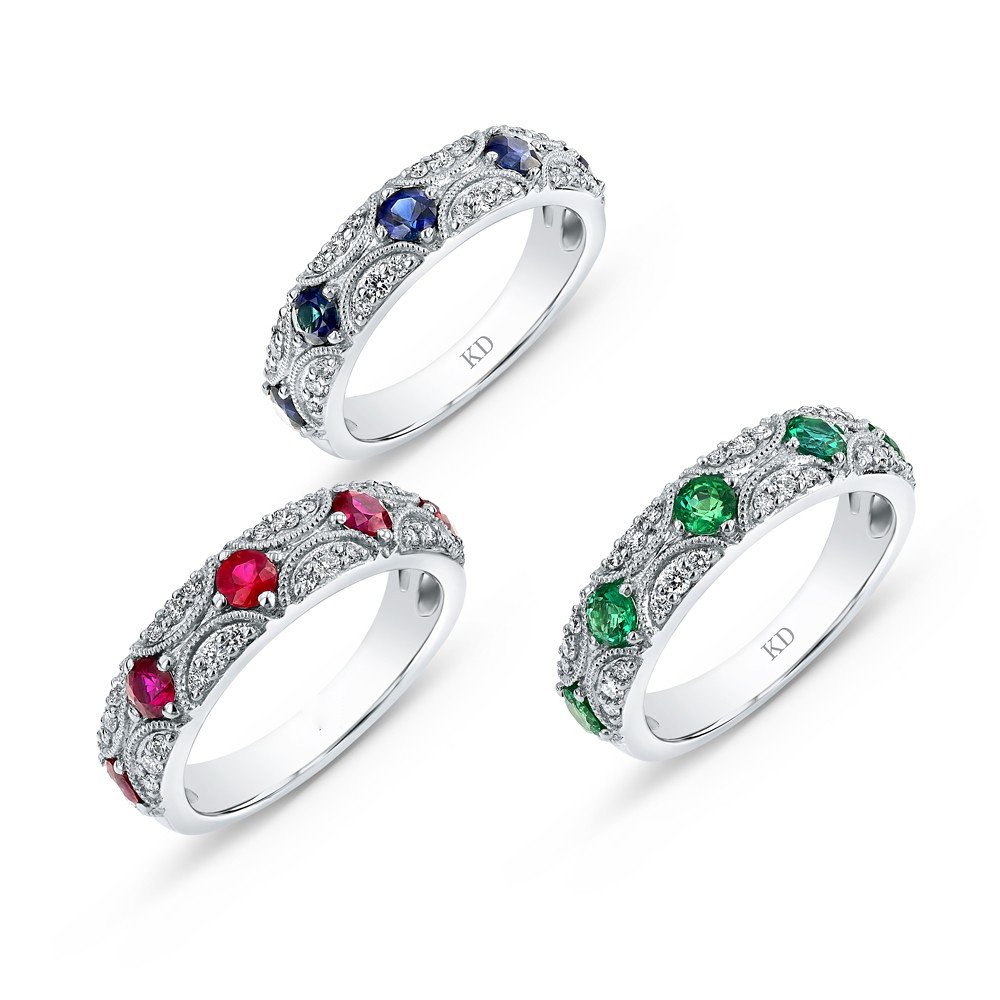
Say sapphire and most people picture deep blue, yet that is only the beginning of the story. Sapphire is gem-quality corundum, the same mineral as ruby, and it occurs in almost every colour imaginable; the single exception is red, which we call ruby instead. Loved by royalty, worn in some of the world's most famous engagement rings and prized for exceptional durability, sapphire is one of the most versatile and rewarding gemstones you can buy. This guide looks beyond blue to help you choose well.
In short: judge a sapphire first on colour, looking for a vivid, evenly distributed hue in a medium to medium-dark tone, then on an eye-clean appearance and a lively cut. Expect standard heat treatment and ask that any no-heat claim be backed by a report. At 9 on the Mohs scale sapphire is superbly hard-wearing and ideal for engagement rings, it is September's birthstone, and bought in George Town it is entirely tax-free.
Sapphire at a Glance
Here are the facts clients ask for most often, gathered in one place and expanded below. You can see fine sapphires in context across our coloured gemstone collection.
| Property | Sapphire |
|---|---|
| Mineral | Corundum (aluminium oxide) |
| Colour range | Every colour except red, which is ruby |
| Mohs hardness | 9, second only to diamond |
| Notable sources | Kashmir, Sri Lanka (Ceylon), Myanmar, Madagascar |
| Birthstone | September |
| Anniversary | Fifth and forty-fifth wedding anniversaries |
| Common treatment | Heat, standard and accepted |
| Care | Warm soapy water and a soft brush; very durable |
Beyond Blue: The Full Spectrum
Blue sapphire gets its colour from traces of iron and titanium, but the same mineral can appear in a remarkable range of other hues, and these are known as fancy sapphires. The spectrum simply widens your choice without changing the fundamentals of quality.
Fancy sapphires
Sapphire occurs in pink, yellow, green, violet, orange and even colourless or near-white, alongside colour-change stones that shift hue between daylight and lamplight. Pink sapphire is the lighter cousin of ruby, yellow ranges from lemon to rich gold, and white sapphire offers a colourless alternative to diamond. Whatever the colour, the qualities that define beauty stay the same.
Padparadscha, the rarest hue
The rarest and most celebrated fancy colour is padparadscha, a delicate blend of pink and orange named after the lotus blossom. Genuine padparadscha commands great admiration and high value, so it is one colour where an independent report is especially worthwhile.
| Colour | Notes |
|---|---|
| Blue | The classic; iron and titanium give the hue, from bright Ceylon to deep royal blue |
| Padparadscha | Rare pink-orange named after the lotus blossom; highly prized |
| Pink | Delicate to vivid; the lighter cousin of ruby |
| Yellow | Lemon to rich golden, often clean and lively |
| Green, violet, white | Fancy sapphires that widen the palette |
| Colour-change | Shifts hue between daylight and incandescent light |
Prized Blues and the Rarity of Kashmir
Among blue sapphires, certain origins are especially sought after, though origin is best treated as one factor among several rather than a guarantee of beauty.
Ceylon and royal blue
Ceylon sapphires, from Sri Lanka, are admired for a bright, lively blue, while the term royal blue describes a rich, vivid, slightly violet-blue that many consider ideal. Both are widely available in fine quality and represent the heart of the market.
Kashmir, Burma and Madagascar
The most legendary blues of all came from Kashmir, where a brief period of mining produced stones with a velvety, almost sleepy cornflower-blue that has never been matched; genuine Kashmir sapphires are extraordinarily rare and treasured. Fine blues also come from Burma, now Myanmar, and from Madagascar, a major modern source. Our guide to coloured gemstone jewellery in Cayman explains how we weigh origin against the qualities you can actually see.
Judging Quality: Colour, Clarity, Cut and Carat
Colour, the leading factor
Colour is the leading value factor. Look for a vivid, evenly distributed hue in a medium to medium-dark tone, and avoid stones that are so dark they look inky or so light they look washed out. Even colour, with no pale zones or strong banding, is the mark of a well-chosen stone.
Clarity and cut
Clarity in sapphire is often better than in ruby or emerald, and the best stones are eye-clean. Fine silk inclusions are acceptable and can lend a soft glow, and in some stones they produce a star, an effect called asterism. The cut should show even colour with a bright return of light and no large pale window at the centre; cushions, ovals and rounds are all popular.
Carat weight
Carat weight affects price significantly, and as with all fine gems a smaller stone of superb colour usually outshines a larger, duller one. Spend on colour first, then take the largest size your budget allows once the colour is right.
Heat Treatment and What to Disclose
Heat, standard and accepted
Most sapphires on the market are heat treated, a stable, permanent and widely accepted process that improves colour and clarity. A heated sapphire of fine colour is a genuine, durable gemstone, and reputable jewellers disclose the treatment plainly.
Untreated stones and other treatments
Untreated stones of fine colour are rarer and command a premium, so any no-heat claim should be backed by an independent report. Treatments such as lattice diffusion or glass filling change the picture and should always be disclosed, because they affect both value and care. Insist on written disclosure before you buy.
Durability and Why Sapphire Suits Engagement Rings
Built for everyday wear
Durability is where sapphire truly excels: at 9 on the Mohs scale it is second only to diamond, resisting the scratches and knocks of daily life, which is exactly why it makes such a superb engagement ring stone. Add its rich colour, its long royal heritage and its strong value, and the appeal is easy to understand; our advice on how to choose an engagement ring and the choice between a halo and a solitaire applies just as well to a coloured centre as to a diamond.
The September birthstone
Sapphire is the birthstone for September and the gem of the fifth and forty-fifth wedding anniversaries, associated with wisdom, loyalty and trust, which adds personal meaning to any piece. See where it sits among the other birthstones by month, and find ideas in our anniversary jewellery gift guide.
Care
Sapphire is easy to live with: clean it with warm soapy water and a soft brush, and standard heated stones tolerate gentle ultrasonic cleaning, though glass-filled material should not. Store it apart from softer gems so it does not scratch them. Our guide to cleaning and caring for fine jewellery covers the routine in full.
Choose a sapphire on the evenness and intensity of its colour first, insist on disclosure of any treatment, and let its diamond-like hardness make it a stone you can wear every day for life.
Buying a Sapphire Tax-Free in Grand Cayman
Whether you are drawn to a classic royal blue or a rare padparadscha, sapphire offers beauty that lasts a lifetime. Every sapphire we present in George Town is independently certified, with any treatment clearly disclosed, and you are welcome to compare several stones in the hand alongside our fine jewellery and certified loose diamonds.
Walk in whenever it suits you, with no appointment needed. Every purchase is tax-free, with no sales tax and no VAT, so a sapphire here can cost roughly 20 to 35 percent less than the same stone in the United States, the United Kingdom or Europe, and we offer free insured worldwide shipping. See how tax-free shopping works, or visit us on the George Town waterfront.