
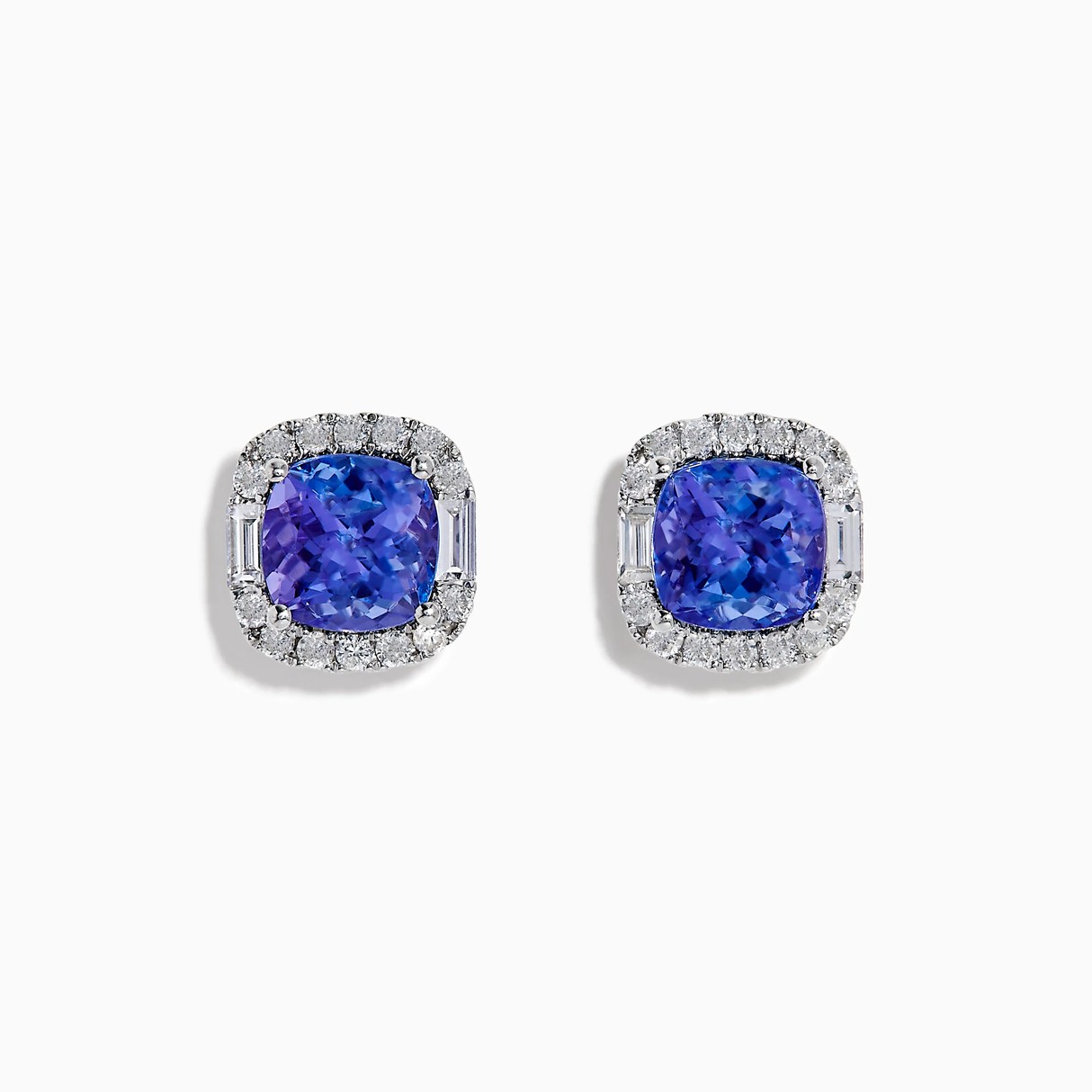
Few gemstones can tell a story as singular as tanzanite. Discovered only in the late 1960s and mined in just one small place on Earth, it offers a velvety blue-violet that no other stone quite matches. For collectors and romantics alike it is the rare gem you can still own in generous, vividly coloured sizes, and December's most glamorous birthstone. This guide explains exactly what tanzanite is, how to judge it with a trained eye, and how to wear it so it lasts, and you can see fine examples across our coloured gemstone collection.
In short: judge tanzanite first on colour, seeking a deep, saturated blue-violet free of grey and brown, and remember that good cutting and larger sizes both help that colour show. It is softer than sapphire, at roughly 6.5 to 7 on the Mohs scale and with a direction of cleavage, so it is happiest in earrings and pendants and in rings worn occasionally. Tanzanite is December's birthstone, and bought in George Town it is entirely tax-free.
Tanzanite at a Glance
Here are the facts clients ask for most often, gathered in one place and expanded in the sections that follow.
| Property | Tanzanite |
|---|---|
| Mineral | Zoisite (calcium aluminium silicate) |
| Colour range | Blue to violet; the finest a deep blue-violet |
| Mohs hardness | About 6.5 to 7, with a direction of cleavage |
| Notable source | Merelani Hills, near Arusha, Tanzania |
| Birthstone | December (modern) |
| Anniversary | Twenty-fourth wedding anniversary |
| Common treatment | Gentle heat, standard and permanent |
| Care | Warm soapy water and a soft brush; never ultrasonic or steam |
A Gem From a Single Source
What tanzanite is
Tanzanite is the blue to violet variety of the mineral zoisite, a calcium aluminium silicate coloured by traces of vanadium. Tiffany and Co introduced the stone to the world in 1968 and gave it the name tanzanite in honour of its homeland, and it has been one of the most loved coloured gems ever since.
One mine on Earth
Tanzanite is mined commercially in only one location on the planet: the Merelani Hills near Arusha in northern Tanzania, in the shadow of Mount Kilimanjaro. Because the deposit is geographically tiny and finite, many in the trade regard tanzanite as a one-generation gem, which lends every fine example a genuine scarcity that more widely mined stones cannot claim.
Pleochroism, Colour and Cut
Pleochroism
Tanzanite is strongly pleochroic, meaning it shows different colours along different crystal directions. Look into a single crystal and you can glimpse blue, violet and a brownish burgundy at once, a trichroism that makes the stone fascinating and also demanding to cut. The cutter must orient the rough to present the most desirable blue-violet through the table, often sacrificing weight to do so, which is why well-oriented stones command a premium.
Colour and saturation
The most prized colour is a deeply saturated, vivid blue-violet, neither too pale nor veiled by grey or brown. Saturation tends to build with size, so larger tanzanites often show richer colour while small stones can look noticeably lighter, one reason size and colour are so closely linked in this gem.
Cut and clarity
Most facet-grade material is eye-clean, so a fine cut that faces up vivid and even colour, with no dull window at the centre, matters more than chasing flawlessness. A precise, well-oriented cut is worth far more than a heavier but lifeless stone.
What Drives the Value
- Colour, the dominant factor. Seek a strong, pure blue-violet of medium to medium-dark tone and high saturation, and pass over stones that read washed out, greyish or overly brown.
- Clarity, where most fine tanzanite is eye-clean. Visible inclusions or fractures lower value and, given the stone's brittleness, can also affect durability.
- Cut, which governs how evenly colour and brilliance return to the eye. A precise cut that faces up vivid blue-violet is worth more than a heavier but dull stone.
- Carat, since saturated colour is easier to achieve at larger sizes, so bigger stones with excellent colour carry a disproportionate premium.
Treatment and What to Avoid
Heat, standard and permanent
Almost all tanzanite is gently heated at moderate temperatures, which removes a natural brownish component and unlocks the clean blue-violet buyers love. This treatment is standard, stable and permanent, and naturally blue rough that needs no heat is genuinely rare. Our guide to coloured gemstone jewellery in Cayman explains how we present treatment so you always know what you are buying.
What to avoid
What you should avoid are stones that have been coated, dyed or foil-backed to fake saturation, along with vaguely described material sold without disclosure. A reputable jeweller will always tell you precisely what has been done to a stone.
Tanzanite Compared With Sapphire
Because both are blue, tanzanite is often weighed against blue sapphire. They suit different roles: tanzanite offers a richer violet flash and gentler price for its size, while sapphire offers near-unbeatable hardness for everyday rings.
| Tanzanite | Blue sapphire | |
|---|---|---|
| Mineral | Zoisite | Corundum |
| Mohs hardness | 6.5 to 7, with cleavage | 9, very tough |
| Colour | Velvety blue-violet | Blue, from bright to deep |
| Source | One area of Tanzania | Many sources worldwide |
| Best for | Earrings, pendants, occasional rings | Everyday rings included |
Durability, Birthstone and Care
Wear it wisely
Tanzanite sits at roughly 6.5 to 7 on the Mohs scale and has a direction of easy cleavage, which makes it more vulnerable to knocks and abrupt temperature changes than harder gems. For that reason it is best enjoyed in earrings and pendants, where it is shielded from daily impact, and in rings reserved for evenings and special occasions rather than constant wear. If you do choose a ring, a protective setting such as a bezel or a halo of diamonds adds welcome security, and a tanzanite makes a memorable, unconventional centre for coloured-stone engagement rings worn with care.
The December birthstone
As December's modern birthstone and the gem of the twenty-fourth wedding anniversary, tanzanite looks its most regal in 14-carat or 18-carat white gold, which sharpen its blue, with diamonds to lift the colour; our precious metals guide helps you choose the metal. See where it sits among the other birthstones by month, and find ideas in our anniversary jewellery gift guide.
Care
Clean tanzanite only with warm soapy water and a soft brush, and never use ultrasonic or steam cleaners or expose it to sudden heat or harsh chemicals. Our guide to cleaning and caring for fine jewellery sets out a safe routine in full.
With tanzanite, colour is the whole story: choose a deep, saturated blue-violet, value a precise cut over raw weight, and protect a softer gem with a thoughtful setting and gentle care.
Buying Tanzanite Tax-Free in Grand Cayman
Every tanzanite at IDC Cayman is hand-selected for colour and cut, explained honestly, and presented alongside our wider fine jewellery so you can compare in the hand. Visit our waterfront boutique in George Town to see how its blue-violet shifts in different light.
Walk in whenever it suits you, with no appointment needed. Every purchase is tax-free, with no sales tax and no VAT, so a tanzanite here can cost roughly 20 to 35 percent less than the same stone in the United States, the United Kingdom or Europe, and we offer free insured worldwide shipping. See how tax-free shopping works, or visit us on the George Town waterfront.