
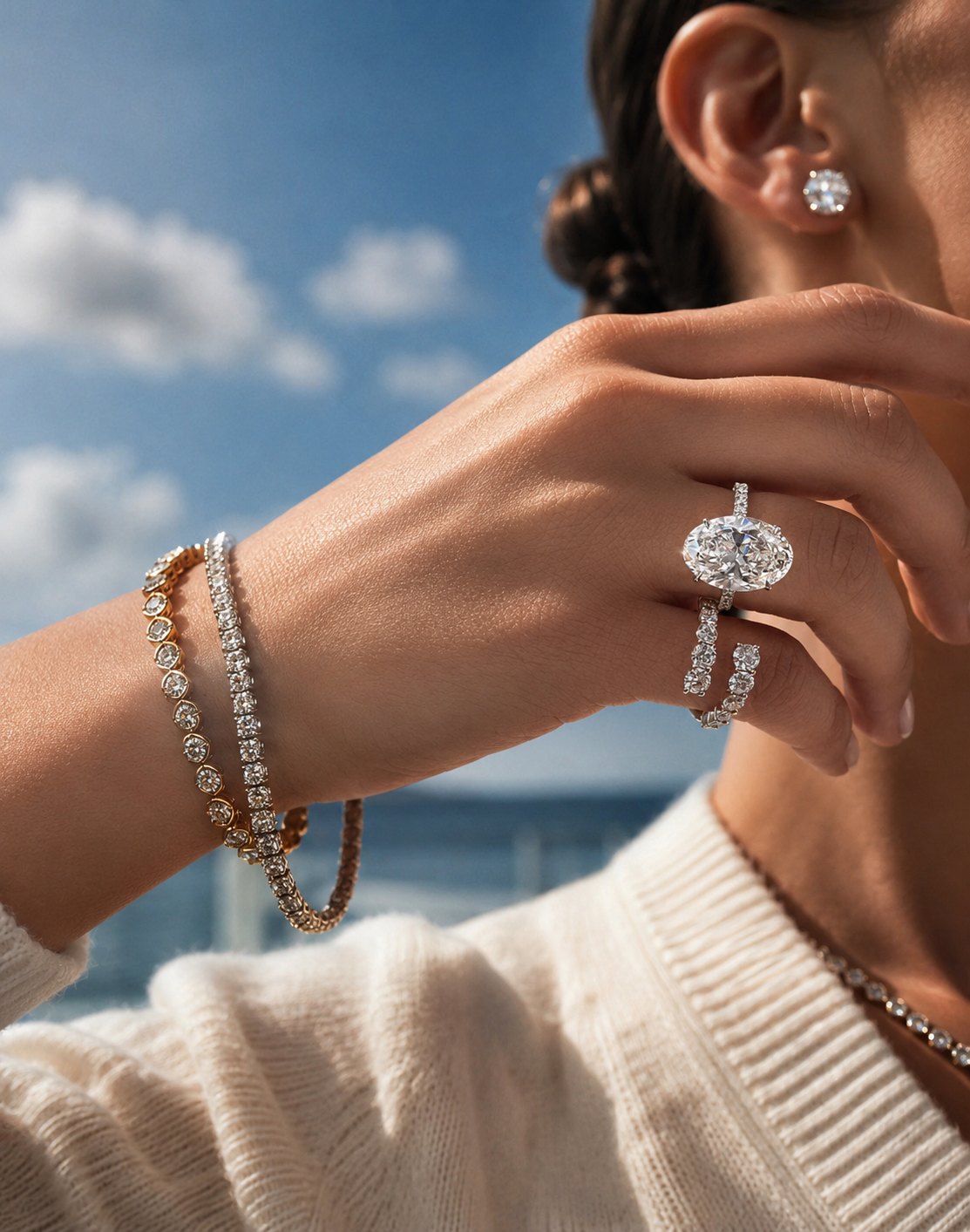
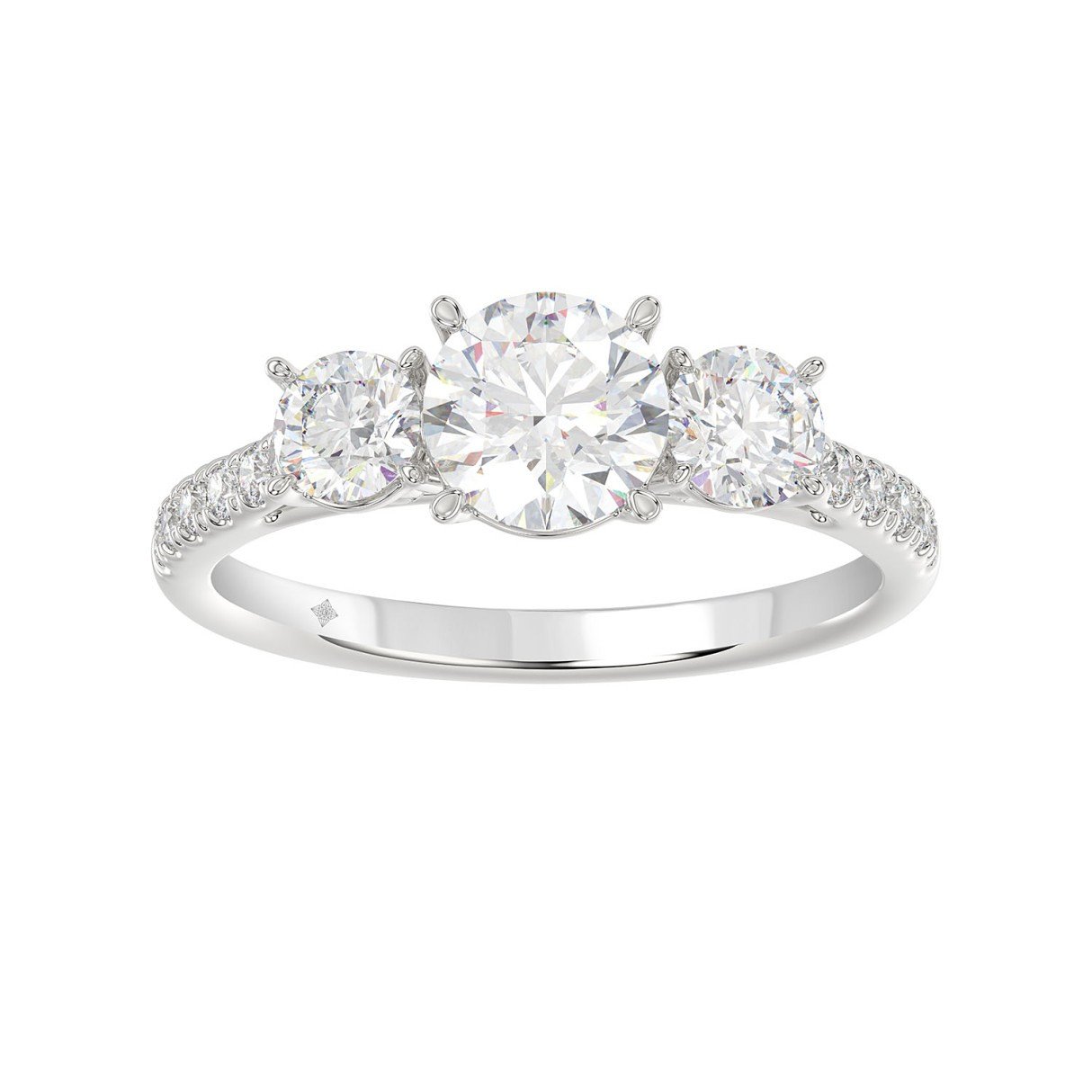
Few engagement ring styles carry as much meaning as the three-stone ring. Three diamonds set side by side have come to represent the past, present and future of a relationship, a single piece of jewellery that tells a whole story. Beyond the symbolism, the design is one of the most flattering and versatile ways to wear diamonds: a centre stone flanked by two carefully matched side stones creates a layered, dimensional look and a greater total diamond presence than a single stone of the same budget.
In short: the three diamonds traditionally mark past, present and future, the side stones should total a little less than the centre so the eye is drawn inward, and matching the cut, colour and clarity across all three keeps the ring harmonious. Choose GIA-certified stones, and buy in George Town to keep the whole ring tax-free.
What a Three-Stone Ring Symbolises
The three-stone ring is loved as much for what it means as for how it looks, which is why it endures long after passing trends fade.
Past, present and future
The traditional reading is the most romantic: the three diamonds mark where a couple has been, where they are now, and where they are going. It is a quiet daily reminder that a relationship is a journey rather than a single moment, which is part of why so many couples are drawn to it for an engagement, and again later for a milestone.
Other meanings couples give it
Many couples write their own meaning into the three stones: a proposal, a wedding and an anniversary; three people who matter most; or simply a love of balance and symmetry. The same versatility makes the three-stone ring a favourite for a significant anniversary gift as well as a proposal, because the symbolism only deepens with the years you wear it.
Choosing the Diamonds
The pleasure of a three-stone ring is in the pairing. The centre diamond is usually larger, with two side stones chosen to complement rather than compete with it, and the most successful combinations balance brilliance with proportion.
Centre and side stone pairings
Some pairings have become classics because they simply work on the hand. The right shape for the side stones can make the whole ring read as longer, softer or more architectural, so it is worth seeing a few against your finger. Our diamond shapes guide explains how each shape behaves, and our loose certified diamonds let you compare them in person.
| Combination | Side stones | Character |
|---|---|---|
| Round brilliant centre | Tapered baguettes | Clean, classic and architectural |
| Cushion or oval centre | Round brilliants | Soft, romantic and full of fire |
| Emerald-cut trio | Emerald-cut steps | Understated, modern sophistication |
| Round or oval centre | Pears angled inward | Graceful and elongating on the finger |
Matching cut, colour and clarity
Because three diamonds sit together in plain sight, any mismatch in colour or cut shows at once. We match the three stones with precision so they read as a single, harmonious piece, and because cut drives most of the sparkle, we hold all three to a high cut standard, as explained in our diamond cut guide. Every significant diamond we use is GIA-certified, so the grades of all three stones are verified independently rather than taken on trust; see our guide to GIA certification for what that report covers.
Settings and Proportion
Proportion is everything in a three-stone ring, and the setting is what holds that proportion together.
Keeping the eye on the centre
As a rule, the two side stones together should total a little less than the centre so the eye is drawn inward rather than pulled to the edges. A common starting point is roughly 60 percent of the diamond weight in the centre and 40 percent shared between the sides, though the right balance depends on the shapes you choose. The carat and size guide explains how weight translates to apparent size.
Setting styles
A shared-prong or trellis setting keeps the three diamonds close and continuous, with the prongs interlacing so the stones almost touch. A setting with a slim band lets the trio dominate, while a slightly raised gallery adds presence. Whichever you choose, the side stones should sit level with the centre so the ring feels considered rather than stepped.
Personalising the side stones
Side stones are also where many couples add a personal note. Tapered baguettes and trapeze-cut stones give a crisp, architectural frame, while rounds and pears soften the look. Some couples set coloured gemstones such as sapphire or emerald as the two sides, framing a diamond centre with birthstones or a favourite colour, a quiet way to make a classic design unmistakably your own.
Three-Stone, Solitaire or Halo?
The three-stone ring is one of three settings most couples weigh up, and each spends a diamond budget differently. A solitaire concentrates everything in one stone; a halo borrows apparent size from many tiny stones; a three-stone ring spreads the weight across three. None is better, they simply suit different tastes.
| Style | How the diamond budget spreads | Best suited to |
|---|---|---|
| Solitaire | Around 100 percent in one centre stone | Lovers of pure, timeless simplicity |
| Halo | A modest centre framed by inexpensive melee | Those who want maximum apparent size |
| Three-stone | About 60 percent centre, 40 percent sides | Those who want meaning and presence |
If you are still deciding, our halo versus solitaire guide and our complete guide to choosing an engagement ring compare every option in detail.
Metal, Size and Matching a Band
A three-stone ring sits a little wider than a solitaire, so the metal and fit deserve thought. 14-carat and 18-carat gold each suit the design; our precious metals guide compares colour and durability. Because the design spans more of the finger, getting the size right matters, so use our ring size guide before you decide. When the time comes, a contoured or curved band frames the trio neatly, as our guide to matching a wedding band explains, and the matching band can be designed alongside the ring from our wedding rings collection.
A three-stone ring is the rare design that becomes more meaningful the longer you wear it.
Buying a Three-Stone Ring in Grand Cayman
At IDC Cayman in George Town, every three-stone engagement ring is built around GIA-certified diamonds in 14-carat or 18-carat gold, and offered entirely free of sales tax and VAT, so a ring here can cost roughly 20 to 35 percent less than the same ring abroad. Whether you choose from our engagement rings collection or commission a bespoke design, our team will help you match the three stones perfectly and explain every grade before you decide, with no pressure and no appointment needed. Visit us in George Town, or say hello first.