No other gem species paints in as many colours as tourmaline. It grows in every hue of the rainbow, sometimes several at once within a single crystal, from electric neon blue-green to raspberry pink, deep forest green and inky midnight blue, which is why the trade has long called it the rainbow gem. Tourmaline is not one mineral but a family of related boron silicate species, and it is strongly pleochroic, meaning many stones reveal different colours or depths of colour depending on the direction you view them. For a buyer that endless variety is a gift, because tourmaline can supply almost any colour you want, often at genuine value, and it is the variety as much as the hue that sets the price.
In short: choose tourmaline by its variety first and the purity of its colour second, prioritise vivid, evenly saturated stones that stay lively in both daylight and lamplight, expect routine heating but ask about anything more, and lean on a protective setting for heavily included material. At about 7 to 7.5 on the Mohs scale it wears well with sensible care, and bought in George Town it is entirely tax-free.
A Family Painted in Every Colour
Tourmaline owes its astonishing range to chemistry. Tiny amounts of iron, manganese, chromium, vanadium and copper enter the crystal as it grows, and each leaves its own fingerprint of colour, which is why one species can deliver pinks, greens, blues and bi-colours that look like entirely different gems. That breadth makes tourmaline one of the most versatile stones in the coloured gemstone world, and a useful place to start before you read our wider coloured gemstone jewellery guide.
Why one species shows so many hues
Where most gems are defined by a single trace element, tourmaline accepts many, and even small shifts in its recipe move the colour dramatically. Copper gives the famous neon of Paraiba, manganese the reds and pinks of rubellite, and chromium the lush green of chrome tourmaline. This is also why tourmaline rewards a buyer who learns the names, since the variety tells you far more about rarity and value than the word tourmaline alone.
Pleochroism and the cutter's craft
Because tourmaline is strongly pleochroic, a single rough crystal can look pale down one axis and richly saturated down another. A skilled cutter studies the rough and orients the stone so the most beautiful colour shows face-up, sometimes sacrificing weight to do so. This is craft you cannot see on a certificate, and it is exactly where an experienced jeweller earns their keep when selecting stones for fine jewellery.
The Varieties Worth Knowing
Different colours of tourmaline carry different names and very different values, so it pays to know the vocabulary before you shop. The great modern sources are Brazil, which produced the original Paraiba material, and several African countries including Mozambique, Nigeria, Namibia and Madagascar, with Afghanistan and others adding fine stones; the same variety can come from more than one country.
The named varieties
- Paraiba, the rarest and most coveted, a copper-bearing tourmaline in electric neon blue to blue-green that seems to glow from within.
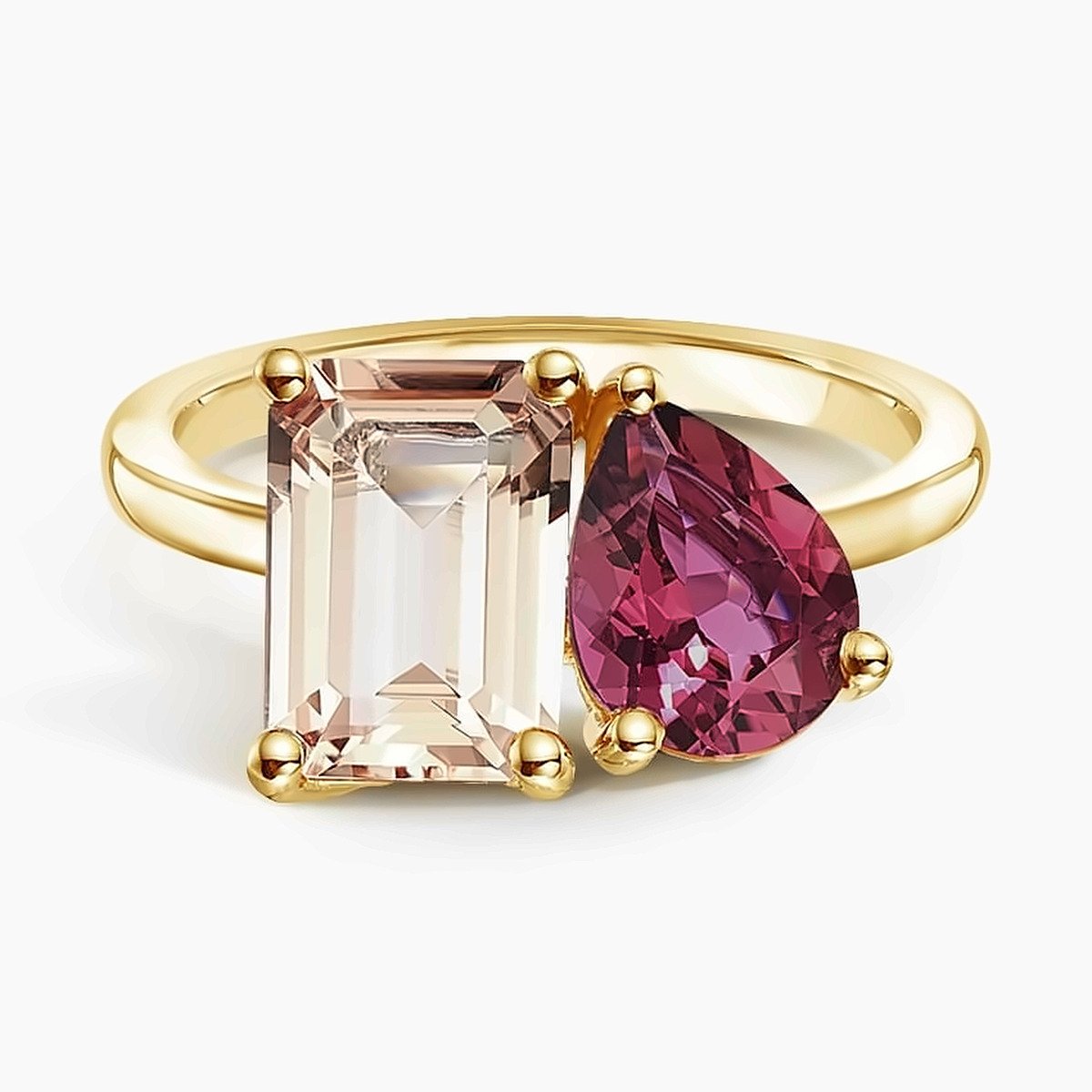
- Rubellite, the rich pink to red tourmaline, prized when its colour stays strong and vivid in both daylight and indoor light.
- Chrome tourmaline, an intense, saturated green coloured by chromium and vanadium, recalling fine emerald or tsavorite garnet.
- Indicolite, the scarce blue tourmaline, from rich teal to deep ocean blue, one of the harder colours to find well saturated.
- Verdelite, the more common green tourmaline, ranging from yellowish to bluish green and widely used in everyday jewellery.
- Bi-colour and watermelon, single crystals showing two or more colours, the watermelon famously pink at the centre with a green rind, often cut in slices to display the effect.
Paraiba, the electric outlier
Paraiba deserves its own paragraph because nothing else looks quite like it. Discovered in the Brazilian state of Paraiba in the late nineteen eighties, this tourmaline contains traces of copper and manganese that produce an unmistakable glowing turquoise, neon blue and blue-green found in no other gem. Brazilian Paraiba is extremely rare and tends to come in small sizes, so later finds of copper-bearing tourmaline in Mozambique and Nigeria, which can be larger, have become important. The trade generally accepts the Paraiba name for copper-bearing tourmaline regardless of country, though Brazilian origin still commands the greatest premium. Most Paraiba is heated to reach its finest colour, which is standard and accepted on this material.
| Variety | Typical colour | What to know |
|---|---|---|
| Paraiba | Neon blue to blue-green | Copper-bearing, rarest and most valuable; usually heated |
| Rubellite | Vivid pink to red | Prized when colour holds indoors; often included |
| Chrome | Intense pure green | Coloured by chromium and vanadium; emerald-like |
| Indicolite | Teal to deep blue | Scarce; hard to find richly saturated |
| Verdelite | Yellowish to bluish green | The most common green; widely available and wearable |
| Watermelon | Pink centre, green rind | Natural colour-zoned bi-colour; often slice-cut |
What Drives Tourmaline Value
Across every variety, colour is the engine of value, but clarity, cut and treatment all shape what a stone is worth and how it will look on the hand.
Colour and saturation
Saturation is the most important dimension of colour. The most desirable tourmalines show pure, vivid, richly saturated hues that are neither too dark nor too washed out, and stones that stay lively under both daylight and lamplight are worth more than those that turn dull or brownish indoors. View a stone in several lights before deciding, because colour is the whole reason to buy this gem.
Clarity expectations by colour
Clarity standards vary by variety. Greens and blues are usually expected to be eye-clean, while the pinks and reds of the rubellite family often carry visible inclusions that the market tolerates because clean material is so scarce. Knowing what is normal for each colour stops you overpaying for the impossible or rejecting a fine stone for a flaw its variety simply tends to show.
Treatments and honest disclosure
Honesty on treatment is straightforward. Many tourmalines are heated to improve or stabilise colour, which is permanent and widely accepted, and a good deal of material reaches the market with no more than that. Some stones, particularly certain Paraiba and rubellite, may also be clarity-enhanced or irradiated, so ask for disclosure and a report on important pieces. We explain how this works across the trade in our coloured gemstone jewellery guide.
Buy tourmaline for the purity of its colour, and let an honest answer about treatment tell you the rest.
Tourmaline at a Glance
These are the key facts our gemologists return to most often when guiding a client through a tourmaline purchase.
| Property | Detail |
|---|---|
| Mineral | Family of boron silicate species (gem tourmaline) |
| Mohs hardness | 7 to 7.5 |
| Colour range | Every hue, plus bi-colour and watermelon zoning |
| Birthstone | October, shared with opal |
| Anniversary | Traditional gift for the eighth |
| Main sources | Brazil, Mozambique, Nigeria, Namibia, Madagascar, Afghanistan |
| Common treatment | Heating; some stones clarity-enhanced or irradiated |
Durability, Care and Settings
Tourmaline is a practical everyday gem for most uses, provided you respect the quirks of more delicate varieties.
Everyday wear and hardness
At about 7 to 7.5 on the Mohs scale, tourmaline is hard enough for rings, earrings and pendants with sensible care. Stones with many inclusions, such as some rubellite, are a little more brittle and prefer protective settings and gentle handling. If you want a colour you can wear daily without a second thought, a cleaner green or blue in a secure setting is the safer choice.
Cleaning and storage
Clean tourmaline with warm soapy water and a soft brush, then dry it gently. Keep it away from ultrasonic and steam cleaners and from sharp knocks, and store it apart from harder gems that could scratch it. Our jewellery care guide covers safe routines for every stone in a collection.
Settings that flatter colour
Because colour is the point, choose a setting that lets it shine. White metals keep blues and greens cool and true, while yellow gold flatters pinks and warm bi-colours; our precious metals guide explains how each metal reads against colour. A simple solitaire or a clean halo frames a stone without competing with it, and tourmaline's range makes it a favourite for rainbow gemstone bracelets and other personal, colourful pieces. As an October stone it also makes a thoughtful anniversary gift, and you can match any colour to a month in our birthstones by month guide.
Buying Tourmaline Tax-Free in George Town
At IDC Cayman we hunt for tourmalines with pure, glowing saturation, cut to show their best colour and set to flatter it, and we sell every stone completely tax-free, with no sales tax and no VAT, so a piece here can cost roughly 20 to 35 percent less than the same stone elsewhere. Browse our coloured gemstones, explore the wider shop, and visit us on the George Town waterfront with no appointment needed; ask about free insured shipping worldwide or get in touch before you travel.